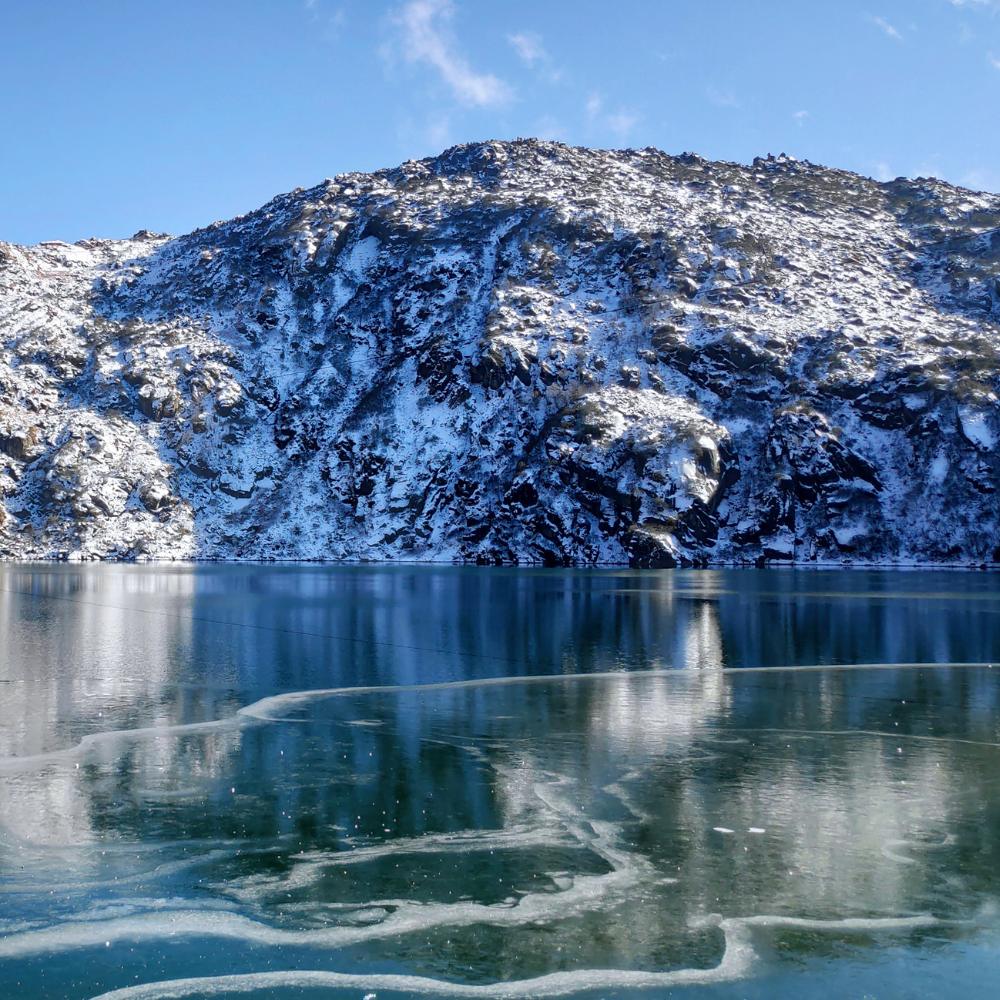
Northeast India is a cluster of eight states connected to the rest of the country by a narrow land corridor and culturally and geographically distinct from anywhere else in India. Meghalaya, Assam, and Sikkim, the three states covered in this guide, are at the heart of the region's appeal to experienced travellers seeking luxury. These states feature living root bridges grown by hand over generations, exclusive wildlife encounters with the world's largest population of the greater one-horned rhinoceros, stays at colonial-era tea estates now converted into heritage retreats, and Himalayan Buddhist monasteries with private access and unique cultural experiences. For travellers who have already explored Rajasthan and Kerala, the Northeast offers India's most exclusive and undiscovered luxury escapes.
This guide covers the essential experiences in Meghalaya, Assam, and Sikkim, detailing how to combine them into a single circuit and providing all the information required to plan the trip. Each state offers unique highlights and logistics to consider, so let’s explore them in turn for a seamless journey.
Northeast India at a Glance
- Main airports: Bagdogra (IXB) for Sikkim and Meghalaya/Darjeeling; Guwahati (GAU) for Assam and Meghalaya.
- Best visit: October-April (dry season). Avoid the monsoon (June-September), especially in Meghalaya.
- An optimal 9-12-day trip covers all three states without rushing.
- Permits: ILP required for Sikkim and parts of Arunachal Pradesh; not required for Meghalaya/most of Assam (Indian nationals).
- Signature luxury experiences: Private living root bridge explorations (Meghalaya), exclusive one-horned rhino safaris (Assam), heritage tea bungalow stays with tailored experiences (Assam), and curated monastery tours with special access (Sikkim)
Meghalaya: Living Root Bridges and the World's Wettest Region
Meghalaya means 'abode of clouds' in Sanskrit, as evidenced by the regions around Sohra (Cherrapunji) and Mawsynram, which receive some of the highest rainfall on Earth. Mawsynram holds the Guinness World Record for the highest average annual rainfall, narrowly ahead of Sohra, which also holds several rainfall records.
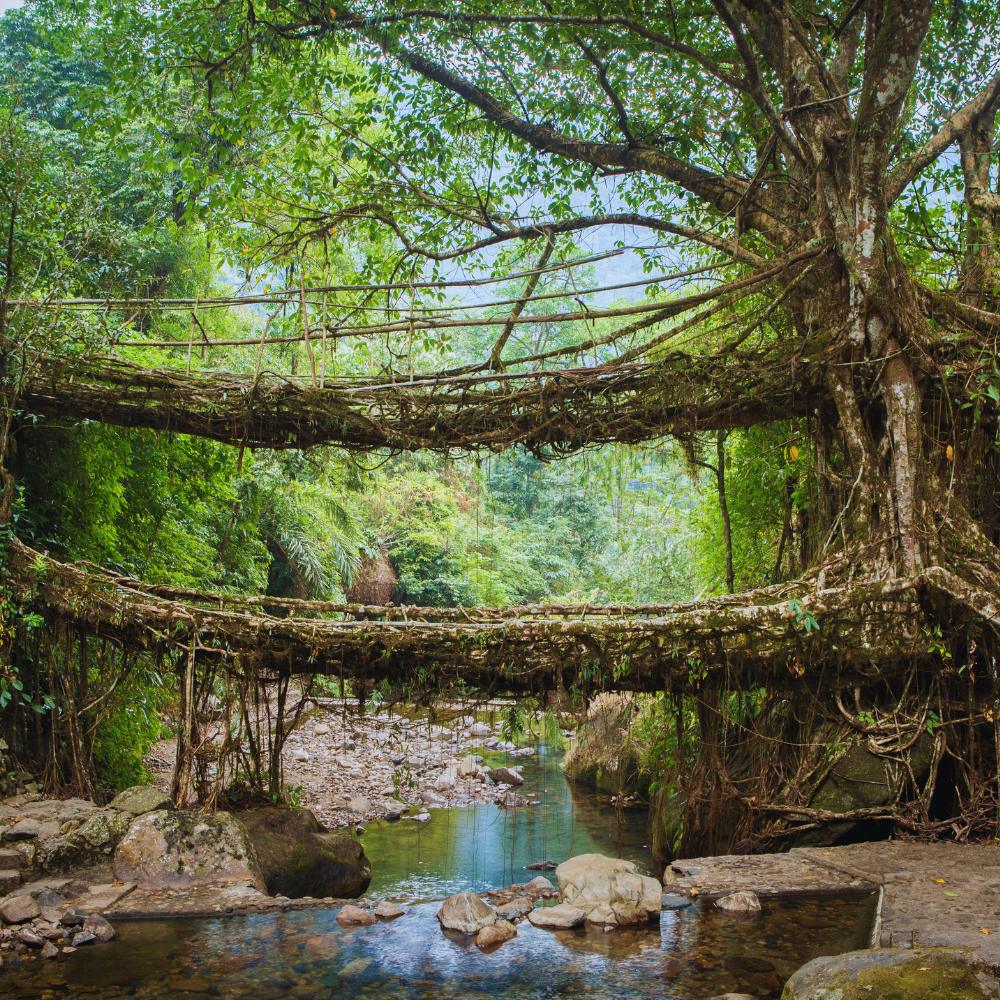
The state's defining attraction is its living root bridges: structures grown over 15 to 30 years by training the aerial roots of rubber fig trees (Ficus elastica) across rivers and streams, a practice unique to the Khasi and Jaintia tribal communities of southern Meghalaya. In March 2022, the Indian government submitted the living root bridges to UNESCO's Tentative List of World Heritage Sites under the name Jingkieng Jri, covering more than 70 villages. The best-known example, the Double Decker Root Bridge near Nongriat village, is reached by a steep descent of roughly 2,500 to 3,000 steps from Tyrna village and has become one of the most-visited sites in the state, drawing reported footfall exceeding a thousand visitors a day during peak season.
For travellers seeking a quieter luxury experience, the lesser-known root bridges around Mawlynnong (frequently cited as one of the cleanest villages in Asia) and the Rangthylliang bridge near Sohra offer more exclusivity. Luxury and boutique accommodations in Meghalaya remain limited compared with those in Assam or Sikkim, with upscale options mostly concentrated around Shillong and Sohra; most operators recommend a luxury stay in Shillong, complemented by private day excursions to root-bridge villages rather than overnighting in the villages themselves.
Planning a Meghalaya visit
- Ideal: October-April; monsoon (June-September) makes root bridge treks unsafe.
- Access: Guwahati (GAU), 100 km from Shillong; Shillong Airport (SHL) has limited flights.
- Nongriat trek: full-day, strenuous; start early, carry water.
Assam: Rhino Safaris and Tea Estate Heritage
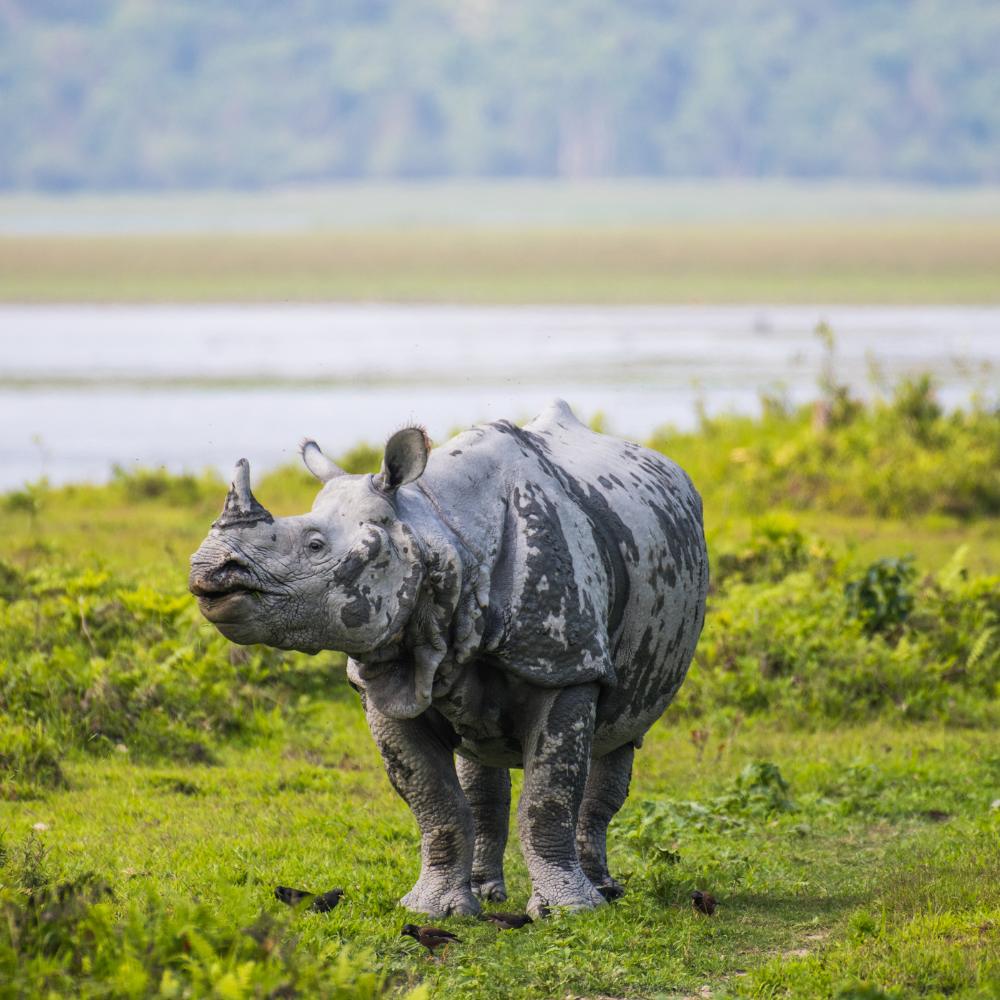
Kaziranga National Park, on the southern bank of the Brahmaputra in central Assam, is the world's primary stronghold of the greater one-horned rhinoceros. Inscribed as a UNESCO World Heritage Site in 1985, the park covers approximately 430 square kilometres and was first protected as a reserved forest in 1908, after the population of rhinos in the region had been reduced to a small fraction of historic numbers by hunting. The most recent census, conducted in March 2022, recorded 2,613 rhinos within the park, by far the largest concentration of the species anywhere in the world. Kaziranga has also been designated a Tiger Reserve since 2006 and is home to healthy populations of wild water buffalo, swamp deer, and elephants. Jeep safaris through the park's central, western, and eastern ranges offer close sightings of rhinos grazing in open grassland, often within a short distance of the vehicle track.
Assam's other defining luxury experience is its tea heritage. The state produces more than half of India's total tea output, and the area around Jorhat, known locally as the Tea Capital of Assam, is home to colonial-era planters' bungalows, many over a century old, restored as upscale heritage stays. Properties such as Banyan Grove in the Gatoonga Tea Estate and the Chameli Memsaab Bungalow in the Cinnamora Tea Estate provide an indulgent blend of high-ceilinged colonial architecture, private tea garden tours, personalised tasting sessions, and curated Assamese dining. Majuli, widely cited as the world's largest river island, sits roughly 20 kilometres from Jorhat in the Brahmaputra and is the spiritual centre of Assamese neo-Vaishnavism, home to a cluster of Satras (monasteries) founded in the 15th and 16th centuries by the saint-reformer Srimanta Sankardeva. Private guided experiences are available for luxury travellers.
Planning an Assam visit
- Best for Kaziranga: November-April; park closes May-October (monsoon).
- Nearest airport: Jorhat (JRH) for tea estates/Kaziranga; Guwahati (GAU) is the main hub.
- Book jeep safaris in advance with the resort or a registered operator, especially for the central range.
Sikkim: Buddhist Monasteries and Himalayan Trekking
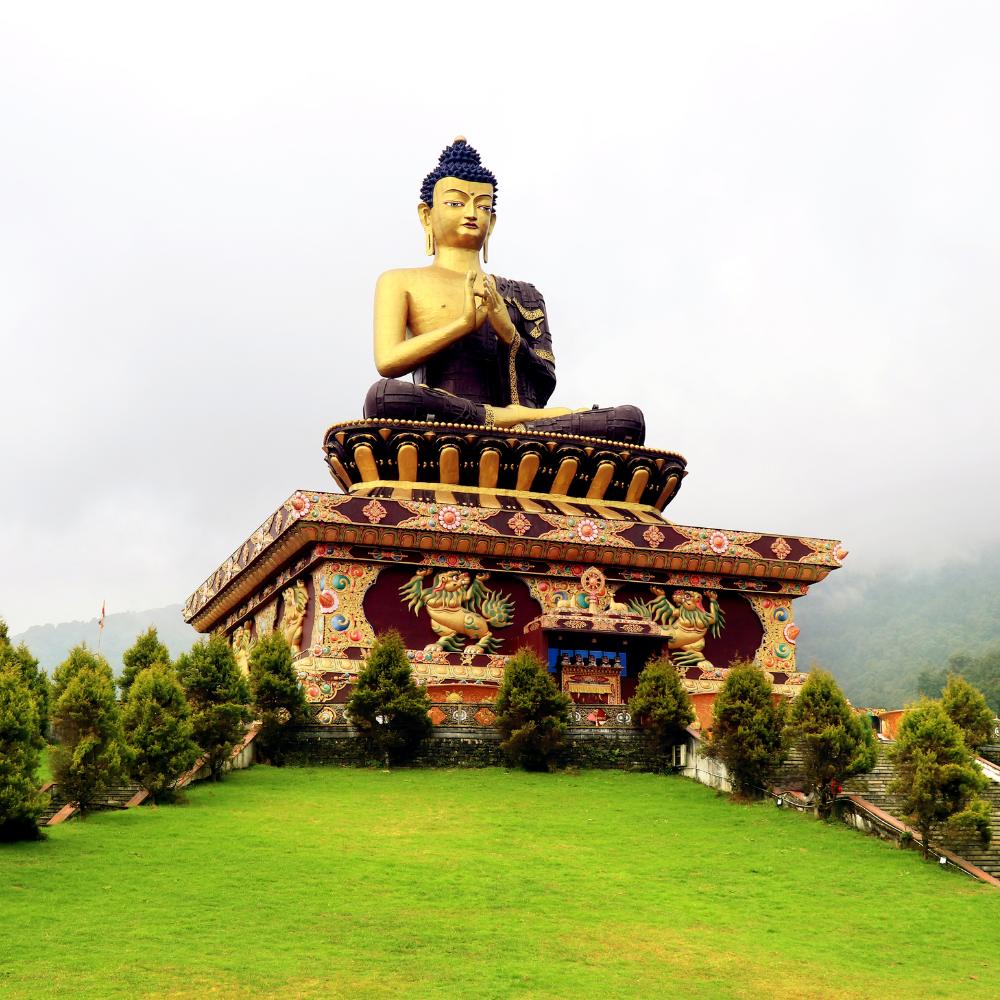
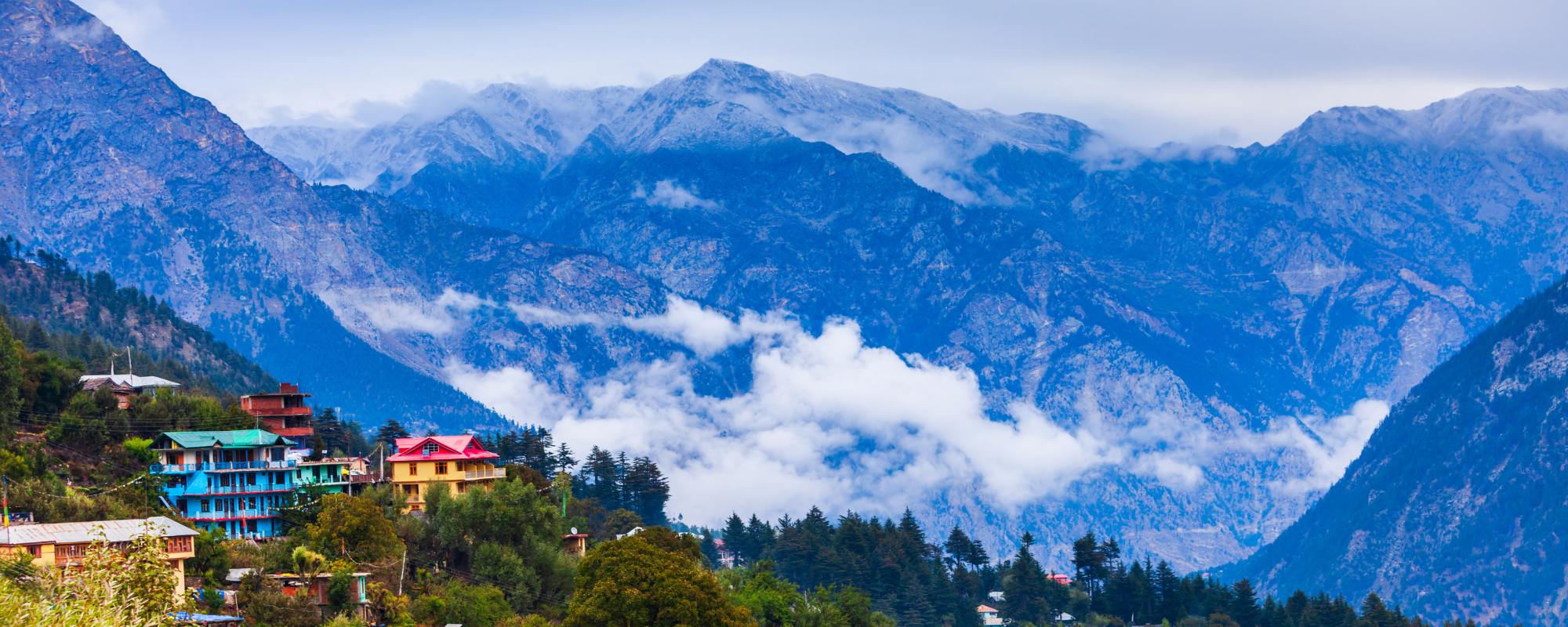
Sikkim was a Himalayan Buddhist kingdom under the Namgyal dynasty from 1642, and its heritage now offers luxury travellers exclusive cultural and wellness experiences. Rumtek Monastery, approximately 24 kilometres from the capital Gangtok, is the largest in Sikkim and the seat in exile of the Karma Kagyu lineage of Tibetan Buddhism, with options for private visits and immersive rituals. The original structure was founded in 1734 by the 9th Karmapa, Wangchuk Dorje, under the patronage of Sikkim's fourth Chogyal; it fell into disrepair over the following two centuries and was rebuilt in the 1960s by the 16th Karmapa, Rangjung Rigpe Dorje, after he fled Tibet following the Chinese invasion. Pemayangtse Monastery, near Pelling in West Sikkim, is among the oldest and most revered in the state, second only to Dubdi Monastery near Yuksom, and offers stunning views of Kanchenjunga, the world's third-highest mountain, from select luxury lodges.
For travellers seeking a more active itinerary, the Goecha La trek, beginning at Yuksom, Sikkim's first capital, and passing through Tshoka and Dzongri before reaching the Goecha La viewpoint at approximately 4,940 metres, is widely regarded as one of the finest Himalayan treks in India for its close views of Kanchenjunga, requiring no technical climbing experience but a reasonable level of fitness and proper acclimatisation. The core trek typically takes 9 to 12 days, with complete packages that include Gangtok acclimatisation and transport days often running 12 to 17 days, depending on the operator and pace. An Inner Line Permit is required for the trek, as for most of Sikkim.
Planning a Sikkim visit
- Best time: March to May and September to November for monastery visits and lower-altitude sightseeing; Goecha La trek is best from March to June or September to October.
- Reach Sikkim: Bagdogra (IXB), 124 km/4-5 hrs from Gangtok; Pakyong (PYG) has a few flights.
- Permits: ILP required for most of Sikkim, including Goecha La. Arrange via a tour operator or at the entry.
How to Combine Meghalaya, Assam, Sikkim and Darjeeling Into One Itinerary
The most efficient version of this circuit begins in Guwahati, covering Kaziranga and the Jorhat tea estates first (4 to 5 days), before flying or driving to Shillong for Meghalaya's living root bridges (2 to 3 days). From Shillong, the route continues overland into West Bengal and Sikkim via Siliguri, allowing Darjeeling to be added to the circuit with minimal extra travel time, before a final stretch in Gangtok and the Sikkim monastery circuit (3 to 4 days). A complete version of this itinerary, including Darjeeling, typically runs 12 to 14 days; travellers short on time more commonly choose two of the four destinations rather than attempting all in one trip.
When Is the Best Time to Visit Northeast India?
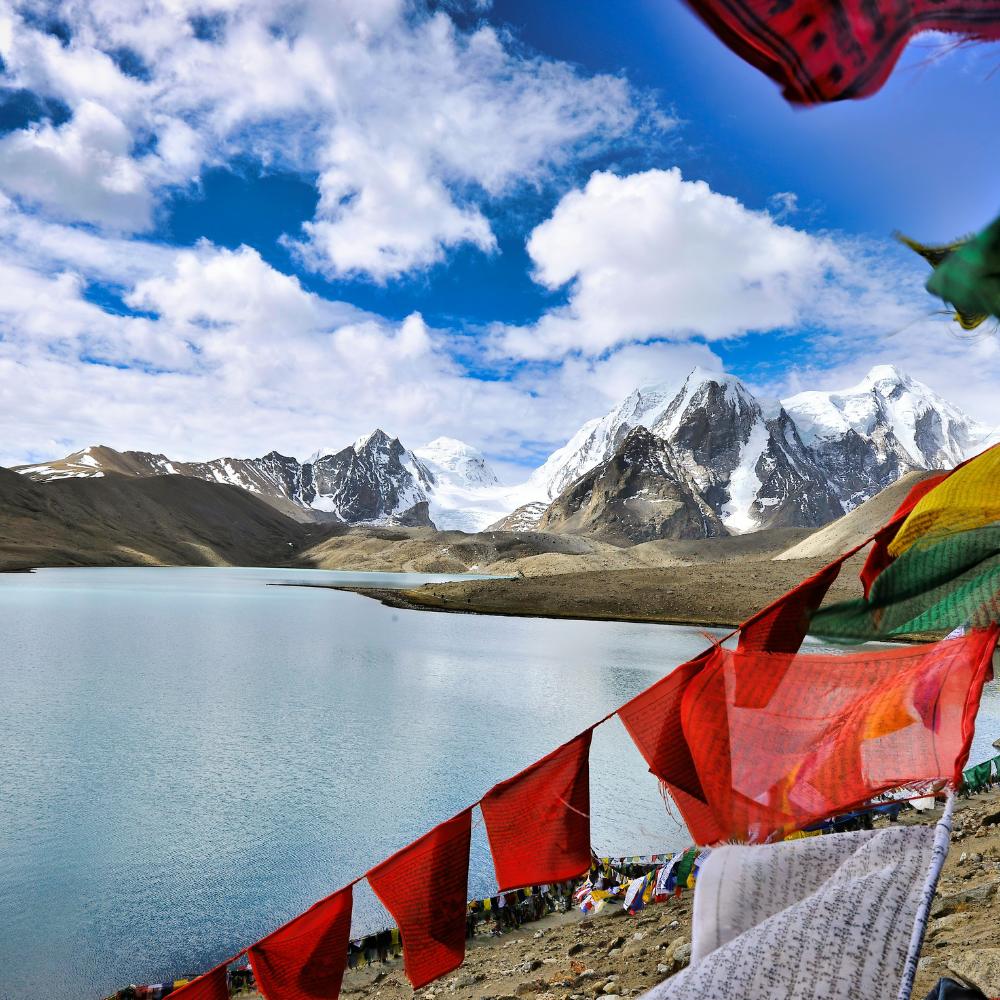
- October to April (recommended): Dry conditions across Meghalaya, Assam, and Sikkim. Kaziranga is open and at its best for rhino sightings; root bridge treks are safe; Sikkim's higher passes and trekking routes are accessible from March.
- May: Transitional month; Kaziranga remains open early in the month before the park typically closes for the monsoon
- June to September (avoid): Peak monsoon. Kaziranga is closed. Meghalaya, among the wettest regions on Earth, becomes hazardous for root-bridge treks. Sikkim's lower routes remain passable, though frequent landslides on mountain roads are a concern.
How to Reach Northeast India
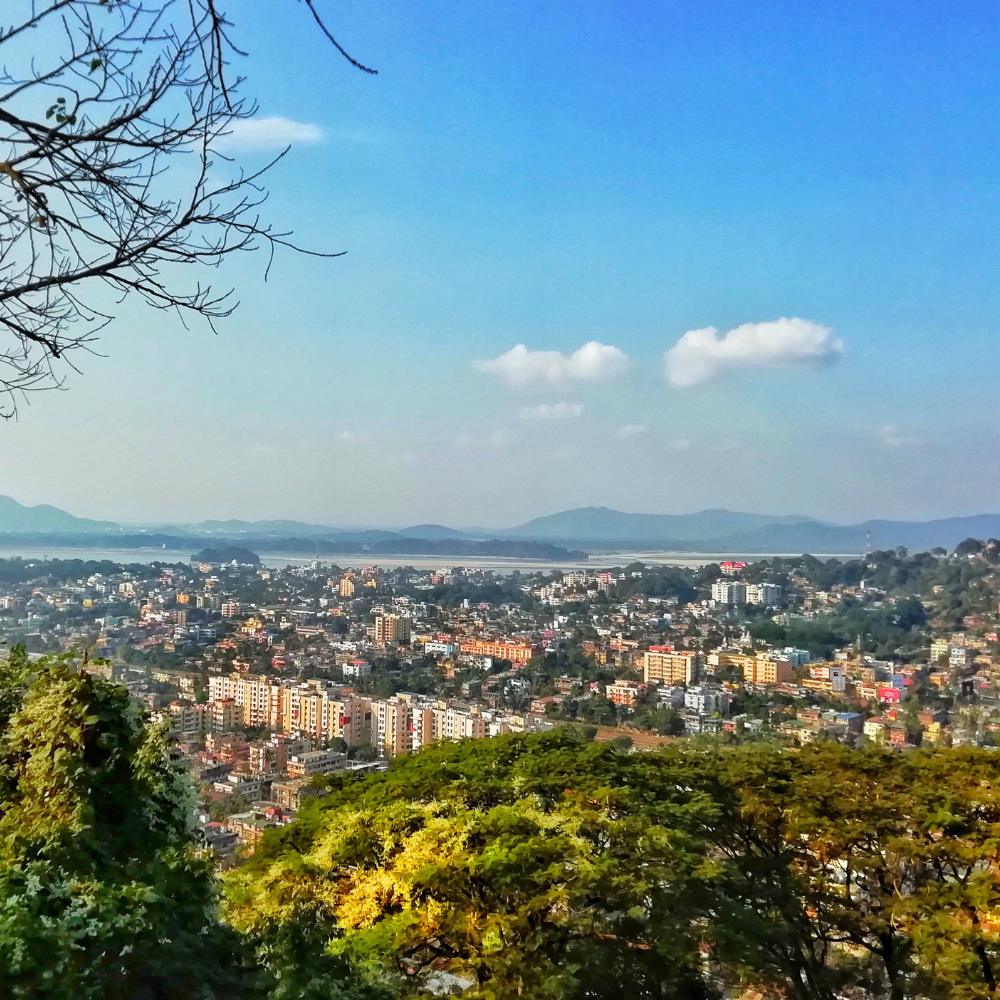
- By air: Guwahati (GAU) is the principal gateway for Assam and Meghalaya, with direct domestic flights from Delhi, Mumbai, Kolkata, and Bengaluru. Bagdogra (IXB) in West Bengal is the gateway to Sikkim and is easily connected to Darjeeling. Jorhat (JRH) serves the Assam tea estate region directly. Guwahati has limited direct international connections, including to Paro (Bhutan) and Singapore via Druk Air, as well as a seasonal route to Bangkok; most international visitors still connect via Delhi, Mumbai, or Kolkata.
- By rail: Guwahati has the best rail connectivity in the region, with services from Kolkata, Delhi, and other major cities. New Jalpaiguri (NJP), near Bagdogra, is the railhead for Sikkim and Darjeeling.
Frequently Asked Questions About Northeast India
How many days do you need for Meghalaya, Assam, and Sikkim?
A minimum of 9 to 12 days is needed to cover all three states without rushing: roughly 4 to 5 days for Assam (Kaziranga and the tea estates), 2 to 3 days for Meghalaya, and 3 to 4 days for Sikkim. Adding Darjeeling extends this to 12-14 days. Most first-time visitors choose two of the four destinations rather than attempting the full circuit in a single trip.
Do you need a permit to visit Northeast India?
It depends on the state. Sikkim requires an Inner Line Permit (ILP) for most areas, including the Goecha La trek route, though this is straightforward to arrange through a registered operator. Meghalaya and most of Assam do not require special permits for Indian nationals. Foreign nationals should check current requirements for all three states before travelling, as rules for border-adjacent areas can change.
Is Kaziranga better than other Indian tiger reserves for wildlife viewing?
Kaziranga is unmatched for rhino sightings. It holds the largest population of the greater one-horned rhinoceros anywhere in the world, and jeep safaris through its open grassland typically deliver close, reliable sightings within the first hour. It also holds a healthy tiger population and has been a Tiger Reserve since 2006, though dense grassland makes tiger sightings less frequent than at reserves like Ranthambore. Travellers prioritising rhinos, elephants, and birdlife will find Kaziranga exceptional; those focused specifically on tigers may prefer a dedicated tiger reserve.
What is the best way to experience Meghalaya's living root bridges without the crowds?
The Double Decker Root Bridge near Nongriat is reportedly the most photographed and most visited, drawing more than a thousand visitors a day in peak season. Travellers seeking a quieter experience can visit the root bridges around Mawlynnong, one of Asia's cleanest villages, or the Rangthylliang bridge near Sohra, both of which see a fraction of Nongriat's footfall while offering a comparable experience of the same living architecture.
Can Northeast India and Darjeeling be combined in one trip?
Yes, and it is a natural addition. Sikkim and Darjeeling share a regional gateway (Bagdogra Airport), and the road journey between Gangtok and Darjeeling takes approximately 3 to 4 hours, making it straightforward to combine Sikkim's monastery circuit with Darjeeling's tea estates and Himalayan railway in a single itinerary.