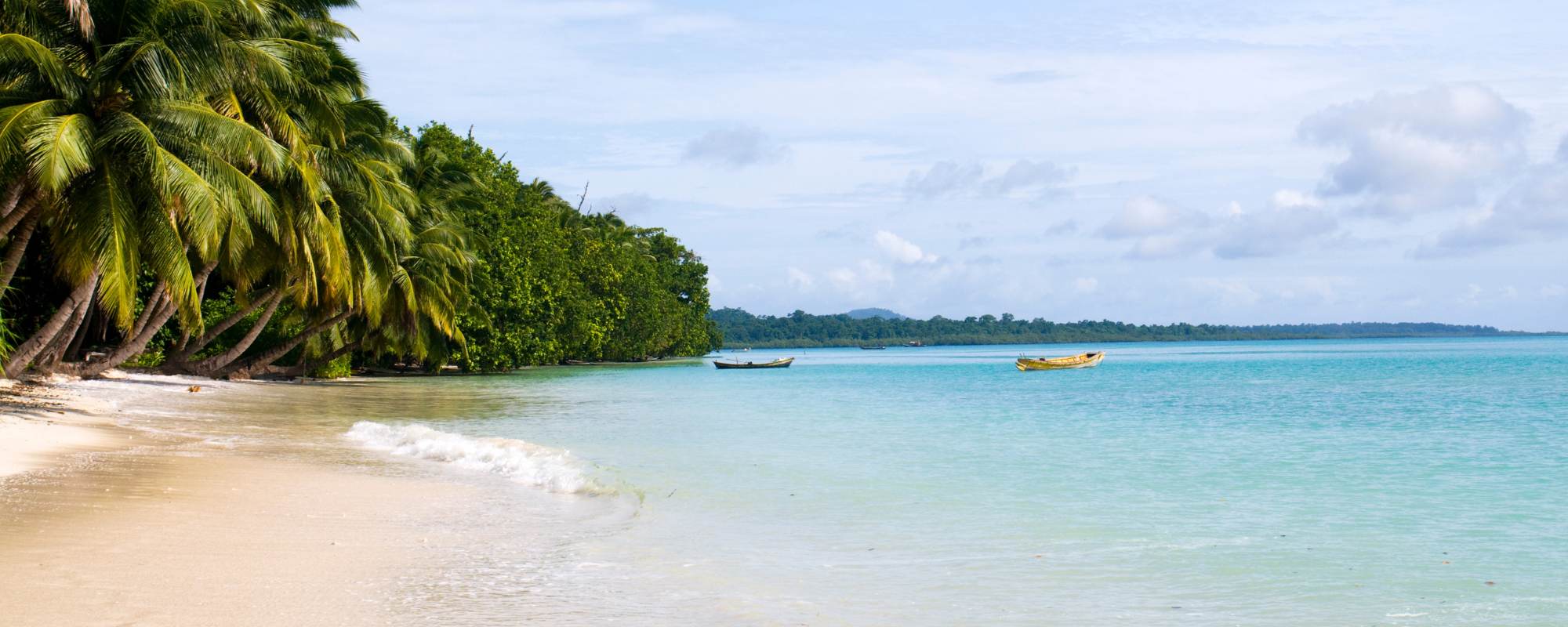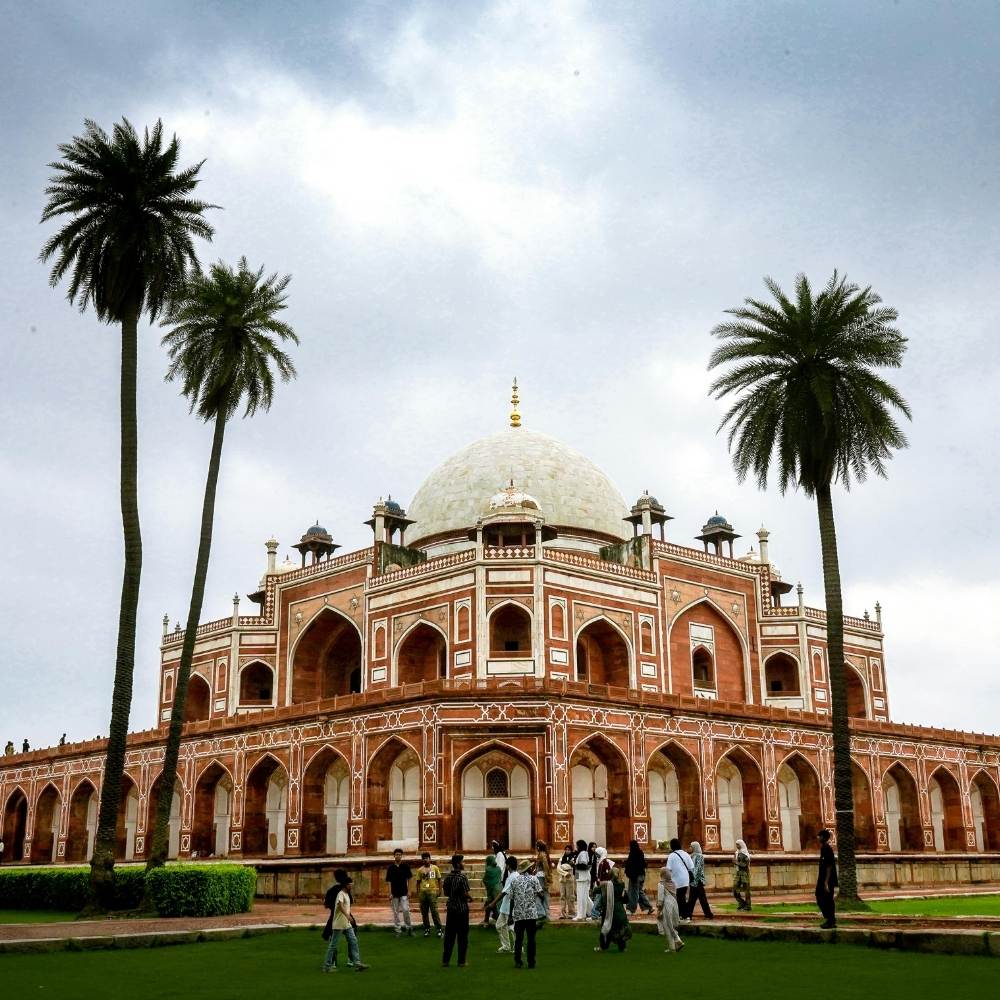
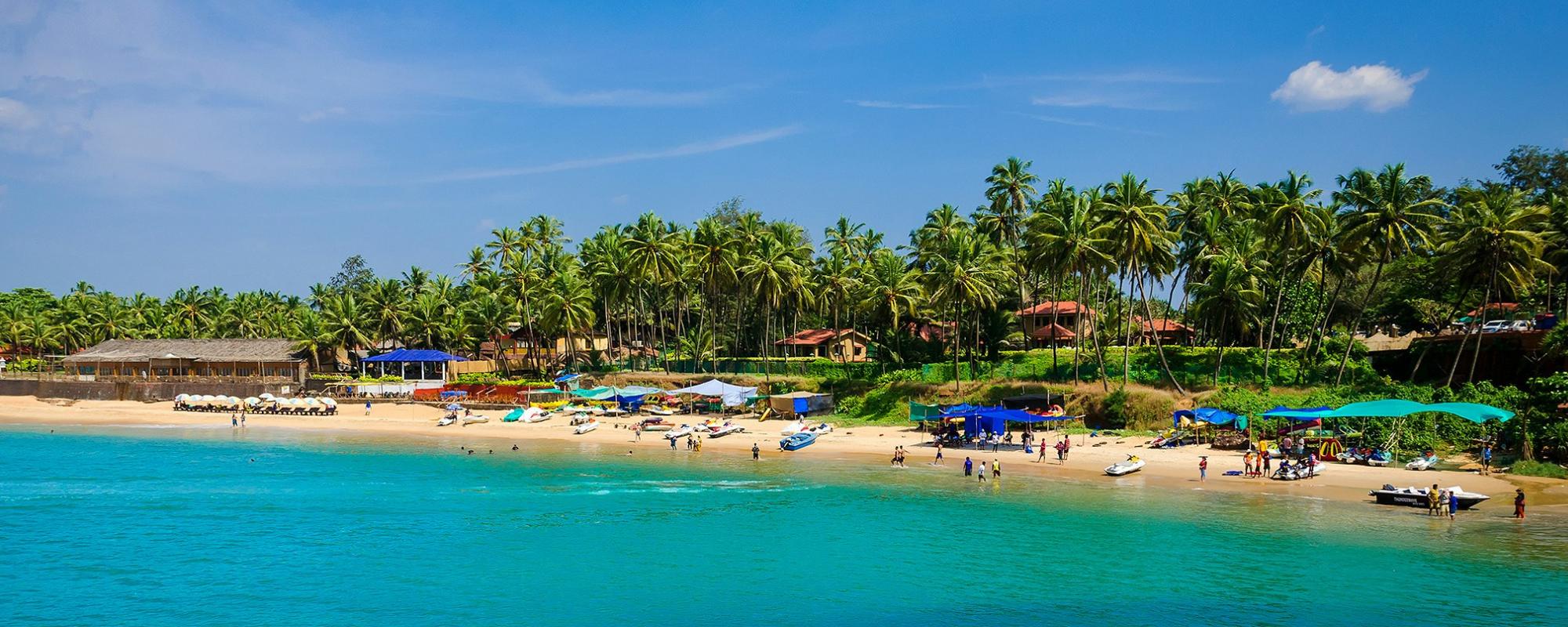
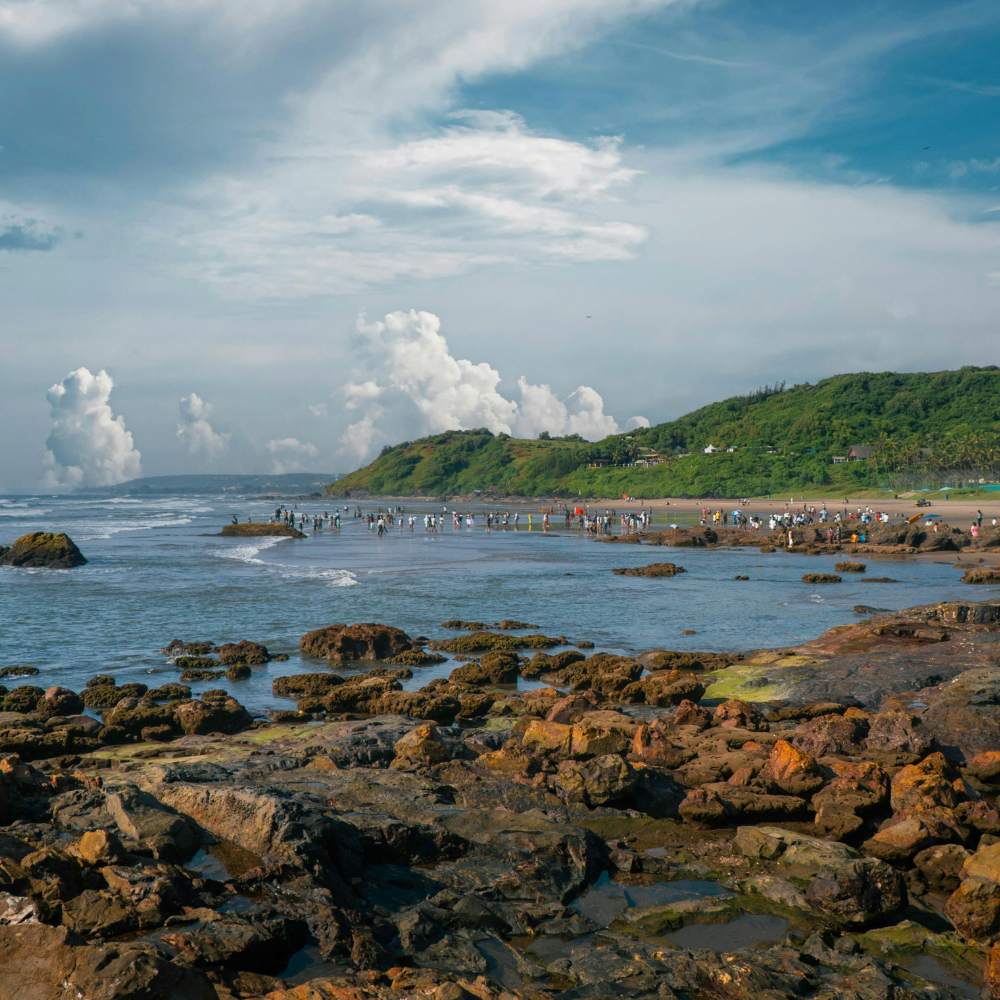
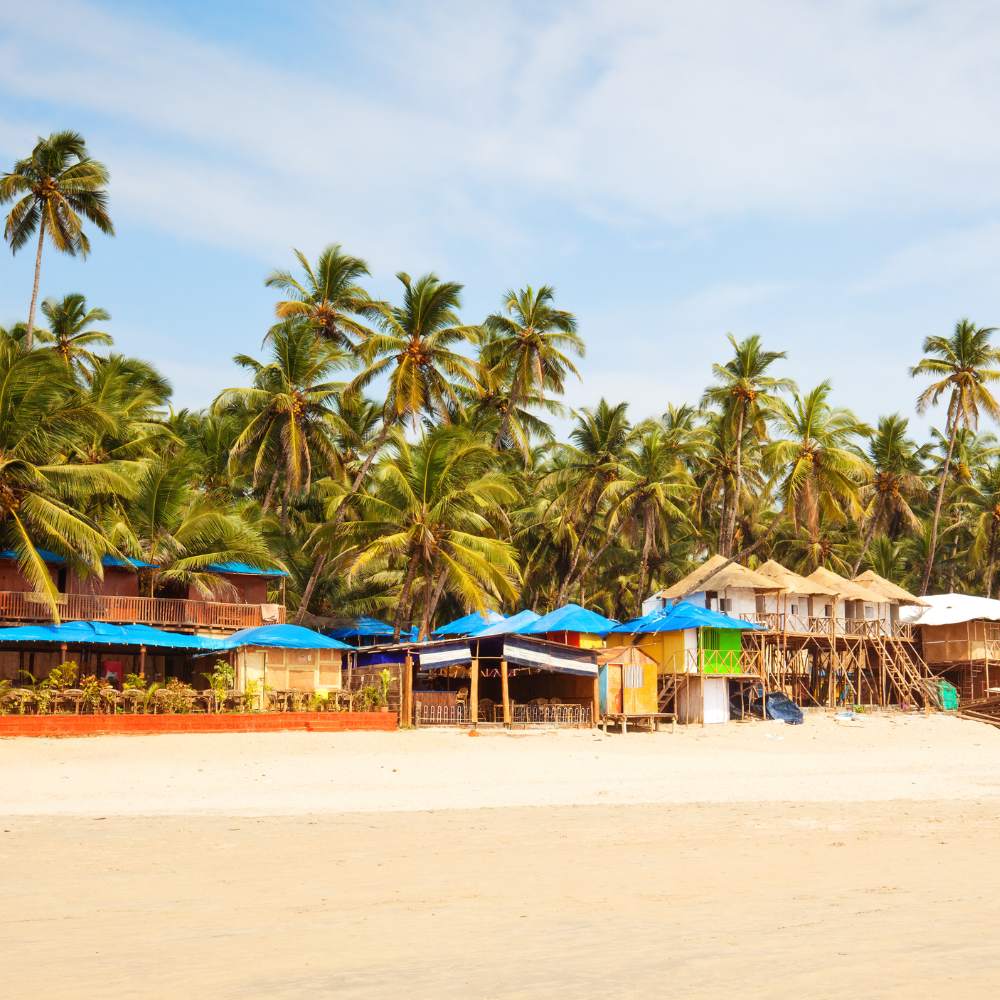
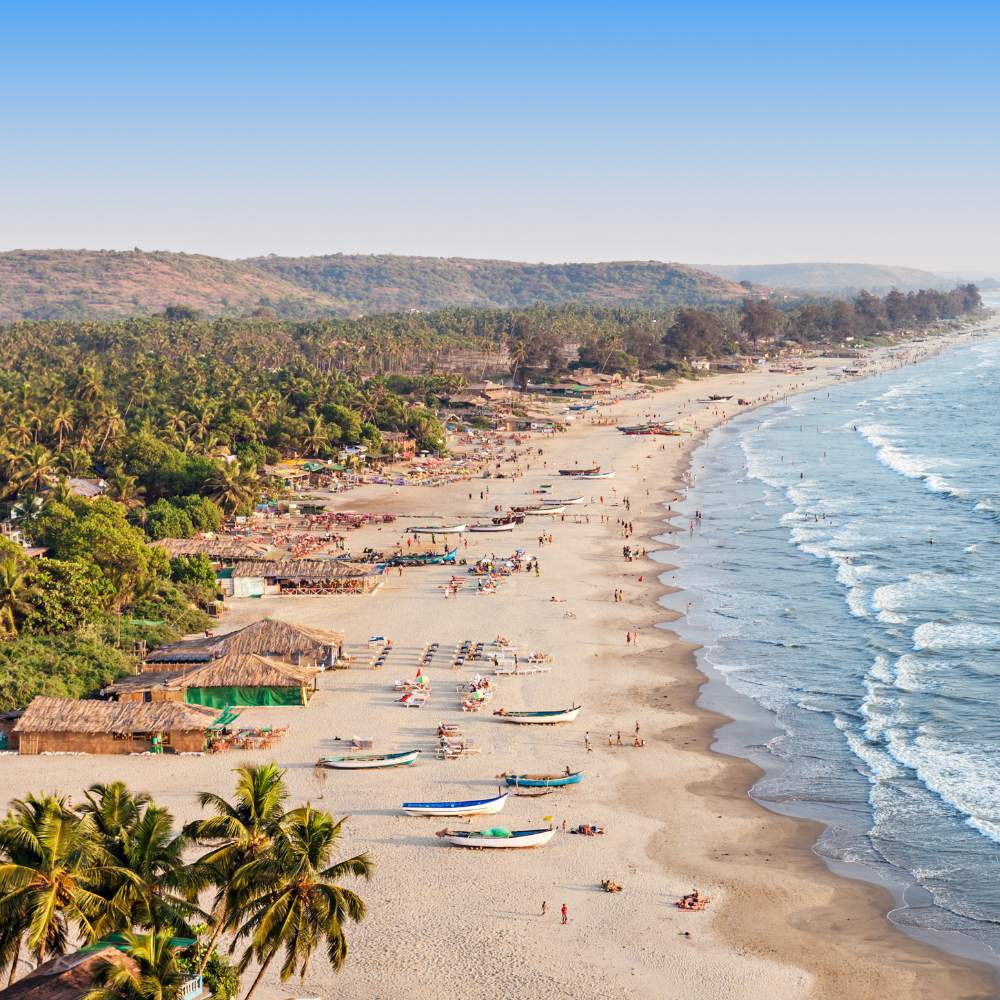
Goa is India's smallest state and its most internationally recognised coastal destination. It sits on the Arabian Sea between Maharashtra and Karnataka, with 105 kilometres of coastline and a Portuguese colonial history that lasted until 1961.
In 2025, the state recorded 1.08 crore (10.8 million) tourist arrivals, the highest in its history.
For luxury travellers, the appeal lies in a combination few Indian destinations can match: five-star beachfront resorts, private pool villas, UNESCO-listed colonial architecture, and a dining scene that blends Portuguese, Konkani, and contemporary Indian cuisine.
This guide covers how to choose between North and South Goa for a luxury stay, the best heritage and culinary experiences, when to visit, and how to get there.
Goa at a Glance
- Location - west coast of India, on the Arabian Sea, between Maharashtra and Karnataka
- Best time to visit - November to February (peak, dry and cool); October and March (shoulder, fewer crowds); June to September is monsoon
- Airports - Dabolim Airport (GOI) in South Goa; Manohar International Airport (Mopa, IATA: GOX) in North Goa
- 2025 tourist arrivals - 1.08 crore (10.8 million), an all-time record, including 517,802 foreign visitors
- Colonial history - Portuguese territory from 1510 to 1961; the Basilica of Bom Jesus (1594–1605) sits inside the UNESCO-listed Churches and Convents of Goa
- Minimum recommended stay - 4 to 5 nights for a single luxury base; 7 to 10 days to combine beach and heritage
South Goa or North Goa: Which Is Better for a Luxury Stay?
Both work; it depends on what you want from the trip.
The two halves of Goa, divided by the Zuari River, have developed in genuinely different directions. The choice matters more than it once did, and most discerning travellers benefit from understanding the distinction before booking.
South Goa: five-star beachfront resorts and quiet luxury
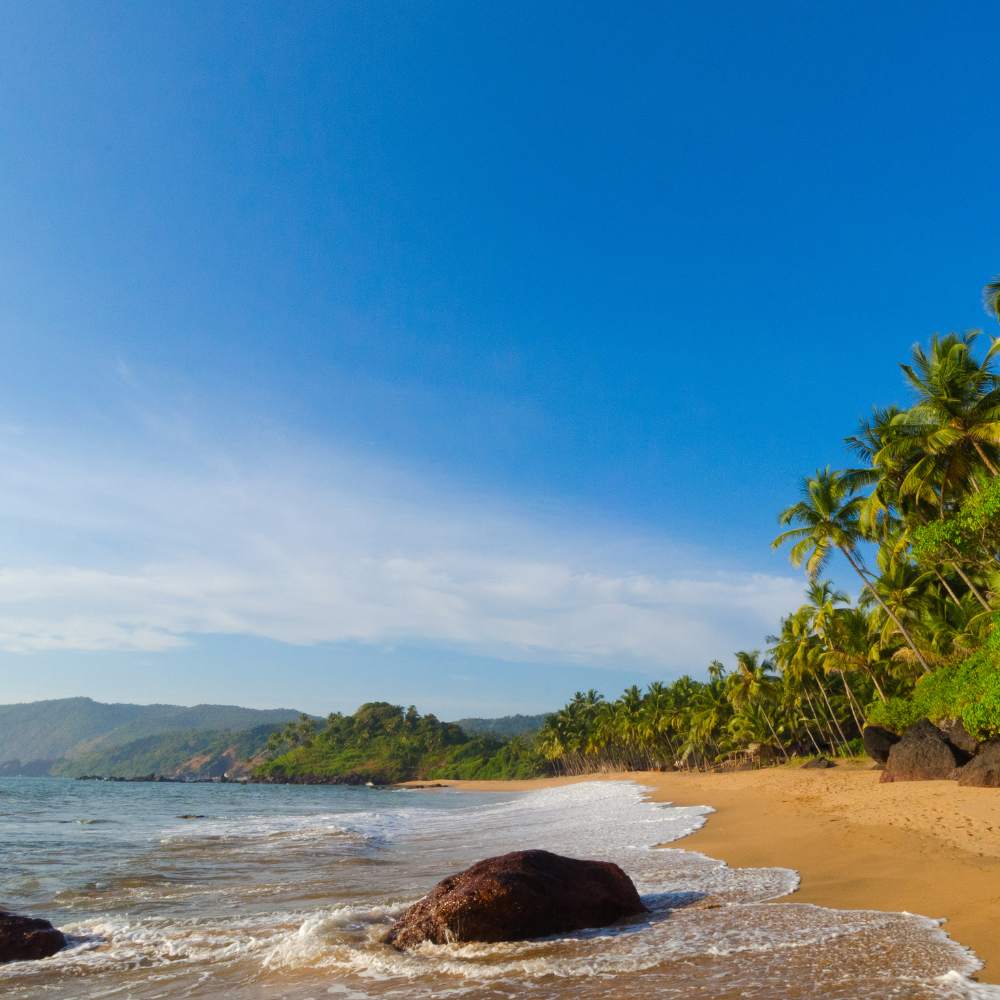
South Goa is where Goa's large-format five-star resorts cluster, particularly along Cavelossim, Varca, Benaulim, and Colva, and around the Mobor headland where the Sal River meets the sea.
These beaches are wider, less crowded, and built for resort-style luxury: spa facilities, multiple restaurants, infinity pools facing the Arabian Sea, and direct beach access.
Palolem, further south in Canacona taluka, has a crescent-shaped bay with calm, shallow water and a more boutique, low-rise character.
Best for: travellers prioritising rest, privacy, and resort infrastructure over proximity to markets and restaurants.
North Goa: design-led villas, heritage hamlets, and dining
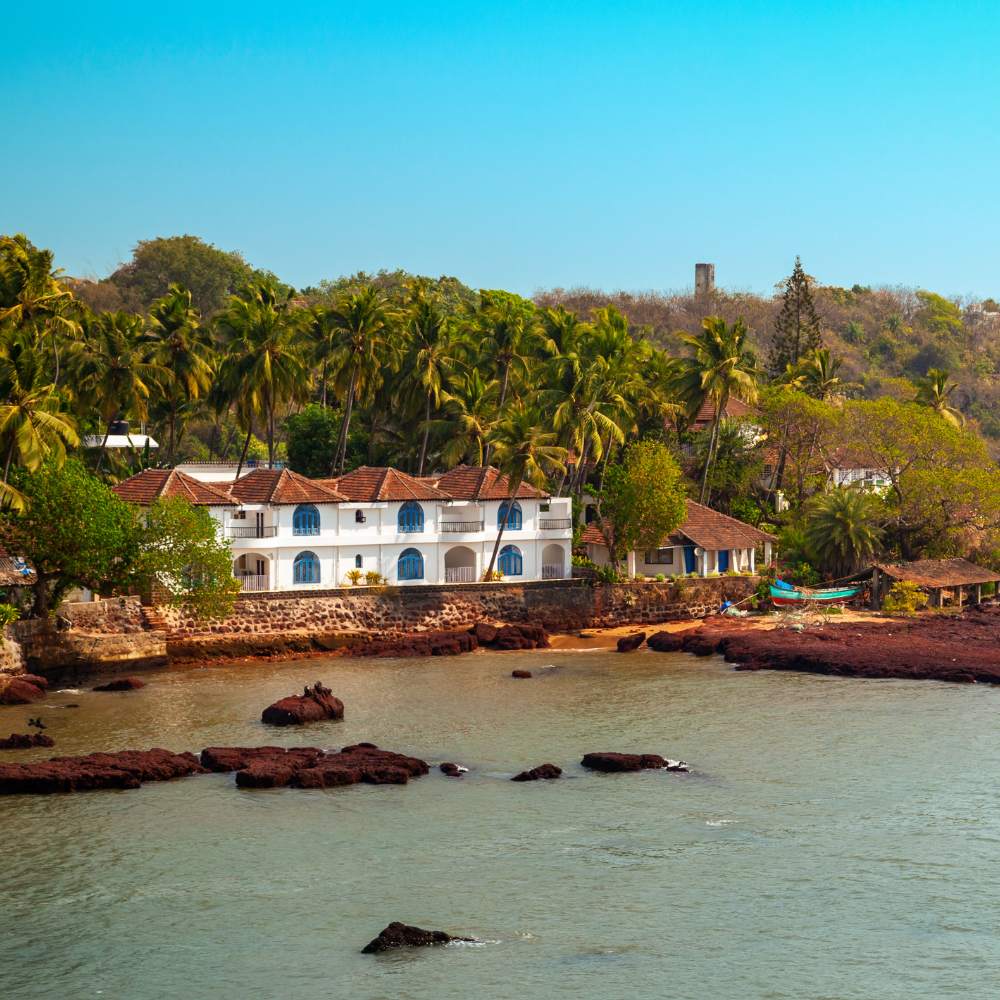
North Goa's luxury scene is built around a different model: restored Portuguese-era villas converted into boutique stays, concentrated in Assagao, Siolim, and Anjuna.
These properties tend to be smaller, often two to six bedrooms with a private pool, and suit travellers who want architectural character, proximity to the state’s strongest restaurant and cafe scene, and the option to explore on foot.
The beaches along this stretch (Ashvem, Mandrem, Morjim) are quieter than the well-known party beaches at Baga and Calangute, which most luxury travellers avoid entirely.
Best for: travellers who want a design-forward base with easy access to dining, boutiques, and day trips.
The overcrowding factor
Goa's record 1.08 crore arrivals in 2025 have concentrated heavily in a few North Goa locations.
Baga and Calangute are now widely reported by both visitors and the Goa government as the most overcrowded beaches in the state, with heavy traffic, littered shorelines, and a dense stretch of vendors.
Anjuna and Vagator become similarly packed during peak season and around New Year, when the state can receive an estimated 500,000 visitors over a single weekend.
In response, the state tourism department has explicitly shifted toward what it calls regenerative tourism, fewer, higher-spending visitors rather than maximum footfall.
Where to stay to avoid the crush: Assagao, Siolim, and the Ashvem-Mandrem stretch sit a short drive from the party belt but remain comparatively calm even in peak season, which is why the villa scene has concentrated there.
In South Goa, Palolem itself has become busier in recent years. Agonda (immediately to its north) and Patnem (just to its south) offer the same crescent-bay character with noticeably fewer crowds.
What Is Fontainhas and Why Does It Matter for Heritage Travellers?
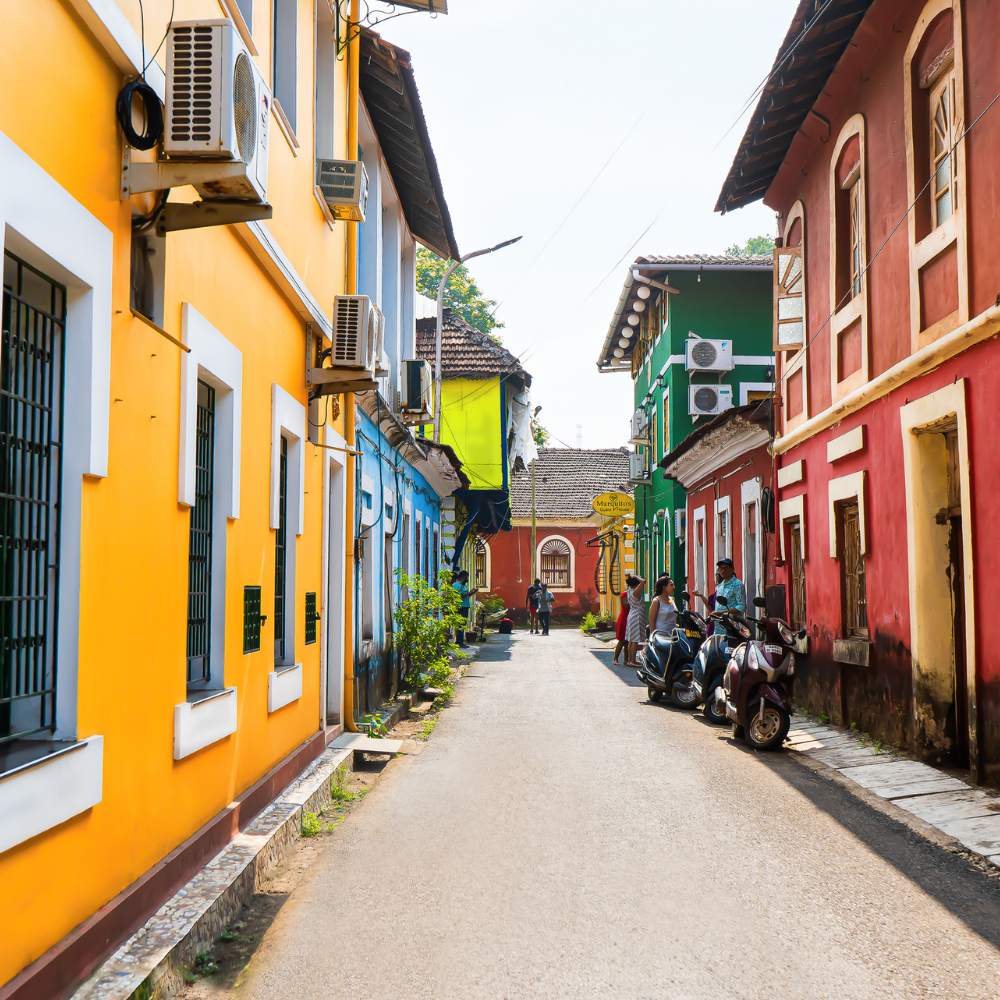
Fontainhas is the old Latin Quarter of Panjim (Panaji), Goa's capital, and one of the best-preserved Portuguese-era residential neighbourhoods in Asia.
Narrow lanes are lined with 18th- and 19th-century houses painted in ochre, blue, and red, with overhanging balconies, terracotta tile roofs, and azulejo tilework.
It remains a living neighbourhood rather than a museum district; residents still occupy many of the houses, and this has created genuine tension.
A growing tension worth knowing about
Through 2024, 2025, and into 2026, Fontainhas and the adjoining Sao Tome ward have repeatedly raised concerns about photography-driven tourism: visitors entering private gardens and verandahs, flying drones toward homes, and posing in doorways for social media.
Some households have put up 'No Photography' signs; Panjim police have at times deployed additional patrols in the area.
How to visit responsibly: treat Fontainhas as a residential neighbourhood rather than a backdrop. Don't enter private property. Don't photograph residents or their homes without permission. Visit earlier in the day, when the lanes are quieter.
The quieter alternative: South Goa's heritage mansions
Travellers wanting the same Indo-Portuguese architecture without this tension have a genuine alternative in rural South Goa.
Loutolim and Chandor, roughly 30 to 40 minutes from Margao, are home to grand colonial-era mansions set in quiet village surroundings rather than dense urban lanes:
- Figueiredo Mansion in Loutolim (built 1590), privately owned, open to visitors by arrangement, and also operating as a heritage homestay
- Braganza House in Chandor, one of the grandest Indo-Portuguese homes in Goa, with its East and West wings still occupied by descendants of the original family
Old Goa: the UNESCO core
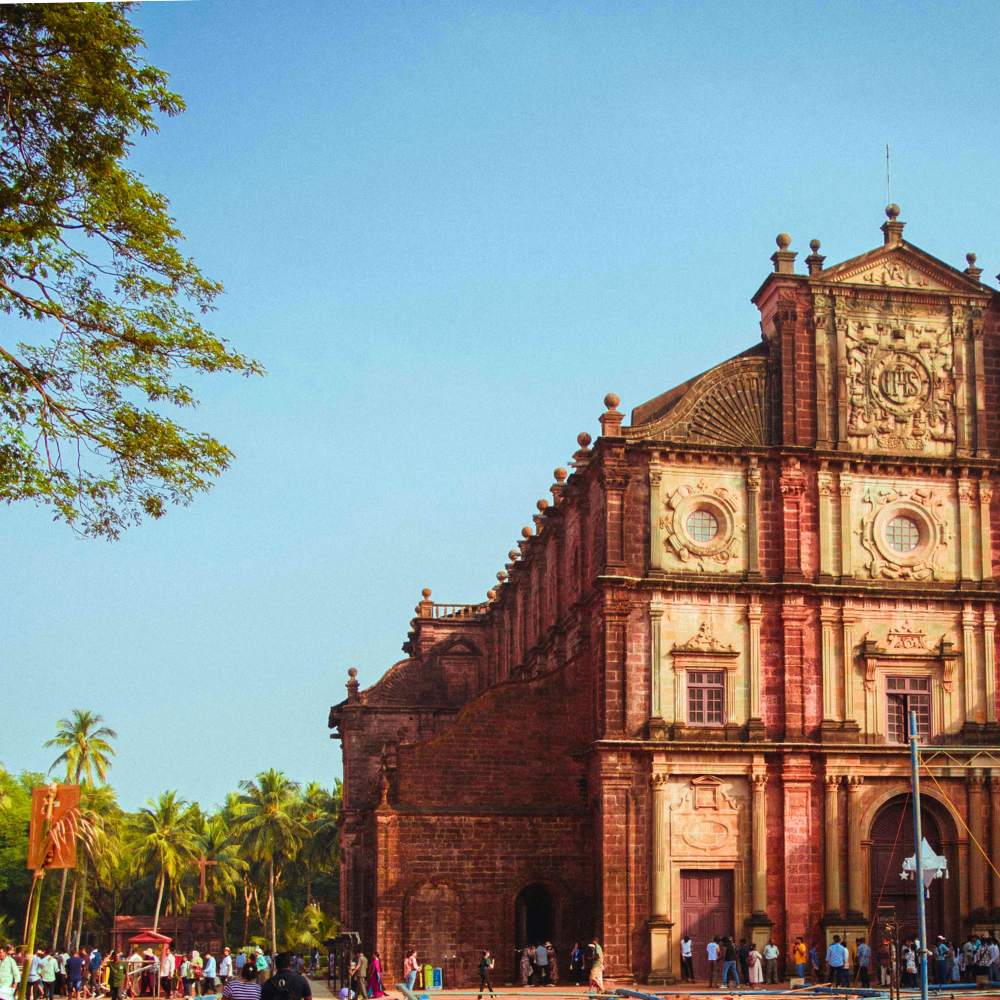
Old Goa, approximately 10 km from Panjim, holds the core of the UNESCO-listed Churches and Convents of Goa (inscribed 1986).
The Basilica of Bom Jesus, built between 1594 and 1605, houses the remains of St Francis Xavier and is one of the best-preserved examples of Baroque architecture in Asia.
The Se Cathedral, also in Old Goa and among the largest churches in Asia, dates from the same broader era.
Practical tip: both sit within a short walk of each other and form the centrepiece of a half-day heritage itinerary from either North or South Goa. Visit in the early morning, before coach tour groups arrive.
What Makes Goan Cuisine Distinct?
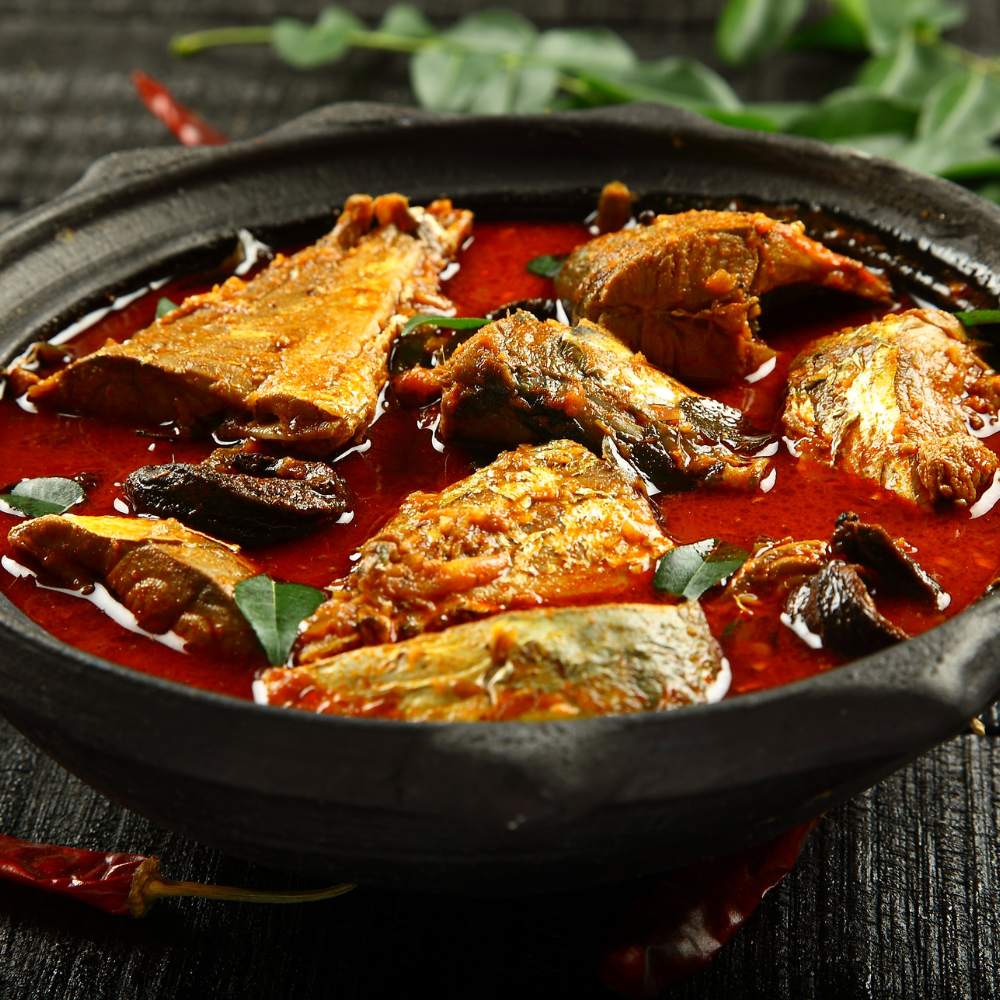
Goan cuisine sits at the intersection of Konkani coastal food traditions and 450 years of Portuguese culinary influence; a combination found nowhere else in India.
Signature seafood dishes
- Prawn balchao — preserved prawns in a tangy, fiery red masala
- Recheado-stuffed fish — typically pomfret or mackerel, butterflied and filled with a spiced red paste
- Crab xec xec — crab in a roasted coconut and spice gravy
The Portuguese-Goan Catholic tradition
- Pork vindalho — a garlic-and-vinegar marinated pork curry. This gave English its 'vindaloo,' but the original is closer to a sharp, tangy stew than the fiery version found in UK curry houses.
- Sorpotel — a slow-cooked spiced pork dish, traditionally a Christmas staple
Feni: Goa's heritage spirit
Feni is distilled from cashew apples or coconut palm sap.
The cashew version received Geographical Indication (GI) status in 2009; the first Indian spirit to do so. Coconut feni producers are still pursuing the same recognition.
Beyond the restaurant
For luxury travellers, the food experience extends well beyond restaurants:
- Spice plantation tours near Ponda — combine a working plantation walk with a traditional Goan lunch.
- Private Goan cooking classes — run by several heritage properties in both North and South Goa, often led by the in-house chef
When Is the Best Time to Visit Goa?
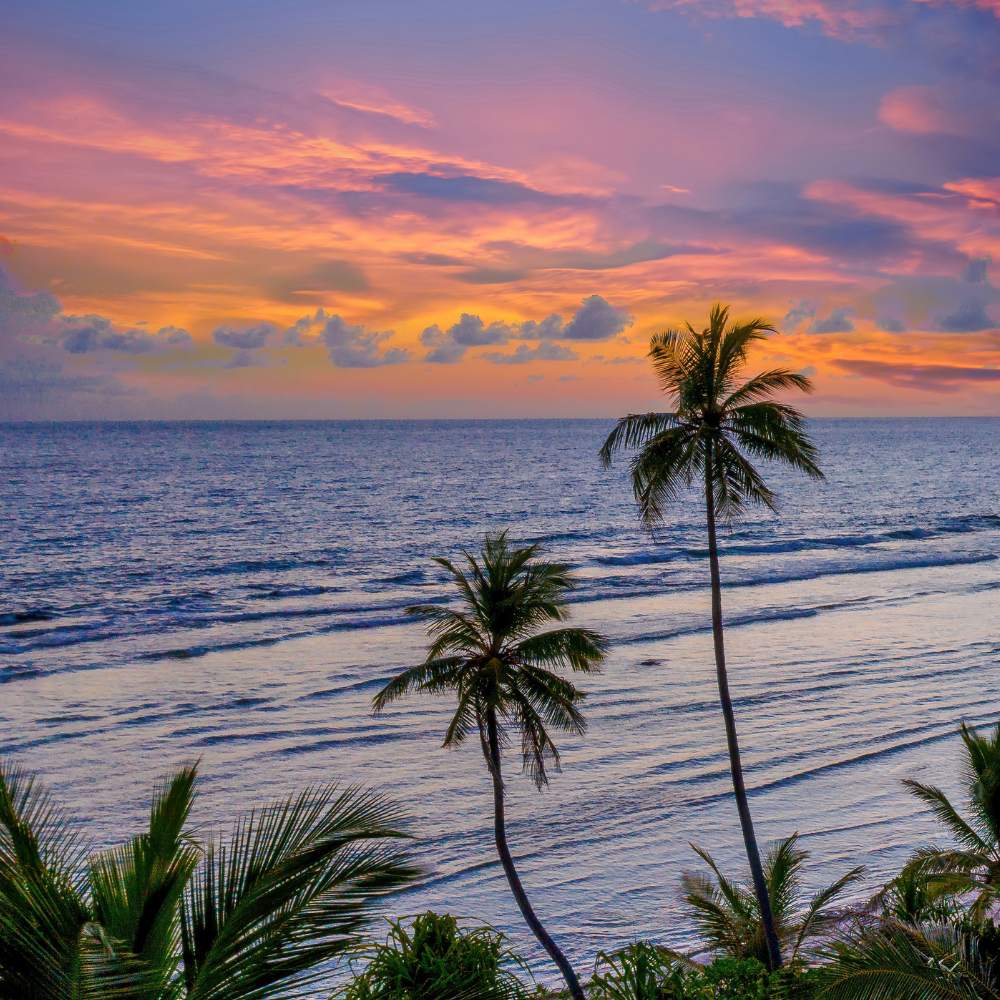
November to February — peak season
Dry, sunny, and the most comfortable weather of the year, with daytime temperatures around 28 to 32°C.
Book early: December and the New Year period are the absolute peak. Luxury resorts and villas should be booked 3 to 4 months ahead.
October and March — shoulder season
Warmer and slightly more humid, but with significantly fewer visitors and lower rates.
A strong choice for travellers prioritising value and quiet.
June to September — monsoon
Heavy rainfall and rough seas make beach swimming inadvisable, and many beachfront shacks close for the season.
Several heritage and inland luxury properties remain open at significantly reduced rates, with the Western Ghats and spice plantations at their most lush.
How to Reach Goa
By air
Goa now has two airports.
- Dabolim Airport (IATA: GOI) — near Vasco da Gama — closer to South Goa resorts
- Manohar International Airport (Mopa, IATA: GOX) — opened in 2023; now handles the majority of Goa's international flight movements
Both airports have domestic connections from Delhi, Mumbai, and Bengaluru. Seasonal direct charter and scheduled international flights serve the UK and European markets, particularly in peak season.
From the UK
Seasonal direct flights operate to Goa during the peak winter months. Outside this window, travellers typically connect via Delhi or Mumbai.
By rail
Madgaon (Margao) Junction in South Goa is the main railway station, with connections to Mumbai (approximately 10 to 12 hours) and onward to Kerala along the Konkan Railway.
Combining Goa with Other Destinations
Goa pairs naturally with two onward routes for travellers, building a longer Indian itinerary.
Hampi, in northern Karnataka, is the ruined capital of the 14th- to 16th-century Vijayanagara Empire and a UNESCO World Heritage Site. It is reachable by overnight train from Goa and offers a complete contrast: boulder-strewn landscapes and temple ruins rather than coastline.
Kerala, to the south, connects via the Konkan Railway and adds backwater houseboat stays and Western Ghats tea country to a beach-and-heritage circuit.
A 10 to 14-day itinerary combining Goa with either destination is achievable without excessive internal travel time.
Frequently Asked Questions:
Is South Goa or North Goa better for a honeymoon?
Both work well, but for different reasons.
South Goa's large beachfront resorts offer all-inclusive privacy, spa facilities, and direct beach access ideal for couples who want to stay within a single property.
North Goa's villa scene in Assagao and Siolim suits couples who want a private pool villa with easy access to Goa's best restaurants and boutiques.
Palolem in South Goa is a popular middle ground for its boutique, low-rise character.
How many days do you need in Goa?
Four to five nights is sufficient for a single-base luxury beach stay.
Seven to ten days allow time for a half-day heritage excursion to Old Goa and Fontainhas, a visit to a spice plantation, and exploration beyond the immediate resort area without feeling rushed.
Which airport should I fly into for Goa?
Choose based on where you are staying.
- Dabolim Airport (GOI) — more convenient for South Goa resorts in Cavelossim, Varca, Benaulim, and Palolem
- Manohar International Airport (Mopa, GOX) — closer to Assagao, Siolim, and Anjuna, and increasingly handles a larger share of international flights.
Is Goa a good value compared to the Maldives or other beach luxury destinations?
Yes, particularly for private villa stays.
A multi-bedroom private pool villa with staff in North Goa typically costs a fraction of an equivalent overwater villa in the Maldives, while also offering access to restaurants, markets, and heritage sites that an isolated atoll resort cannot.
The trade-off: Goa's luxury experience is built as much around exploration and dining as it is around the resort itself.
What should international visitors know before travelling to Goa?
- Most international visitors require an Indian e-Visa, which can be applied for online in advance.
- Drink only bottled or filtered water.
- Goa's beaches have variable currents outside designated swimming zones; check flag warnings and lifeguard postings, particularly during monsoon and shoulder months.
- Travel insurance covering medical evacuation is recommended for all international visitors to India.