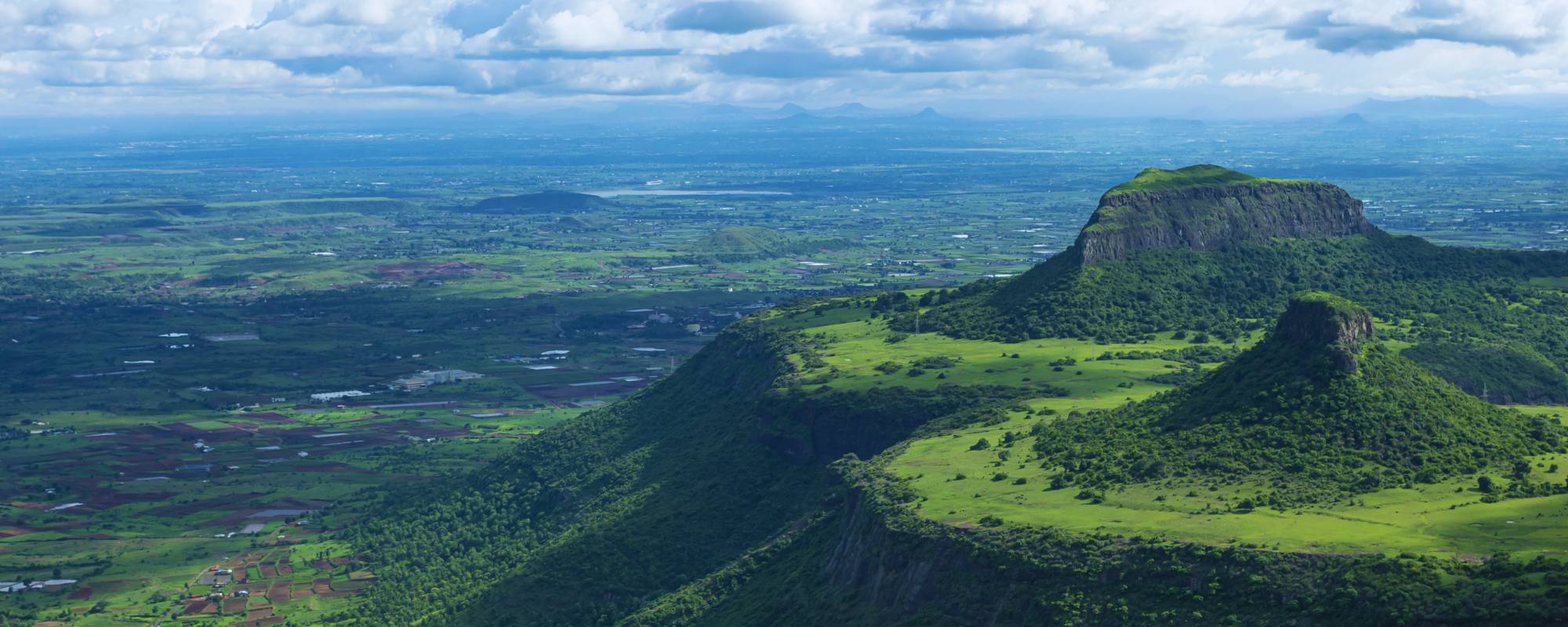
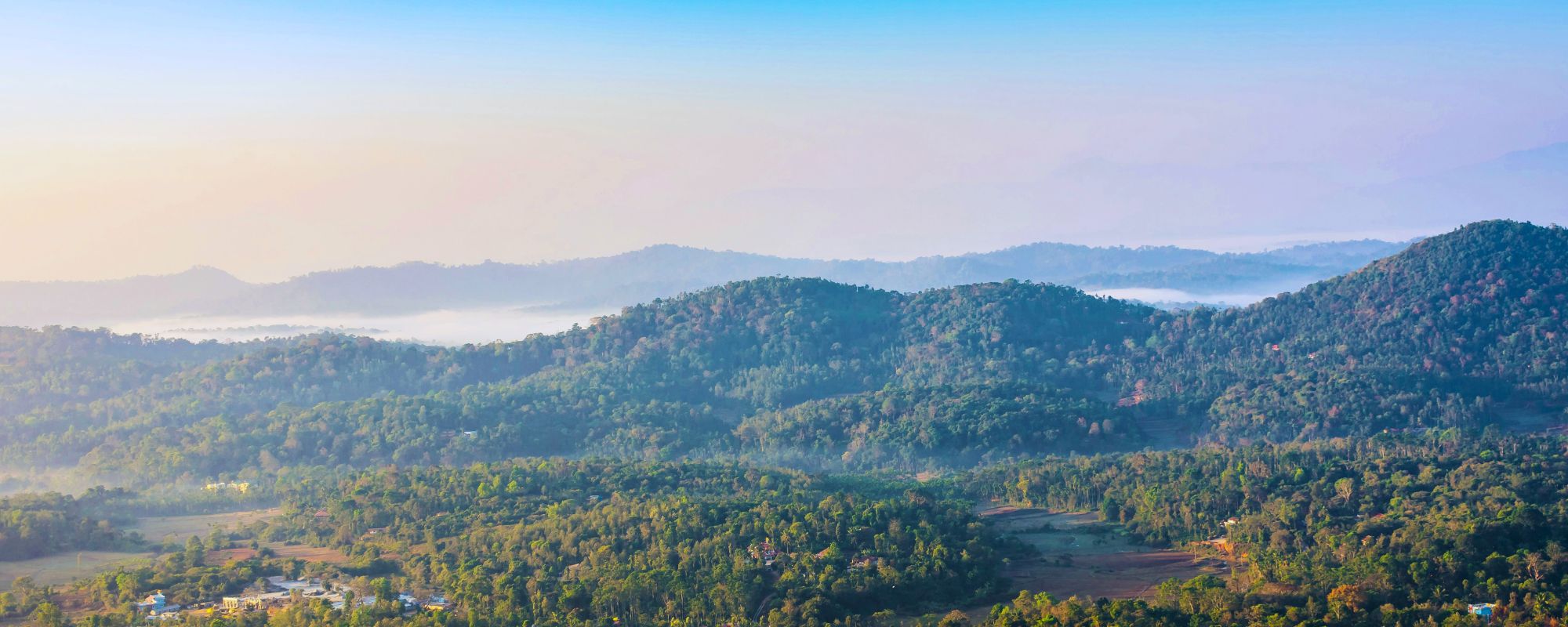
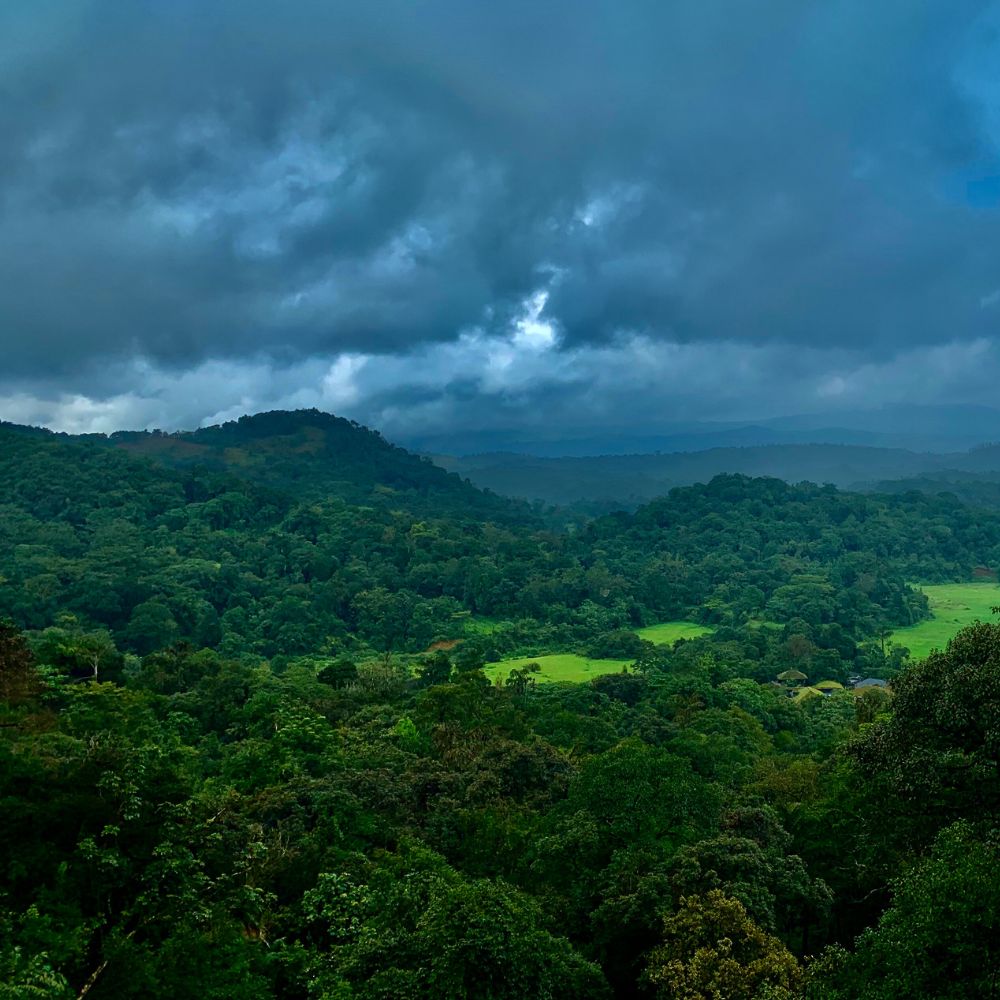
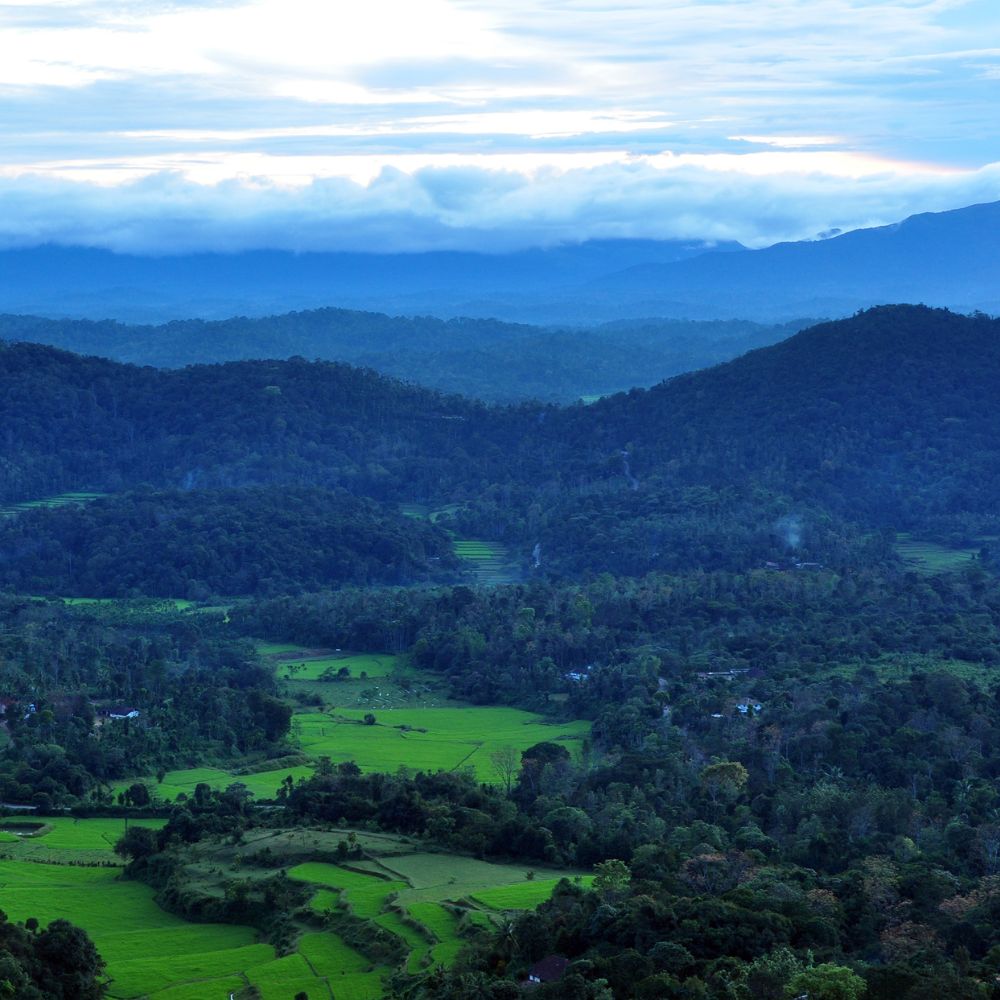
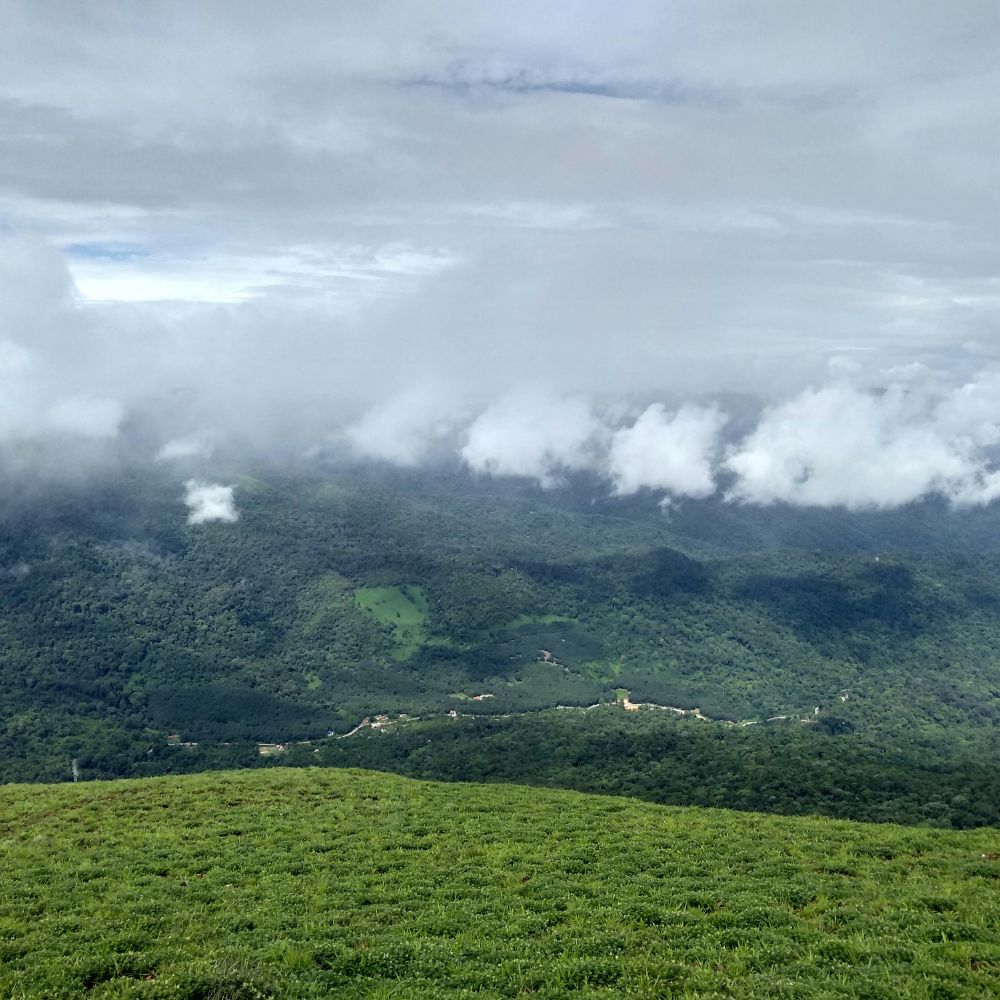
Coorg, officially the Kodagu district of Karnataka, is India's coffee country, and it is also home to one of the country's most distinct and least understood communities. Set in the Western Ghats between Mysore and the Malabar coast, this small hill district produces roughly a third of India's coffee, is the birthplace of the Kaveri River, and is home to the Kodavas, a martial community with their own language, dress, and customs unlike anywhere else in India.
For international travellers, Coorg offers a rare combination: genuine working coffee estates converted into boutique stays, cool Western Ghats climate, and a culture worth understanding on its own terms rather than as a footnote to South India.
Coorg at a Glance
- Main gateway: Mysore, roughly 120 km from Madikeri; Bengaluru, roughly 250 km, for those flying internationally
- Best time to visit: October to March, cool and dry; avoid the heaviest of the June to September monsoon unless visiting specifically for the lush post-rain landscape
- Minimum recommended stay: 3 to 4 nights to properly settle into estate life rather than rush between sights
- Coffee production: Kodagu district alone produces roughly a third of India's total coffee output, more than any other district in the country
- Signature experiences: A coffee estate homestay, Kodava cuisine, Abbey Falls, Talakaveri (the Kaveri's source), and Madikeri's fort and old town
Who Are the Kodavas, and Why Is Their Culture So Distinct?
The Kodavas, also called Coorgs, are the dominant community of Kodagu, though they make up only around 15 to 20 per cent of the district's population. What sets them apart from almost every other community in India is their martial tradition and the specific legal recognition it carries: Kodavas are one of the few communities in the country permitted to possess firearms without a licence, a right the courts have upheld as integral to their cultural identity. This is not a symbolic distinction.
The community has produced some of India's most senior military leaders, including Field Marshal K.M. Cariappa and General K.S. Thimayya, both of whom led the Indian Army, and a disproportionate number of Kodavas continue to serve in the armed forces today.
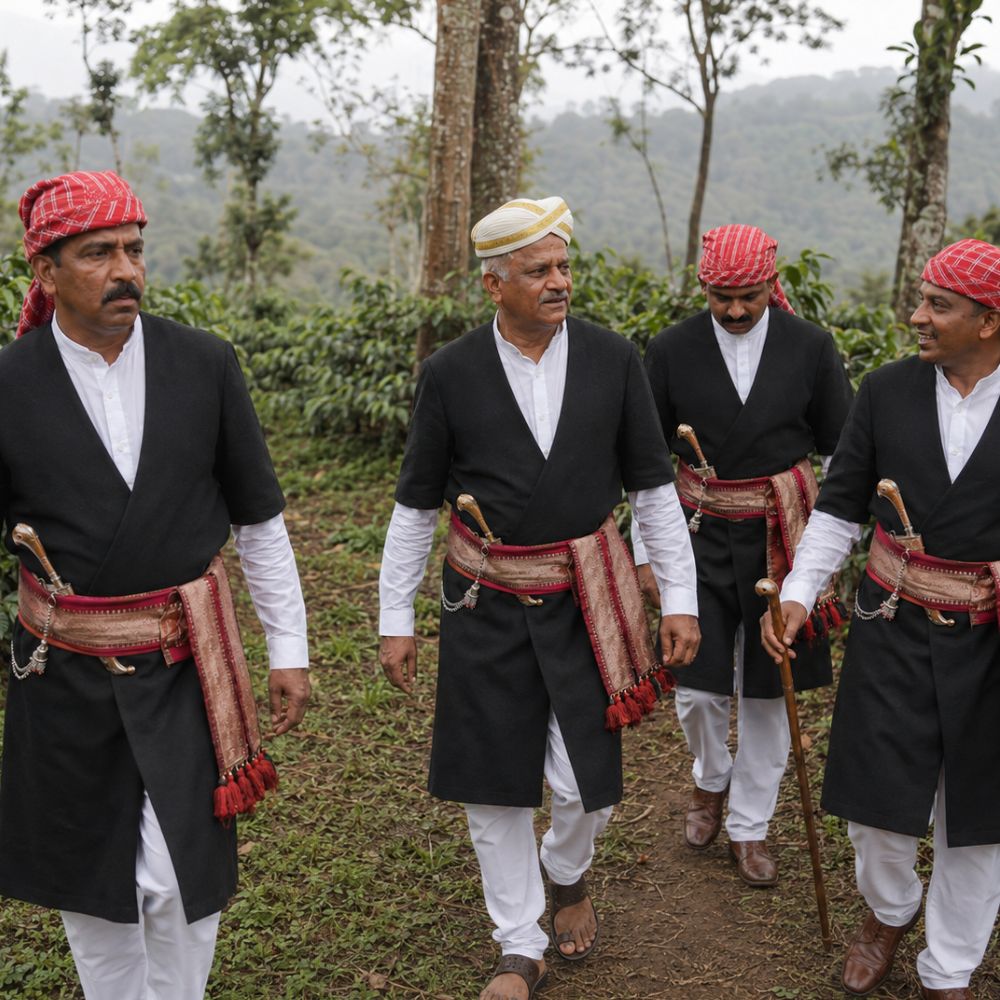
The Kodavas speak Kodava Takk, a language unique to the community and now considered endangered, and their customs diverge from mainstream Hinduism in several notable ways: Hindu priests do not typically officiate Kodava marriage rites, ancestor worship sits alongside temple worship, and there is no dowry system. Traditional dress remains distinctive and is still worn at weddings and festivals: men in a knee-length black coat called a kupya, with a red-and-gold sash and an ornate ceremonial dagger; women in a sari draped and pinned in a style unique to the community.
The academic study of Kodava society by sociologist M.N. Srinivas in the 1940s, later published as Religion and Society Among the Coorgs of South India, remains one of the foundational texts of Indian sociology and is worth knowing about for any traveller genuinely interested in the culture rather than only the coffee.
What Makes Coorg's Coffee Estates Worth Visiting?
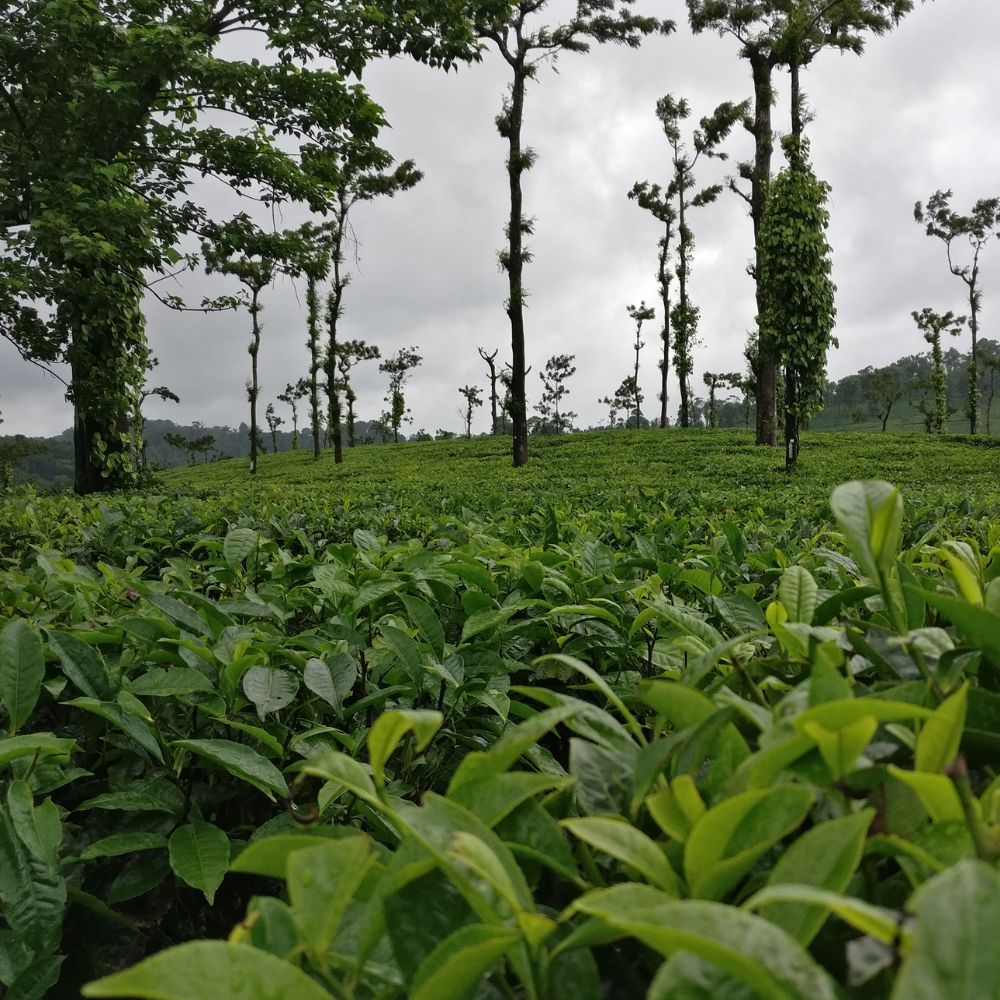
Coffee seeds first reached the region in the 17th century, according to local tradition carried by the Sufi saint Baba Budan from Yemen. Still, it was only after the British annexed Coorg in 1834 that coffee became a large-scale plantation crop, with the first major estates opened in the 1850s. It has remained the backbone of the district's economy ever since, grown as shade coffee, Arabica and Robusta both, under a forest canopy alongside pepper, cardamom, and orange trees rather than in open plantation rows. This shade-grown method, largely unchanged for generations, is part of why a Coorg estate visit feels closer to walking through managed forest than an industrial farm.
What began in the 1990s as a way for planters to supplement falling coffee prices by opening spare rooms on working estates to travellers has since matured into a distinct category of boutique luxury: multi-generational family estates converted into intimate homestays and small luxury retreats, most concentrated around Madikeri, Siddapur, and Virajpet. A stay on a working estate typically includes a guided walk through the plantation explaining the coffee cycle from flowering to harvest, a cupping or tasting session, and home-style Kodava meals using produce grown on the property itself. This is a genuinely different model from that of a resort located near coffee country, and travellers seeking an authentic experience should look specifically for a working estate rather than a hotel merely styled around a coffee theme.
What Should You Eat in Coorg?
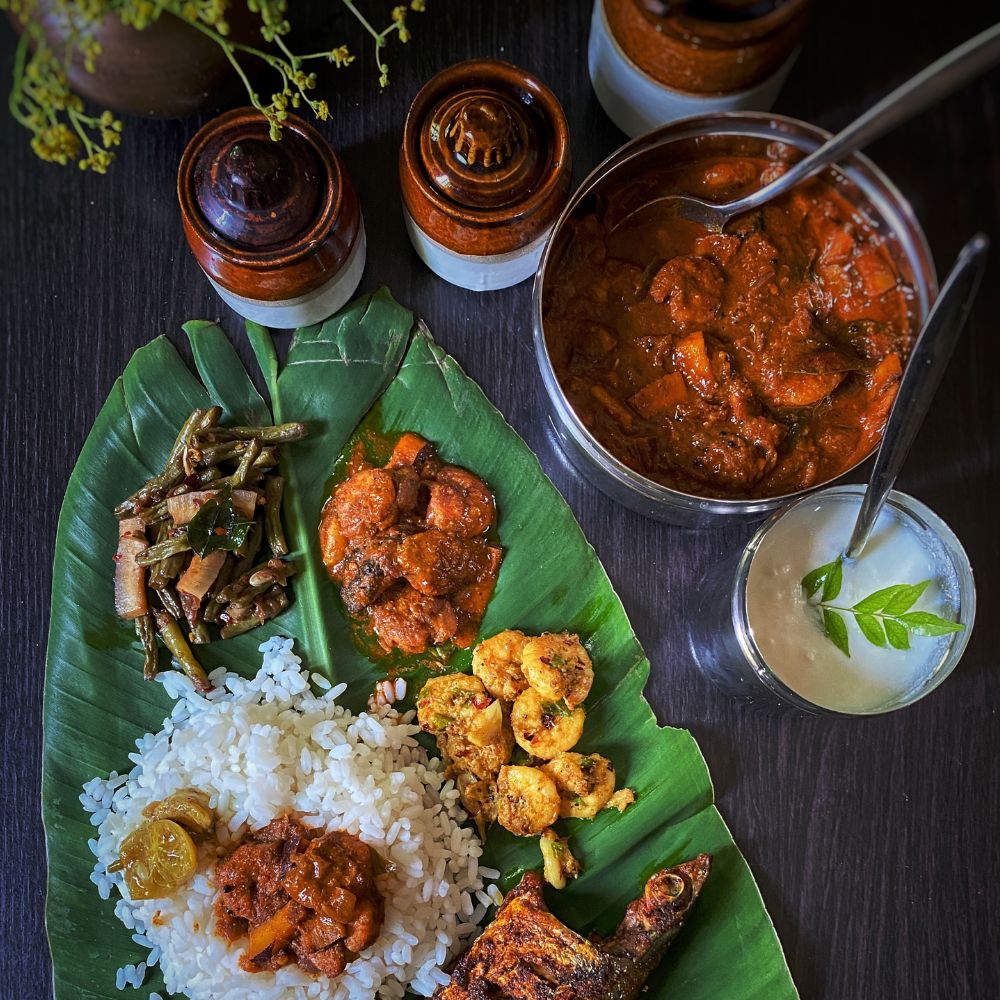
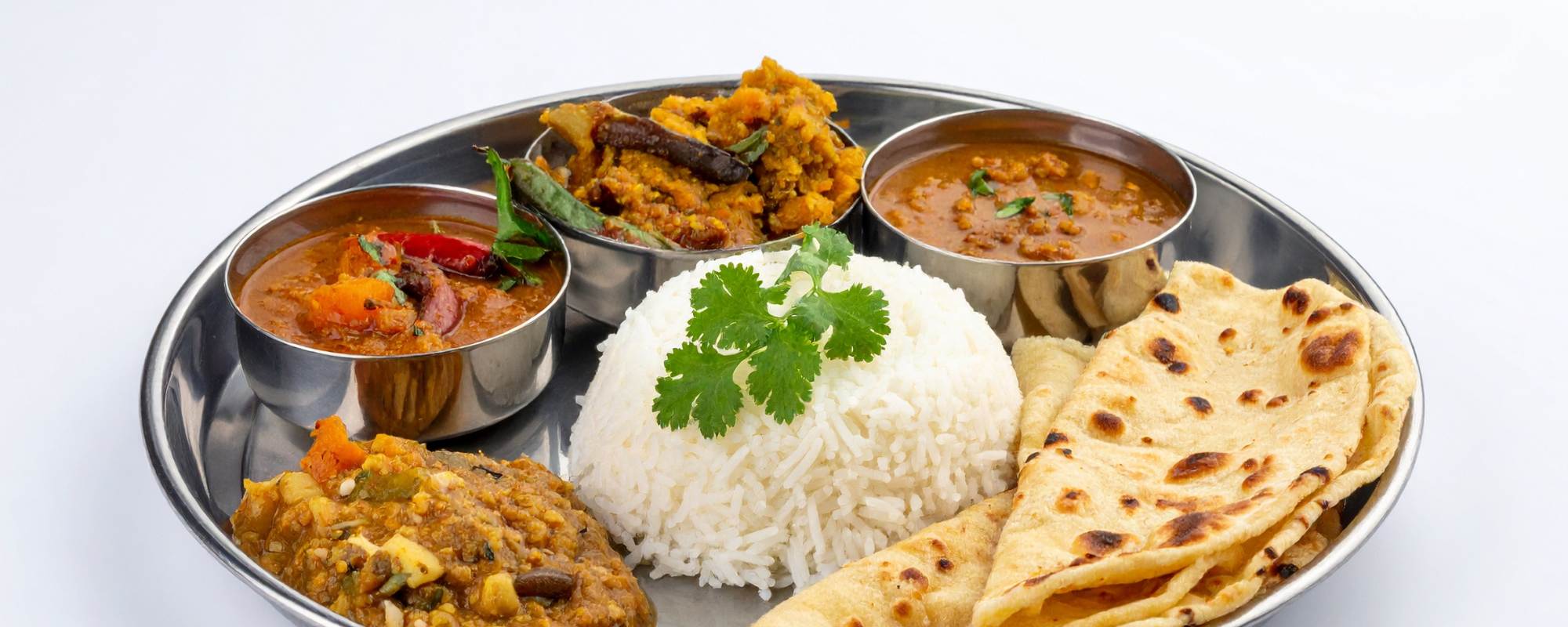
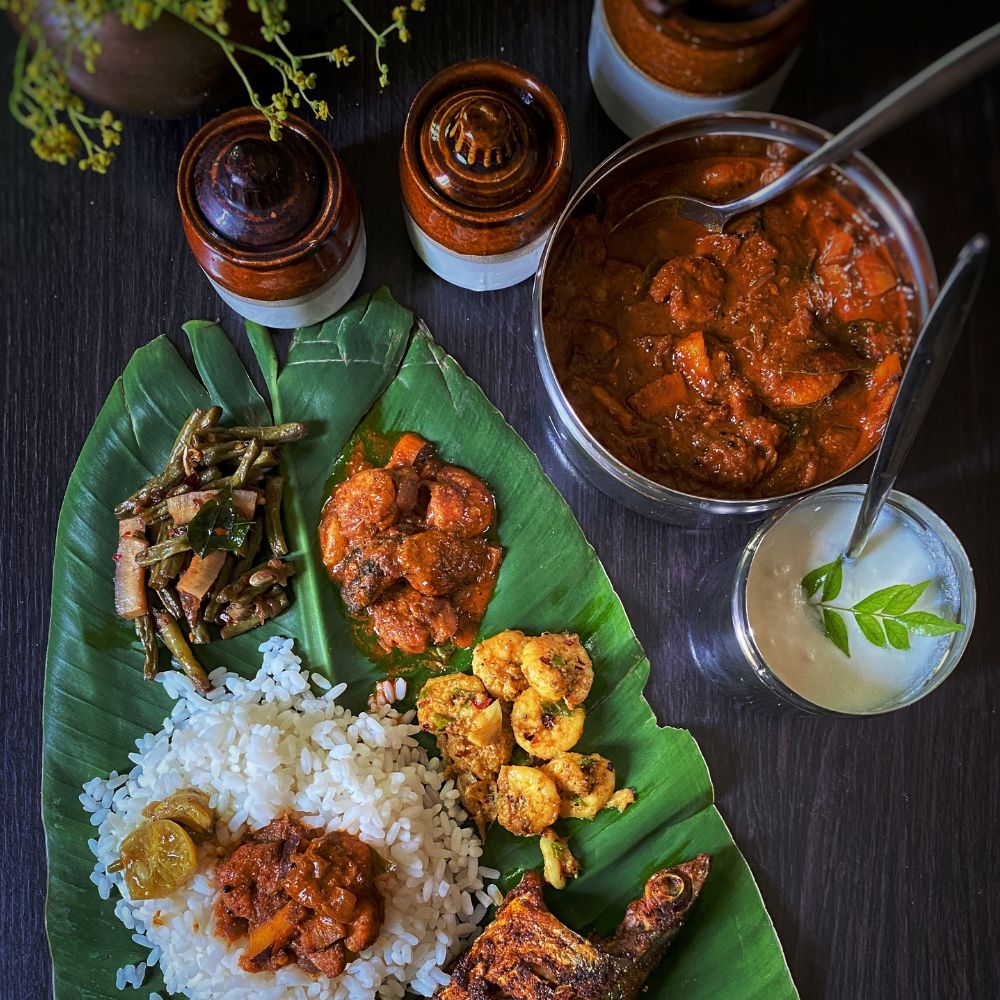
Kodava cuisine is distinct from the rest of Karnataka and built around pork, rice, and the region's own souring agent, kachampuli, a dark vinegar made by slow-boiling the ripe fruit of Garcinia gummi-gutta, a wild tree related to kokum found across the Western Ghats, into a thick, tart concentrate. The fruit itself grows well beyond Coorg, but the vinegar-making tradition and its central place in the region's cooking are distinctly Kodava. Pandi curry, pork slow-cooked with kachampuli and a roasted spice blend until dark and richly flavoured, is the dish most associated with the region and is traditionally served at important feasts.
Kadambuttu, steamed rice dumplings, are the classic accompaniment, alongside akki roti (rice flatbread) and a range of bamboo shoot and jackfruit preparations that make use of the forest surrounding most estates. Coffee itself, naturally, is taken seriously here, with many estates offering their own single-estate roasts alongside the more familiar South Indian filter coffee.
Beyond the Estates: What Else Is Worth Seeing in Coorg?
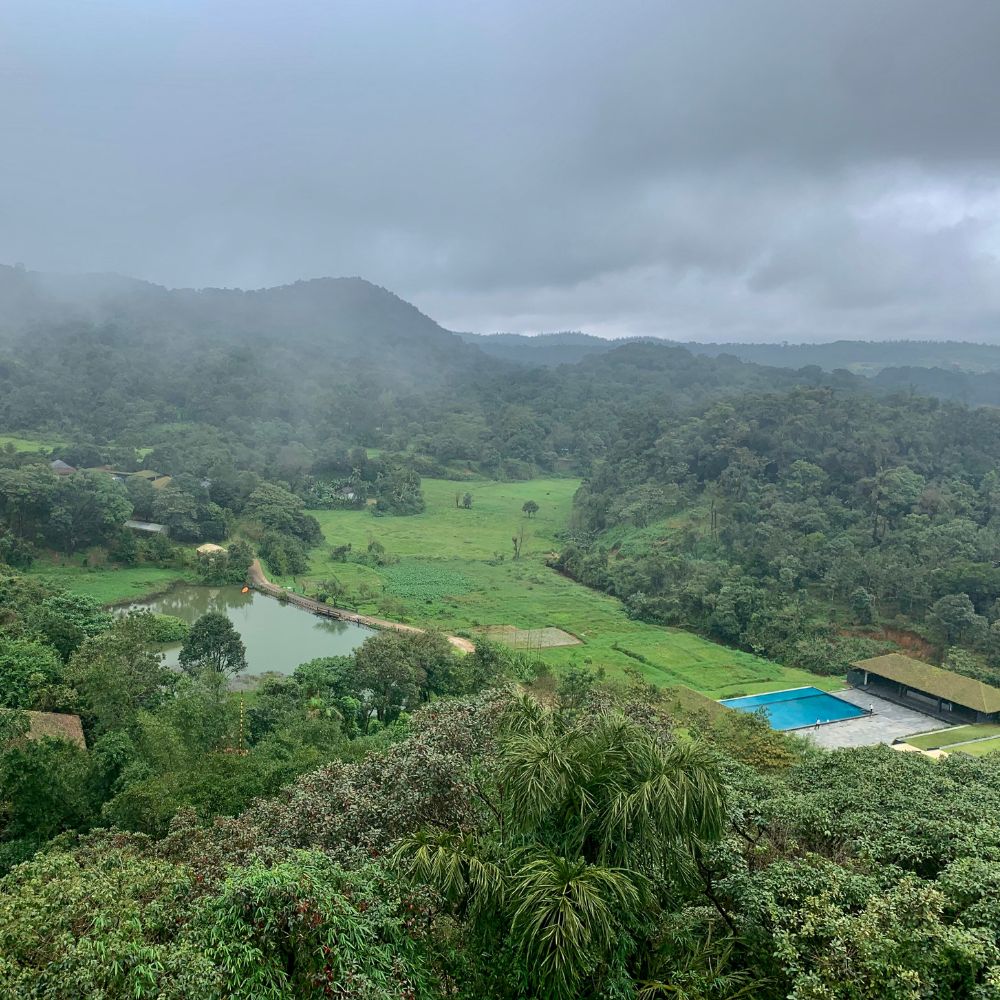
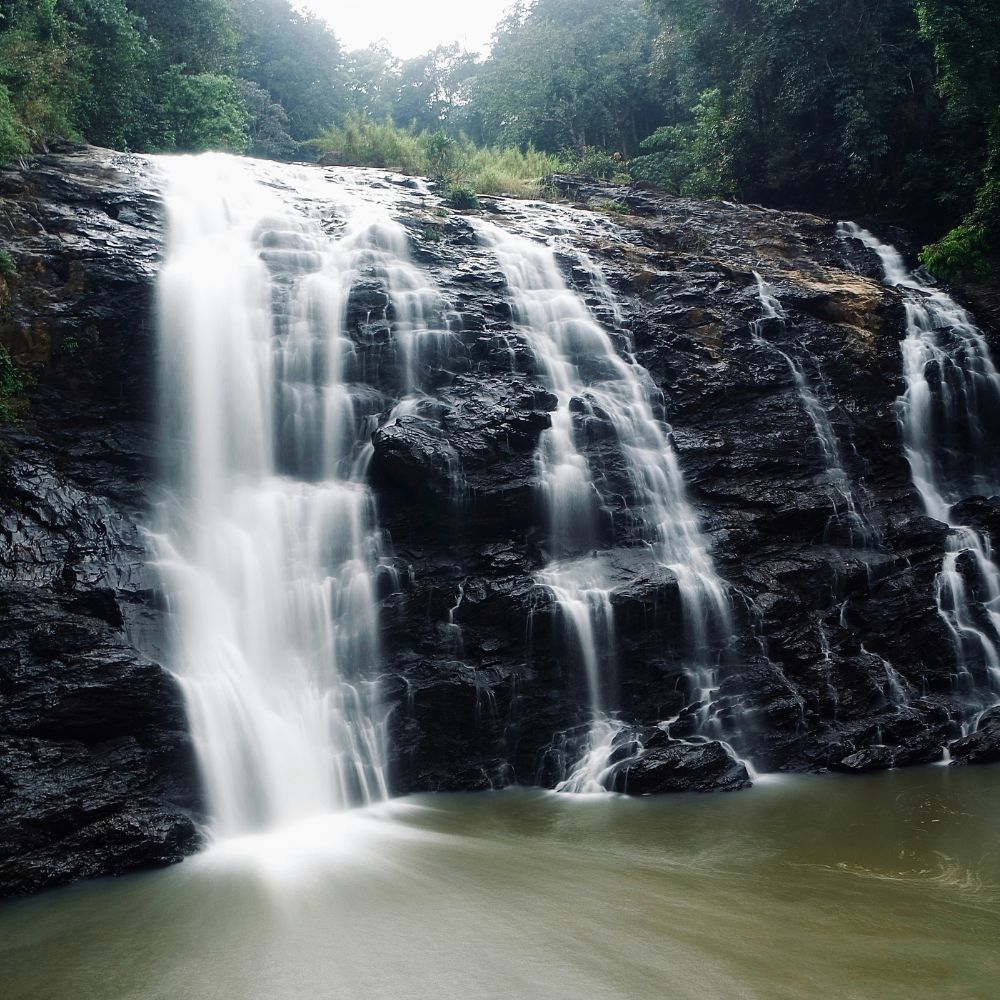
Madikeri, the district capital, sits at over 1,200 metres and is home to the 19th-century Madikeri Fort, along with the district's main markets and old colonial-era buildings; it serves as the practical base for most Coorg itineraries. Abbey Falls, a short drive from Madikeri, is a 70-foot cascade set among coffee and spice plantations and is the most visited single site in the district, best seen just after the monsoon, when the flow is at its fullest.
Talakaveri, in the hills further south, marks the traditional source of the Kaveri River, one of South India's most important rivers, and is a site of genuine pilgrimage significance as well as a scenic mountain drive. Raja's Seat, a garden viewpoint in Madikeri, was historically a favourite spot for Kodagu's former rulers to watch the sunset over the surrounding hills, and remains so today.
When Is the Best Time to Visit Coorg?
- October to March (recommended): Cool, dry weather ideal for estate walks and outdoor sightseeing, with temperatures generally comfortable throughout the day
- December to February: The coolest stretch of the year, occasionally requiring a light jacket in the early morning, and coincides with the coffee harvest at many estates
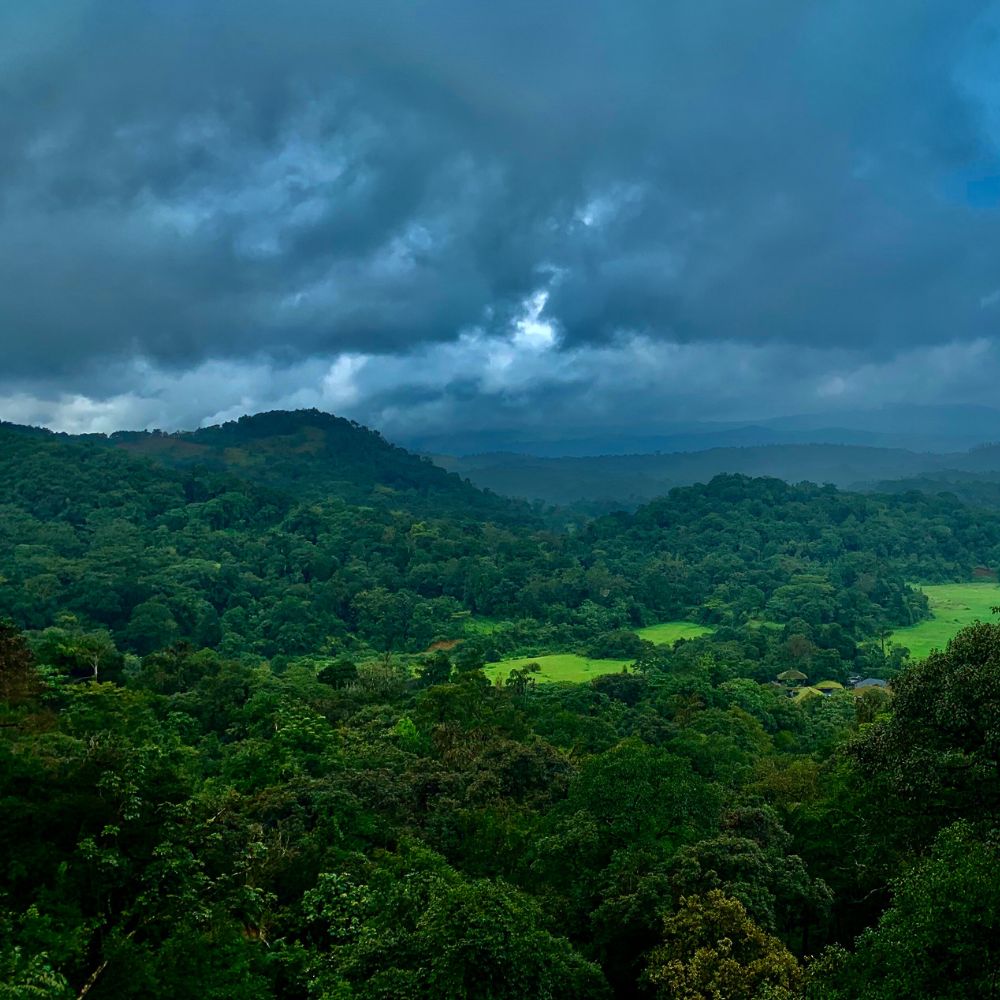
- June to September (monsoon): Heavy rainfall across the Western Ghats; the landscape turns a dramatic, saturated green and waterfalls are at their fullest, but outdoor activity is more limited, and some estate roads can be affected
How to Reach Coorg
- By air: Coorg has no airport of its own. Mysore Airport, roughly 120 km from Madikeri, is the closest with limited domestic connections; Bengaluru's Kempegowda International Airport, roughly 250 km away, offers far greater domestic and international connectivity and is the more practical gateway for most travellers.
- By road: A private car transfer from Bengaluru takes approximately 5 to 6 hours; from Mysore, roughly 3 hours.
- By rail: Mysore is the nearest major railway station with good national connectivity; onward travel to Coorg is by road.