



A destination management company, or DMC, is the local partner that plans and runs your programme on the ground: venues, transport, vendors, permits, guides, and delegate logistics. Choosing one in India is a procurement decision, not a travel one, and the twelve questions below separate a company that holds its own supplier contracts from one that quietly resells someone else's. Each has a verifiable answer. Ask them before the deposit, not after.
TL;DR
- Ask who holds the vendor contracts. Many "DMCs" broker to a third party and add a margin. That changes who is accountable at 2 am.
- Verify the legal entity yourself. The company number, GST number, and the name on the contract should all match, and all three are publicly verifiable in India.
- Ministry of Tourism recognition is voluntary, so its absence is not disqualifying. But the claim is listed in a public government directory, so if you cannot find it there, that's a red flag.
- IATA and TIDS are not the same thing. TIDS is an identifier, not an accreditation and not financial protection.
- Get the final-numbers deadline in writing before you sign. It is the single clause that most often costs money on a live programme.
- Insist on a technical rehearsal in the actual room, not a spec sheet. Untested AV is one of the four most common failures on an India event.
- Ask about GST and withholding up front. For an overseas payer, Indian GST is usually a cost, not a recoverable credit.
- Ask for two programmes that went wrong. A DMC that cannot name one either hasn't run enough events or isn't being straight with you.
A tour operator sells you a trip. A DMC runs your event. Our MICE and events page sets out what that involves, and this piece sets out how to test any provider against it, including us.
1. Do you hold the supplier contracts, or are you brokering them?

This is the question that determines everything downstream. A DMC that contracts hotels, transport, AV and venues directly can move a booking, absorb a change or escalate a failure. A company that has subcontracted your programme to another Indian operator cannot do any of those things without a phone call it does not control. Ask which suppliers on your programme are direct contracts and which are subcontracted, by name. An honest answer includes both.
2. What is your legal entity, and can I verify it independently?
You need three things to match: the registered company name on the contract, the Corporate Identification Number on India's Ministry of Corporate Affairs register, and the GSTIN on the invoice. All three are publicly searchable in India at no cost. If the website, the proposal and the contract name different entities, stop and ask why before you send money. This is a five-minute check that almost nobody performs.
3. Are you recognised by the Ministry of Tourism, and under which category?
India's Ministry of Tourism runs a recognition scheme covering Travel Agents, Inbound Tour Operators, Domestic Tour Operators, Adventure Tour Operators and Tourist Transport Operators. Recognition runs for five years, is renewed by regional committees following inspection, and is administered online through E-Travel Trade Recognition. Two things matter about it. First, it is voluntary, so an unrecognised company is not automatically unsuitable. Second, recognised companies appear in a searchable public directory on the Government of India portal so that you can check any claim of recognition in under a minute. Ask for the category and the certificate number, then look it up.
4. What does your IATA or TIDS registration actually entitle you to?
These get used interchangeably in marketing, and they are not the same. A TIDS registration is a Travel Industry Designator Service code: an identifier that lets a company be recognised by airlines and suppliers. It is not an accreditation; it carries no financial bonding, and it does not protect your money. Full IATA accreditation is different and more demanding. Our guide to vetting an India tour operator covers this distinction in detail for leisure buyers, and it applies here too.
5. Who is the single named person accountable for my programme?

Not a team, not an inbox. A name, a mobile number and a deputy. Then ask the follow-up that matters: what happens if that person is unavailable on day two of a five-day programme, and who has the authority to spend money to fix a problem without asking you first. A DMC that cannot answer the second half is giving you a coordinator, not a project manager.
6. What liability insurance do you carry, and what does it cover for my delegates?
Ask for the policy type, the limit, the territory and whether it covers your delegates or only the DMC's own staff and vehicles. Ask separately whether subcontracted transport operators carry their own cover, because that is where the gap usually sits. If your organisation has a duty-of-care standard for overseas travel, send it before the proposal stage and ask which parts the DMC cannot meet. Some will tell you. That is the useful answer.
7. How will you invoice, in what currency, and what is the tax position?
Three parts. Invoice currency and who carries the exchange risk. GST treatment: in India, this means 18 per cent on venue hire, banquet packages, and hotel rooms above ₹7,500 a night, and 5 per cent on rooms between ₹1,001 and ₹7,500. And recoverability: a GST-registered recipient in India can use input tax credit at 18 per cent. Still, an overseas entity without Indian registration generally cannot recover it, so for an inbound buyer the tax is a cost rather than a credit. Also ask about withholding, because payments from some jurisdictions to an Indian vendor attract deduction at source. Take your own tax advice, and ask the DMC to model both scenarios in the proposal.
8. What is the final-numbers deadline in the venue contracts you will sign on my behalf?
Attrition is where budgets break. Every hotel and venue sets a date after which your headcount is fixed, and you pay for the delegates you contracted rather than the ones who arrived. A good DMC negotiates that date as late as it can get it and tells you what it is in the proposal. A poor one accepts the venue's default and passes the bill on. Ask for the date, the percentage, and what flexibility was actually negotiated.
9. Will you run a full technical rehearsal in the actual room?
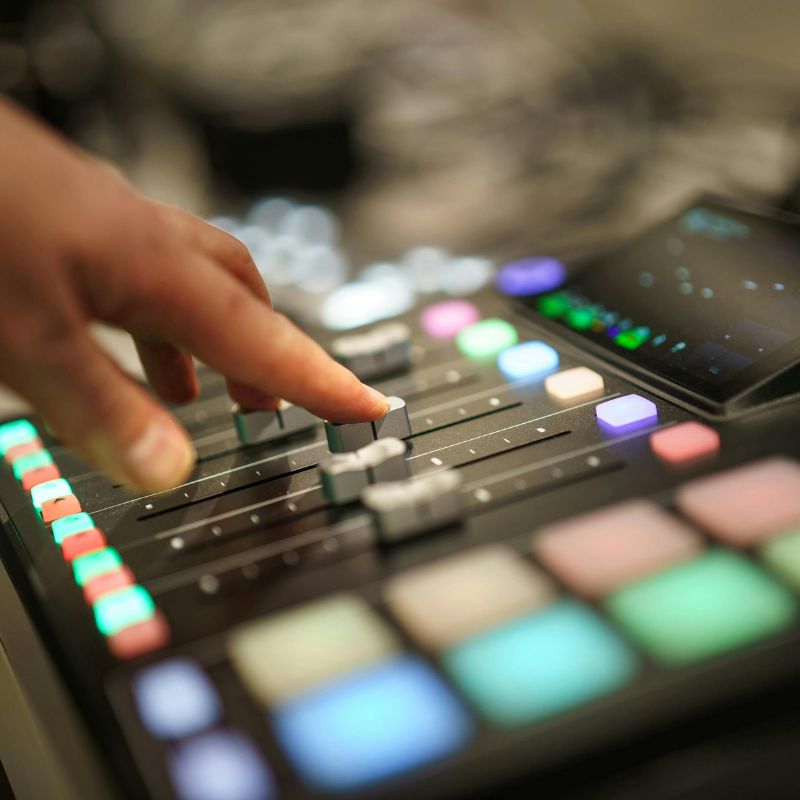
Audio-visual equipment that was specified but never tested in the real space is one of the four most common failures on an India programme, alongside delegates arriving on scattered flights, dietary requirements surfacing on the day, and numbers moving late. The fix for all four is the same: handle them in advance, or not at all. Ask specifically whether the rehearsal is in the room you are using, on the equipment you are using, with your actual deck.
10. What is your position on force majeure, blackout dates and cancellation?
Get the cancellation ladder in writing and ask what overrides it. Our own booking and cancellation policy gives 95 per cent back at 30 days or more and 70 per cent between 15 and 30, but bookings on blackout dates, which are Christmas and New Year week, are non-refundable regardless of notice. Every Indian DMC has some version of that clause because suppliers impose it upstream. What varies is whether they tell you before you sign. Also ask what happens on a monsoon washout, a landslide closure or a venue losing its licence.
11. How will you handle my delegates' personal data?
You will be sending passport scans, dietary and medical information, and sometimes next-of-kin details to a vendor outside your own jurisdiction. Ask where the data is stored, who has access, how long it is retained after the programme, and what happens to it if you do not rebook. If GDPR or an equivalent binds your organisation, ask for that in the contract rather than assuming it.
12. Tell me about two programmes of my size that went wrong.

The last question is the one that tells you the most. Every operator who has run enough events has a flight cancellation that broke a day, a property that didn't match the photographs, or a road closed by a landslide. What you are testing is whether the company will name the failure, describe what it cost, and explain what it did. A provider who says nothing has ever gone wrong is either inexperienced or not being straight with you, and both answers should move you on.
Our testimonials and public review record are one input. The answer to this question is a better one.
What Good Looks Like
A credible DMC will answer all twelve without hesitating, will tell you plainly which things it cannot do, and will put the answers in the proposal rather than in a phone call. If you want to test timing alongside capability, our month-by-month calendar and winter planning guide show which regions suit which dates, and our guide to palace, heritage, and boutique properties covers what each venue type can absorb.