Leh sits at 3,524 m, and the Leh District Administration requires every arriving tourist to complete at least 48 hours of acclimatisation before travelling to higher areas such as Khardung La or Pangong Lake. The LAHDC Leh health advisory adds the line most itineraries ignore: road travel does not assist acclimatisation at all. The CDC Yellow Book 2026 edition puts anyone who flies straight to a sleeping altitude above 3,400 m in its highest risk category for acute mountain sickness, with illness rates approaching 50%. Bout India keeps the first day in Leh free, carries oxygen in every vehicle, and does not schedule a 5,000 m pass before day three.
Almost everything in a Ladakh itinerary is negotiable. Hotels move, monasteries get swapped, drive days get reshuffled. Altitude scheduling does not, because the failure mode is not a wasted afternoon. It is an evacuation from a place where the nearest hospital with oxygen can be six hours away.
Four things decide whether a Ladakh trip works: the 48-hour rule in Leh, which is administration policy rather than forum advice; the real altitude numbers, which are higher than most first-time visitors assume; how you arrive, by air from Delhi or by road from Manali; and permits for Nubra Valley and Pangong Lake, which your Indian e-Visa does not cover.
This article sets out an operator's scheduling protocol and cites public health advisories. It is not medical advice. Speak to your own doctor before travelling to high altitude.
The 48-hour rule: how long do you need to acclimatise in Leh?

At least 48 hours in Leh before going higher. This is policy, not a suggestion.
The District Administration Leh states that all tourists arriving in Leh have to undergo at least 48 hours of acclimatisation before beginning any journey to higher-altitude areas such as Khardung La and Pangong Lake. The same notice makes clear that those two days are not lost: visitors may explore areas near Leh town.
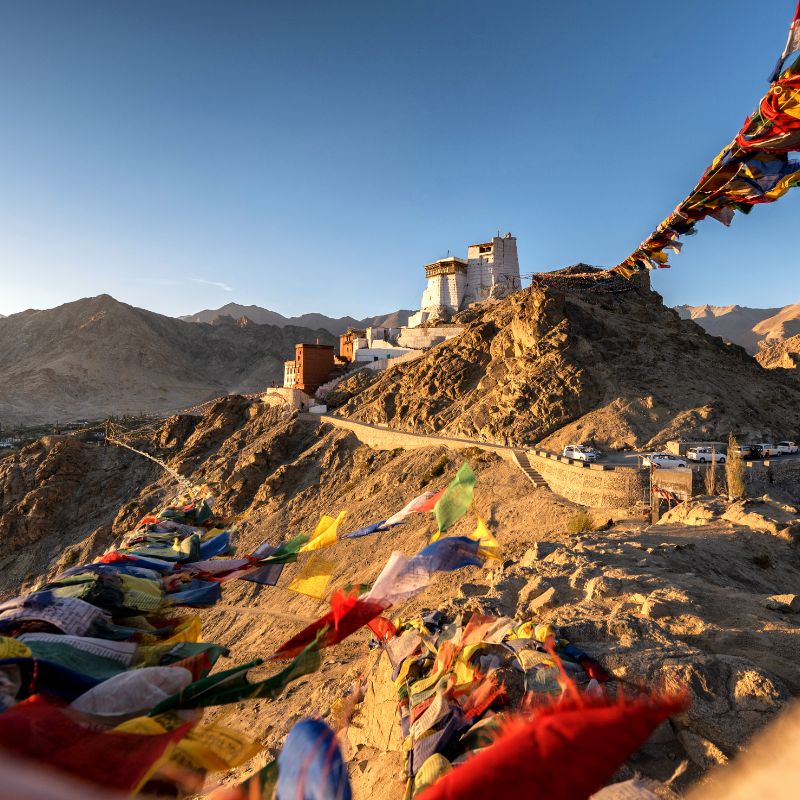
The Department of Tourism, Union Territory of Ladakh, publishes the schedule in four stages. Day one is complete rest with no sightseeing. Day two allows short, easy walks around Leh town only. Day three permits nearby attractions at similar altitude, including Shanti Stupa and Leh Palace. From day four, travellers may gain no more than 500 m per day.
Our seven-day Ladakh itinerary holds two nights in Leh, at properties such as The Grand Dragon Ladakh, and crosses Khardung La only on day three. Clients ask us to compress this more often than any other request on any route we sell. The answer is no.
Itineraries get the numbers wrong: how high is Leh, and how high is everything else?
Leh is the low point of a Ladakh trip, not the high point.
|
Place |
Altitude |
Why it matters |
|---|---|---|
| Leh town | 3,524 m (11,562 ft) | Above the CDC's 3,400 m rapid-ascent threshold on the day you land |
| Nubra Valley floor | Lower than Leh | Reached only by crossing Khardung La, so the pass governs the day |
| Khardung La | 5,359 m surveyed; 5,602 m on official signage | Two competing official figures, both above 5,300 m |
| Chang La | 5,360 m (17,585 ft) | The pass on the road to Pangong |
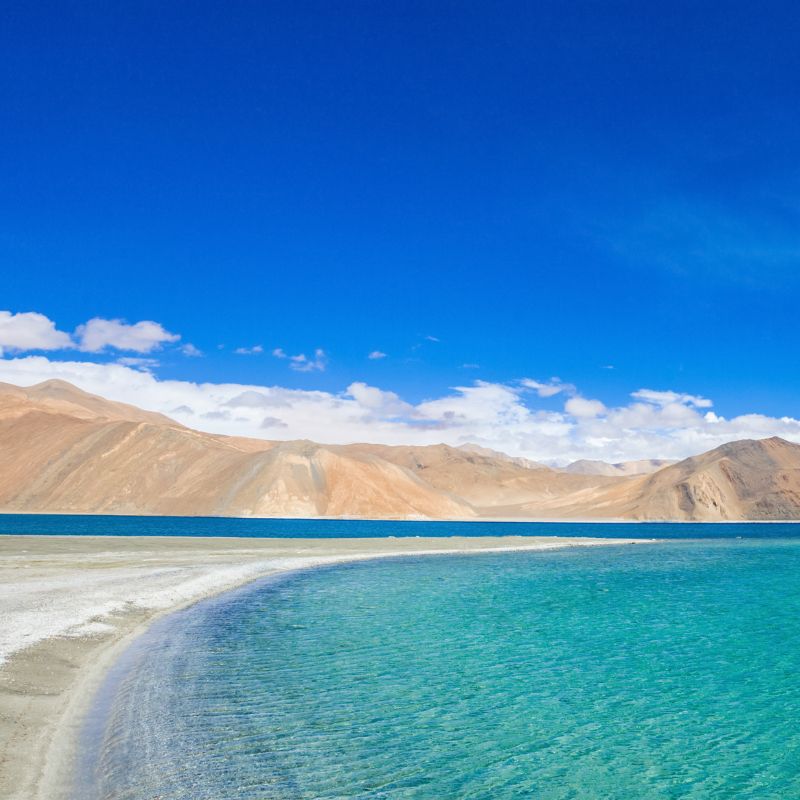
| Pangong Tso | About 4,350 m per the Leh district administration | The band where HAPE incidence rises |
Two consequences follow. Nubra being lower than Leh doesn't make it a soft day, because your body registers the 5,000 m pass in the middle. And the CDC Yellow Book records high-altitude pulmonary oedema in up to 1 in 100 travellers above 4,300 m, where Pangong sits.
The road-trip myth: does driving in from Manali acclimatise you?
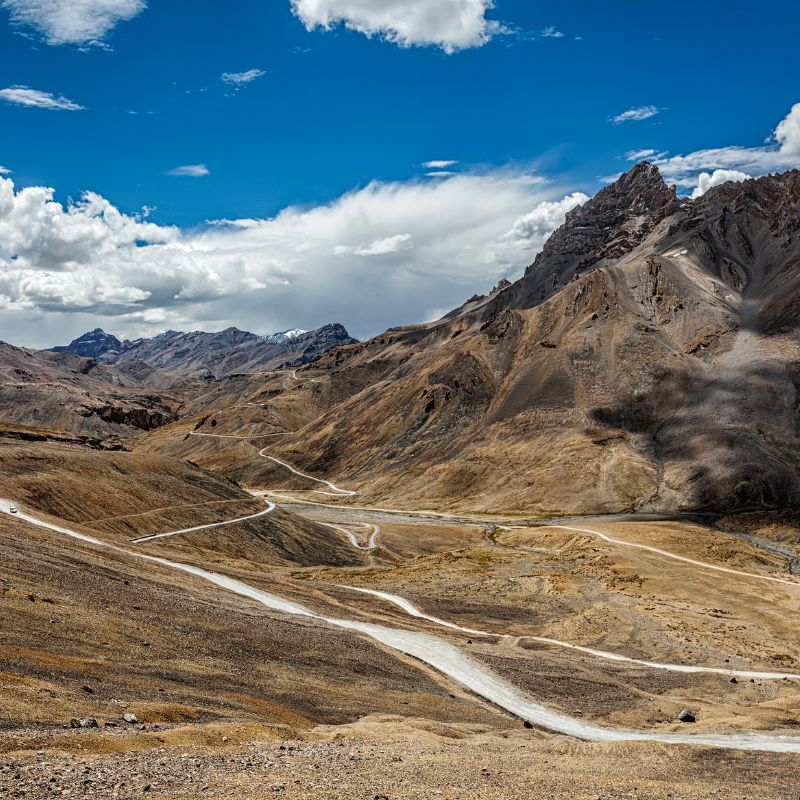
No. The LAHDC Leh health advisory states that road travel does not help with acclimatisation at all, and that it builds up the altitude effect progressively.
That sentence contradicts the most repeated piece of advice on Ladakh forums. The Leh-Manali highway crosses a sequence of passes and involves a night at Sarchu, around 250 km from Leh, at an altitude far above the CDC's 500 m per night ceiling. Two days of rough road, broken sleep and repeated high passes is not a gentle staging profile.
Real staged ascent means sleeping progressively higher with built-in rest nights, which is why our 13-day road route through the high passes exists as a separate product rather than a compressed seven-day trip.
One more thing the road hides. In the Himalayas, a journey Google Maps estimates at three hours regularly takes more than six, so an itinerary that looks comfortable on a mapping app can put you at 5,000 m at dusk with nowhere to descend to.
Fitness will not protect you: who actually gets altitude sickness?
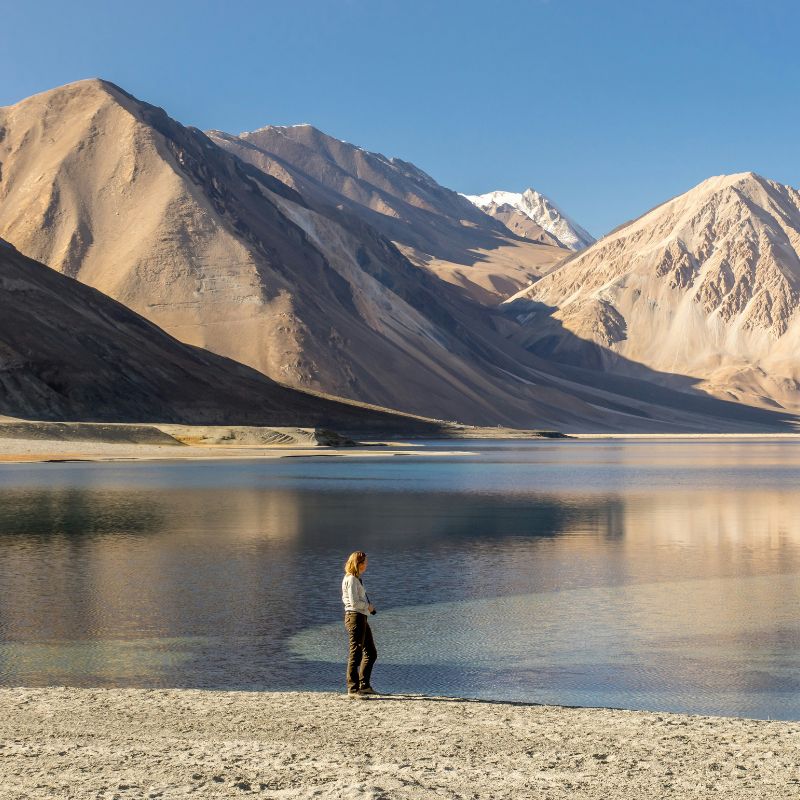
The CDC Yellow Book states directly that training and physical fitness do not affect the risk of altitude illness.
The same chapter notes that children are as susceptible as adults, and that people over 50 carry slightly less risk, not more. Susceptibility is partly genetic, and no simple screening test exists. The marathon runner in the group is not safer than anyone else, and often ascends faster because they feel able to.
Symptoms usually appear 2 to 12 hours after arrival and resolve within 12 to 48 hours provided you do not go higher. Headache is the cardinal symptom, normally with at least one of appetite loss, dizziness, fatigue or nausea. Acute mountain sickness improves rapidly with a descent of 300 m or more.
Two rules follow, and we brief coordinators on them. Never move to a higher sleeping altitude while symptomatic, however minor it feels. Descend if symptoms worsen despite rest at the same elevation.
The rules we won't break: Bout India's Ladakh altitude protocol
- The first day at altitude stays free. No sightseeing, no strenuous activity, no early monastery run. This mirrors the Ladakh Tourism day-one instruction, and it is the rule clients most often ask us to break.
- No 5,000 m pass before day three. Khardung La and Chang La are both above 5,300 m. Crossing either inside the 48-hour window puts a client at the top of a pass with hours of road between them and a hospital.
- Two nights minimum at each altitude step. Two nights per location is our general planning rule across India. In Ladakh it stops being a comfort preference and becomes a medical one.
- Oxygen and a first-aid kit travel in every vehicle. Ladakh Tourism notes that some Leh hotels and pharmacies have portable oxygen, and that SNM Hospital, Leh, is the district's designated point of care for altitude-related symptoms. We do not rely on finding it en route.
- Preventive medication is a conversation with your doctor, not with us. We tell every Ladakh client in writing to raise altitude prophylaxis with their physician before departure.
- Winter travel requires explicit sign-off. Deep-winter Ladakh is a different trip with different road, medical and temperature risks, and we confirm in writing that the client understands what they are choosing.
Diamox, oxygen and permits: what to arrange before you fly
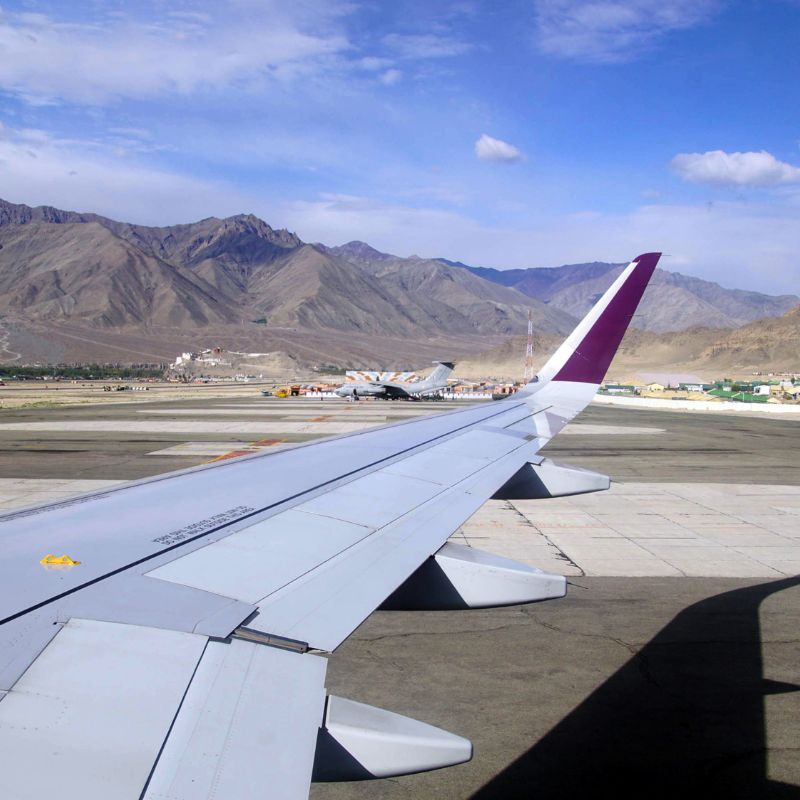
The two official sources give different acetazolamide doses, which is exactly why this is a question for your doctor.
The LAHDC Leh health advisory specifies Diamox 250 mg twice daily, from at least two days before travelling to Leh and continuing two days after arrival. The CDC Yellow Book recommends 125 mg every 12 hours from the day before ascent, noting the lower dose minimises paraesthesia. Both are current and credible. Neither replaces a prescription.
Both agree on the unglamorous parts: no alcohol for the first 48 hours, mild exercise only, 3 to 4 litres of water daily, no sedatives, light meals on arrival. Ladakh Tourism suggests carrying a pulse oximeter, with SpO2 above 90% as the normal reading at altitude.
Permits are separate, and your e-Visa does not cover them. The Leh district permit portal states the Inner Line Permit applies to foreign tourists, and that a Protected Area Permit under the Foreigners (Protected Areas) Order, 1958 is additionally required for citizens of Pakistan, Afghanistan and China, and for holders of diplomatic, UN, international organisation, official and journalist passports or visas. Bout India arranges permits for Nubra, Pangong, Khardung La and Tso Moriri. Please tell us your passport type at the enquiry stage, since it changes the process.
Frequently asked questions
How long does it take to acclimatise in Leh?
The District Administration Leh requires at least 48 hours before travel to higher areas, and you can move around Leh town during that time. Physiology takes longer than policy: the CDC Yellow Book describes acute acclimatisation as occurring over the first three to five days after ascent. In practice, 48 hours is the floor and three nights is the more comfortable plan, particularly if the itinerary sleeps at Pangong afterwards. If your holiday is short enough that 48 hours in Leh feels unaffordable, Ladakh is the wrong destination for that trip length.
Should I take Diamox before going to Ladakh?
That is a decision for your doctor, and published guidance isn't uniform. The LAHDC Leh advisory specifies 250 mg twice daily from at least two days before travel. The CDC Yellow Book recommends 125 mg every 12 hours from the day before ascent, noting the lower dose reduces the tingling side effect many travellers dislike. The CDC also advises a low threshold for prophylaxis for travellers flying rapidly to a sleeping altitude above 3,400 m, which a Delhi-to-Leh flight does.
How common is altitude sickness in Leh, and do fit people get it?
Fitness makes no difference. The CDC Yellow Book states that training and physical fitness do not affect risk, and that children are as susceptible as adults. On frequency, the CDC notes that rapid ascent by aircraft to a sleeping altitude above 3,400 m places travellers in a high-risk category, with altitude illness rates approaching 50%. Leh airport delivers exactly that ascent. Most cases are mild and resolve within 12 to 48 hours if you do not climb higher, which is the whole logic of the 48-hour rule.
Can I travel to Ladakh if I am pregnant or have a heart or lung condition?
Speak to a doctor familiar with high-altitude medicine before booking. The CDC Yellow Book notes there are no studies or case reports describing fetal harm from brief high-altitude travel in pregnancy, but still advises as a prudent measure that pregnant travellers do not sleep above 3,050 m. Leh is above that. It separately advises that travellers with coronary artery disease, chronic pulmonary disease, obstructive sleep apnoea or sickle cell trait consult a physician first, even where the condition is well controlled. Tell us at the enquiry stage: it changes which route we propose.
When is the best time to visit Ladakh, and what happens if someone gets sick mid-trip?
Ladakh runs through the northern summer, which is why we position it as a summer alternative when much of India is in monsoon. Our full Ladakh travel guide covers the routes in detail. If a client becomes unwell, we follow the published guidance: stop ascending, rest, and descend if symptoms worsen, since AMS improves rapidly with a descent of 300 m or more. Our coordinator stays in contact throughout, and we handle any resulting booking changes under our booking and cancellation policy.