
If you're planning a trip to India for New Year, two things shape the trip: the blackout clause and the calendar. Bookings that fall on blackout dates, which we define as Christmas and New Year week, are non-refundable from the moment the deposit is paid, and the published 95, 70 and 40 per cent refund grid does not apply to them. Rates across the window run roughly 25 to 40 per cent above shoulder season; many Indian hotels add a compulsory gala dinner charge collected at the property rather than in your quote; and New Year's Day 2027 falls on a Friday, which closes the Taj Mahal.
TL;DR
- The blackout window is Christmas and New Year's week. During that period, our standard cancellation grid is replaced by a single clause: non-refundable. Availability stays tight from roughly 20 December to 10 January.
- The deposit is 30 per cent, with the balance due 30 days before travel. Card payments carry a 3.5 per cent processing fee. Refunds, where any are due, take a minimum of 20 days to process.
- Booking through a third party is materially worse on terms, not just on price. Our third-party grid gives 80 per cent back at 60 days, where a direct booking gives 95 per cent at 30.
- Compulsory gala dinner supplements are standard practice at Indian hotels over 25 and 31 December, and they are collected at check-out, so they do not show up in the quote you compare.
- New Year's Day is not a gazetted holiday in India. It sits on the restricted list, so banks and offices stay open in most states and almost nothing closes.
- 1 January 2027 is a Friday, and so is 25 December 2026. The Taj Mahal is shut on both.
- Supply, not price, is the binding constraint. December is India's peak inbound month and the peak arrival month for American, British and Australian travellers.
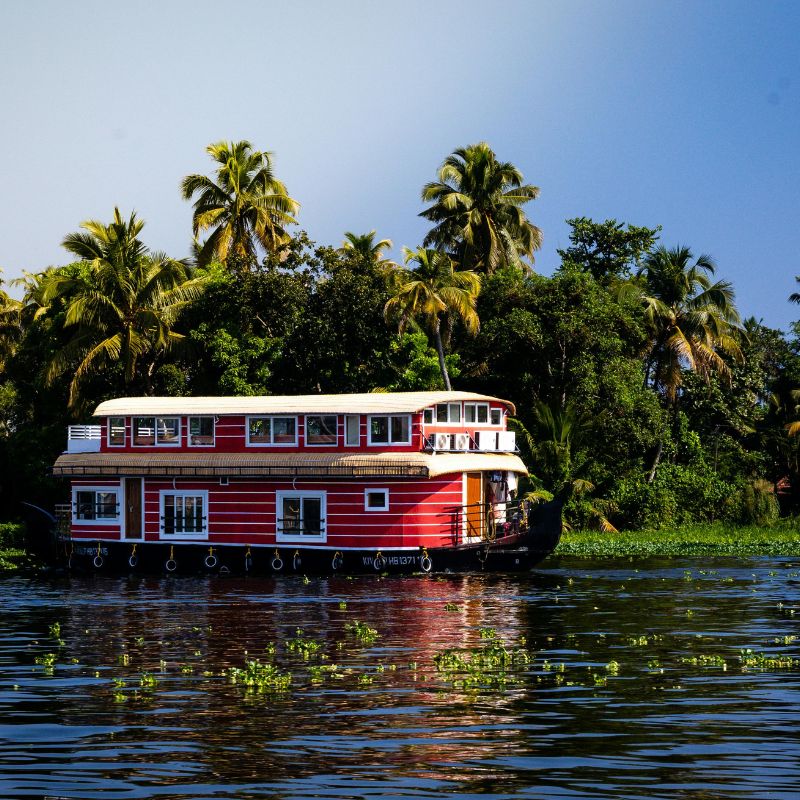
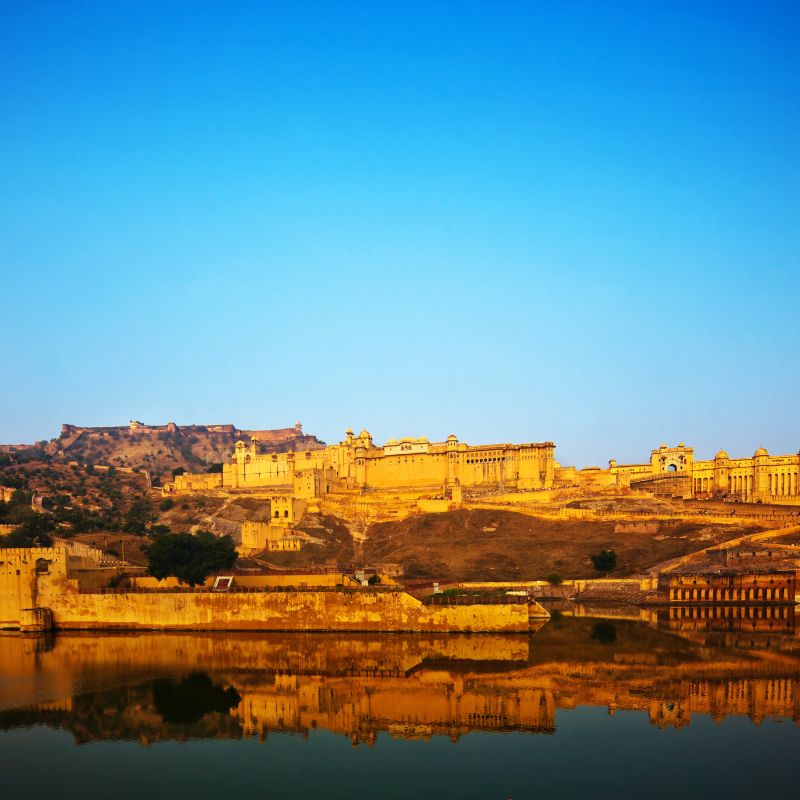
- Twelve months is the honest lead time for Udaipur, Jodhpur and Jaisalmer across this window, and nine for Kerala, Goa and the Golden Triangle.
What a Blackout Date Actually Does to Your Booking

Most operators publish a cancellation ladder and leave it at that. Ours is on the booking and cancellation policy page: 95 per cent back at 30 days or more, 70 per cent between 15 and 30 days, 40 per cent between 7 and 14 days, nothing inside 7 days or for a no-show.
The blackout clause sits underneath that ladder and overrides it. Bookings made for blackout dates are non-refundable. There is no 30-day safety margin and no partial recovery at 15 days. The money is committed when the deposit clears.
This is not a quirk of our terms. It is what our suppliers impose on us. Over the turn of the year, palace hotels, beach resorts and safari lodges take non-refundable deposits and enforce minimum stays. An operator cannot offer a refund it will never receive.
Two smaller clauses matter because they change the arithmetic. Card payments attract a 3.5 per cent processing fee, and on a New Year trip at Luxury tier that is a real number. Any refund that is due takes a minimum of 20 days to process.
Direct Versus Third Party: The Terms Gap Nobody Publishes
Rate differences between booking direct and booking through an overseas agent get discussed. Term differences do not, and they are larger.
|
|
Direct with us | Through a third party |
|---|---|---|
| 60 days or more before travel | 95% refund | 80% refund, or the deposit, whichever is higher |
| 59 to 28 days |
95% refund at 30 days or more, 70% at 29 or 28 days |
60% refund |
| 27 to 15 days | 70% refund | 30% refund |
| 14 to 7 days | 40% refund | No refund |
| Inside 7 days or no-show | No refund | No refund |
| Blackout dates | Non-refundable | Non-refundable |
Read the 27 to 15 day row twice. A traveller who cancels three weeks out recovers 70 per cent booking direct and 30 per cent booking through an intermediary. On a two-person Luxury trip, that difference runs into thousands of dollars, and it exists regardless of the headline price. Our 12 questions to ask an India tour operator cover the rest of what to check before you pay a deposit.
The Compulsory Gala Dinner, and Why It Is Not in Your Quote

Indian hotels across four- and five-star categories routinely make the New Year's Eve dinner mandatory for anyone in-house on 31 December, and the same applies on 25 December. The hotel collects the charge at check-out rather than billing it through the operator, so it doesn't appear in the quote you are comparing against another operator's quote.
The mechanism is visible on public tariff disclosures. Regenta Inn Jaipur, a mid-market property, lists its New Year's Eve gala dinner as a mandatory charge at ₹2,500 per adult and ₹2,000 per child aged 5 to 11, payable at the property. Heritage and luxury properties sit far above that, and the supplement is per person per night affected, not per booking.
The question to ask any operator, including us, is simple: which properties on this itinerary levy a compulsory gala supplement over 25 and 31 December, at what amount, and is it in the quoted price or collected on site. An operator who cannot answer has not read the contracts.
Why the Rooms Go Before the Prices Do

Ministry of Tourism figures in the India Tourism Data Compendium 2024 record 11.02 lakh foreign tourist arrivals in December 2023, the highest month of that year and 11.6 per cent of the 95.21 lakh annual total. The same publication names December as the peak arrival month for travellers from the United States, the United Kingdom and Australia.
Concentrated demand meets inventory that does not expand. In our operation, 20 December to 10 January is the only stretch of the year where availability genuinely constrains what we can build, and it constrains it in three specific cities: Udaipur, Jodhpur and Jaisalmer. The limit is not hotel rooms alone. Experienced English-speaking guides in Rajasthan's desert cities are a fixed pool, and in that fortnight, the pool is fully booked.
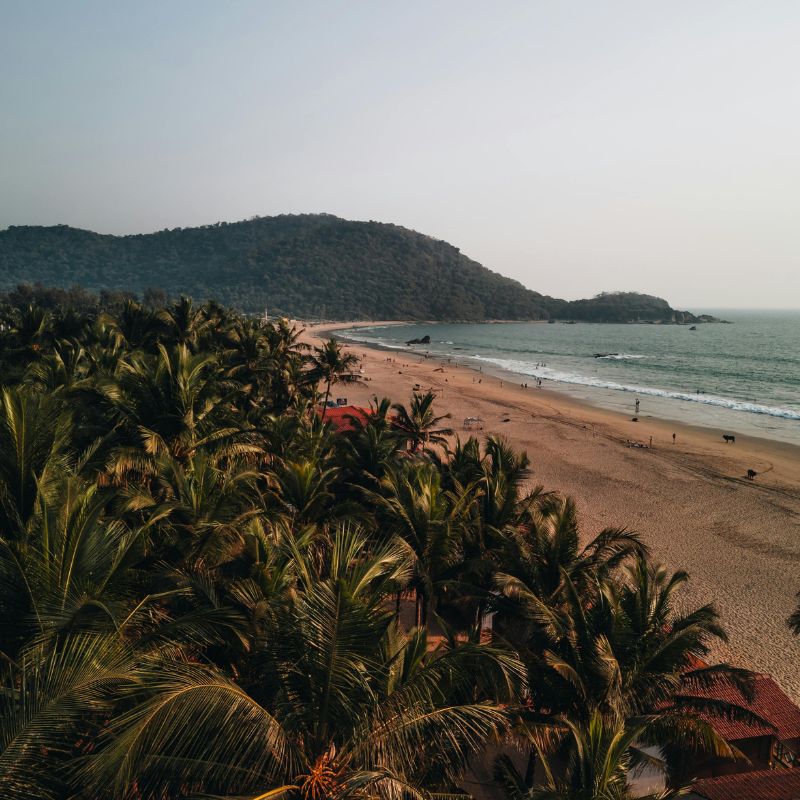
Goa behaves differently. Inventory is larger, and the quality spread is wider, so something is usually available, but the gap between what is available in September and what is available in November is the gap between a good property and a compromise. Our Luxury Goa guide covers the properties we use.
New Year's Day 2027 Is a Friday, and Almost Nothing Closes
New Year's Day is not a gazetted holiday in India. The Department of Personnel and Training's Annexure-I gazetted list for 2027, issued under Office Memorandum F.No.12/2/2023-JCA dated 16 July 2026, contains 17 days and does not include 1 January. New Year's Day sits on the Annexure-II restricted list instead, from which employees may take two days of their own choosing.
In practical terms, 1 January is an ordinary working day across most of India. Offices are open, shops and restaurants trade normally, and domestic flights and trains run to schedule. Banks close only in the states that elect to close under the Reserve Bank's state-wise schedule, which in 2026 covered Mizoram, Tamil Nadu, Sikkim, Manipur, Arunachal Pradesh, Nagaland, West Bengal and Meghalaya.
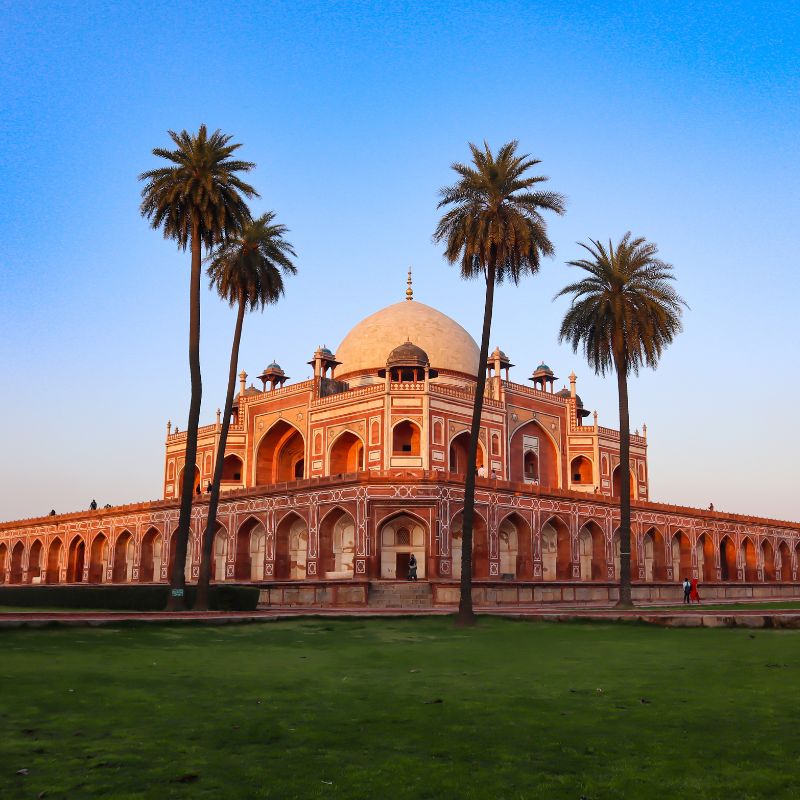
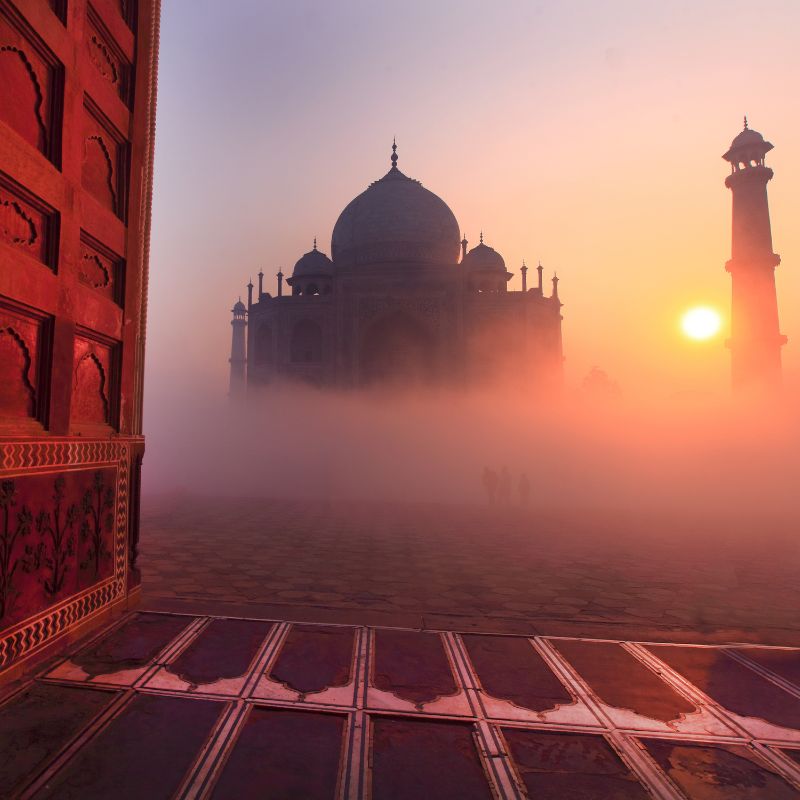
The one closure that will affect an itinerary is unrelated to the holiday. The Taj Mahal shuts to visitors every Friday, and both 25 December 2026 and 1 January 2027 fall on Fridays. Agra Fort, Fatehpur Sikri, Itimad-ud-Daulah and Akbar's Tomb stay open, so Agra still works on those dates provided the Taj itself is scheduled around them. Our 10-day Golden Triangle and Rajasthan route shows how the rest of a week moves around that fixed point.
The Deadlines That Actually Matter
Most clients take two to three rounds of itinerary revision before confirming, which adds four to six weeks between first enquiry and deposit. Working backwards from that, here is how far ahead of travel your deposit needs to be paid for each kind of trip:
- Twelve months out. Pay your deposit this far ahead if the trip includes Udaipur, Jodhpur, Jaisalmer, or a specific named heritage property over 31 December.
- Nine months out. Realistic for Kerala, Goa and the Golden Triangle at the Luxury tier, with choice rather than what is left.
- Six months out. Still workable, with compromises starting to appear on specific properties rather than on destinations.
- Three months out. The itinerary gets built around availability instead of around what you want.
- Within eight weeks. Possible, and we do it, but inventory dictates the shape of the trip.
Our month-by-month calendar sets out how the rest of the year compares, and our winter planning guide covers the fog and connection risks that sit alongside all of this.