




Bundi, once ruled by Hada Chauhan is home to glorious medieval forts & magnificent palaces with well-carved brackets and pillars along with many ancient temples, Havelis, and “step-well” reservoirs known as Baoris. It is of great historical significance as it has been a witness to many battles and legendary tales of valor.

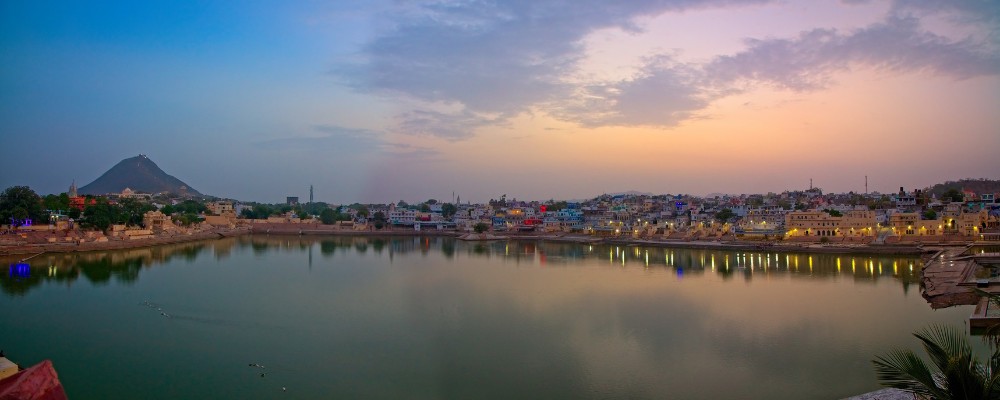
Bundi is blessed with a plethora of nature along with a beautiful pattern of rivers and lakes and some enchanting waterfalls. The city is surrounded by the Aravalli Range on three sides which provides it with a serene environment. It is blessed by the bounty of nature. The land is crisscrossed with sparkling waterfalls, rivers, and lakes which makes the landscape strikingly eloquent. The city is encircled by a massive wall with four gateways. Bundi has witnessed legendary tales of velour and battles throughout its existence, Bundi is still considered unexplored which makes it an iconic tourist destination among both foreign and domestic tourists.

Built-in the year 1354 CE, Taragarh Fort is one of the most impressive structures in Bundi. The state of Bundi was founded this year by Rao Deva, and this was when the construction of this massive square began. Popularly known as the 'Star Fort', the attraction is located on a steep hill and offers a panoramic and breathtaking view of the entire city of Bundi. Moti Mahal is another big attraction of the town. Along with the historic beauty of the Moti Mahal Palace, you can also enjoy the panoramic view of the arid Aravali hills in the backdrop along with the view of the ancient Nagal Sagar Lake.

Explore & Experience in Bundi, Rajasthan -


EXPLORE (Places to visit in Bundi):

  • Taragarh Fort
  • Moti Mahal
  • Badal Mahal
  • Garh Palace
  • Raniji ki Baori
  • Shikar Burj and Jait Sagar
  • Phool Sagar Lake
  • Nawal Sagar Lake
  • Chaurasi Khambon ki Chhatri
  • Sukh Mahal
  • Bundi Palace


EXPERIENCE (Things to do in Bundi):

  • Bundi Utsav festival
  • Shopping at Sadar Bazaar
  • Admire miniature paintings at Chitrashala (Umeed Mahal)
  • A peak into history at numerous step-wells
  • Taste the amazing masala tea at "Krishna's Chai" in Sadar Bazaar
Reach out to our Local Experts
Plan Your Bespoke Journey with Us

Fill in your details and one of our destination experts will get in touch with you. Our experts are dedicated to providing personalized assistance and insights, ensuring that all your queries are addressed and you receive the best possible guidance for your travel plans.


Checkout our
Latest Blogs
Choose from the best
Hotel Partners
Get our latest updates
Subscribe Our Newsletter

Stay Connected
FAQs
  • Why do serious Rajasthan travellers rate Bundi so highly?

    What many of Rajasthan’s better-known centres might have been like before global tourism rolled them over, Bundi sits high above the sleepy plain of the Hadoti region, just 36km from Kota and well off the beaten track. It has a stunning hillside fort and palace, arguably the country’s best stepwells, a concentrated old city packed with steep, narrow, blue-painted alleys, and an association with Rudyard Kipling that adds to its unfettered appeal. The latter commented on the Bundi Palace as: ‘The Palace of Bundi, even in broad daylight, is such a palace as men build for themselves in uneasy dreams, the work of goblins rather than of men.’

  • What makes the Chitrashala inside the Garh Palace so special?

    The Garh Palace complex comprises a series of adjoining palaces built by successive Hada Rajput rulers in the 17th & 18th centuries, forming tiers up the hillside below Taragarh Fort and accessed via the elephant gates, Hathi Pol. The most splendid room inside is the Chitrashala: an open-sided pavilion whose walls and ceiling are entirely decorated with exquisite examples of 17th- & 18th-century Bundi School painting executed for Rao Ummed Singh (1773-1821). Episodes from the life of Krishna, scenes from regal progresses and hunting parties are vibrantly rendered against distinctive dark-green backgrounds with accents of red, blue, black and yellow; among the best-preserved extant murals in India open to public gaze.


  • Why does Bundi have more stepwells than almost anywhere else in India?

    More than 50 centuries-old stepwells, or baoris, part of its civic water supply scheme because the water table is shallow here, stand scattered around Bundi. Raniji ki Baori, its most famous, was erected in 1699 by Rao Raja Anirudh Singh's younger queen, Rani Nathavati Ji. It plummets down 46m to the water level and has a multi-storeyed stone façade decorated with elaborate carvings and elephant figures on its four corners. Well worth the descent are Bundi’s twin Nagar Sagar Kund and Dhabhai Kund, in the centre of the city.

  • What is Bundi's connection to Rudyard Kipling?

    Kipling visited and was so impressed by the palace that he wrote one of his best-known lines on Indian travel: The Palace of Bundi, even in bright daylight, is a palace to be built by man for himself only in troubled sleep, and by hob goblins. He stayed at the Sukh Mahal (comfortable palace), a simple 2-story summer palace on Jait Sagar Lake, and several parts of his novel Kim are thought to have been written during this visit. The Sukh Mahal now serves as a small museum, but the garden at the lake's edge, with the fort behind it high above, still evokes the scene that entranced Kipling.

  • Is the climb up to Taragarh Fort worth the effort?

    Yes indeed. Perched high above the Garh Palace, this 14th-century hill fort, among the oldest in Rajasthan, lies in a semi-ruined state, with a thriving colony of langur monkeys further adding to the untamed atmosphere. A steep climb from the palace level takes 20–30 minutes, and sturdy footwear is required, but once you reach the ramparts, a spectacular vista over Bundi, step-wells, the blue old city, and the hills unfolds, rivalling some of Rajasthan's better-known viewpoints.

  • What is the significance of the 84-Pillared Cenotaph?

    Also known locally as Chaurasi Khambon ki Chhatri, it was built in 1683 by Rao Anirudh Singh in honour of his wet nurse,e Deva. It is a beautifully and poetically moving gesture: not built in memory of royalty, but of a servant. The 84 pillars that support the domed roof refer to the 84,000 lives a soul is meant to go through before being spiritually liberated. It lies tranquilly near Jait Sagar Lake and, though almost unknown outside Bundi, is quite simply the most architecturally unique building in all of Rajasthan.

  • How many days does Bundi need, and how should they be spent?

    Two to three days would be more than enough. Day 1 can incorporate Garh Palace & Chitrashala, Raniji ki Baori stepwell, Nagar Sagar Kund stepwell & a walk through old city lanes. Day 2: cooler Taragarh Fort, Sukh Mahal & Jait Sagar Lake, followed by the 84-pillared cenotaphs at sunset. Option for a 3rd day could be a safari in Ramgarh Vishdhari Tiger Reserve or a visit to the Keshavraipatan temple on the Chambal.

  • When is the ideal time to visit Bundi?

    October-March: Best weather for a walking tour of the fort, palace, and stepwells, with a certain warmth to the winter light against honey stone. November/December offer the clearest skies and the most peaceful visits. Kajli Teej in Aug (monsoon) is a riotous local festival you could aim for if you are a risk-taker when it comes to weather. Apr-Jun: Hot (40-42 C) - ok in early mornings/late afternoons.

  • How do I reach Bundi, and how does it fit with other destinations?

    About 210 km south of Jaipur (1-2 hours by road), 36 km southeast of Kota, which has the closest rail connection, or 150 km from Chittorgarh to the west. Kota Junction is well connected to Delhi, Jaipur, and Udaipur, and Bundi’s a short taxi/bus ride away. Bundi is just outside the main Jaipur-Jodhpur-Udaipur loop, so it needs intentional planning to get to, but blends in well with Kota for Chambal wildlife or with Chittorgarh for a super southern Rajasthan triangle.

  • Is there wildlife to see near Bundi?

    Just about 45 kilometres from town, the Ramgarh Vishdhari Tiger Reserve (notified in 2022) provides a missing link in wildlife corridors, connecting to the more famous Ranthambore. The new reserve is home to tigers, leopards, sloth bears, wolves, and hyenas, and naturally has little to no tourist infrastructure. The Chambal River, about 36 kilometres from Kota, is one of India's most valuable ecological systems with critically endangered gharials, mugger crocodiles, Gangetic river dolphins and some fabulous birdlife.

Plan Your Trip