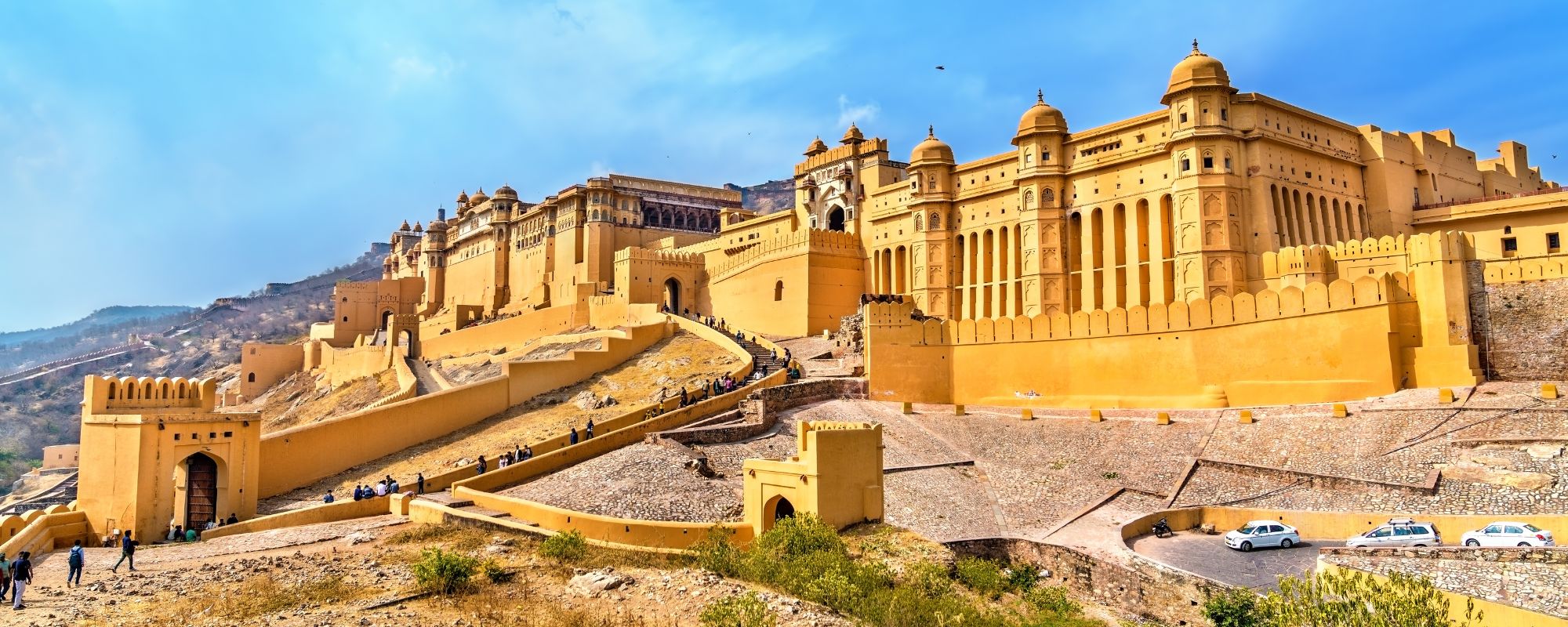




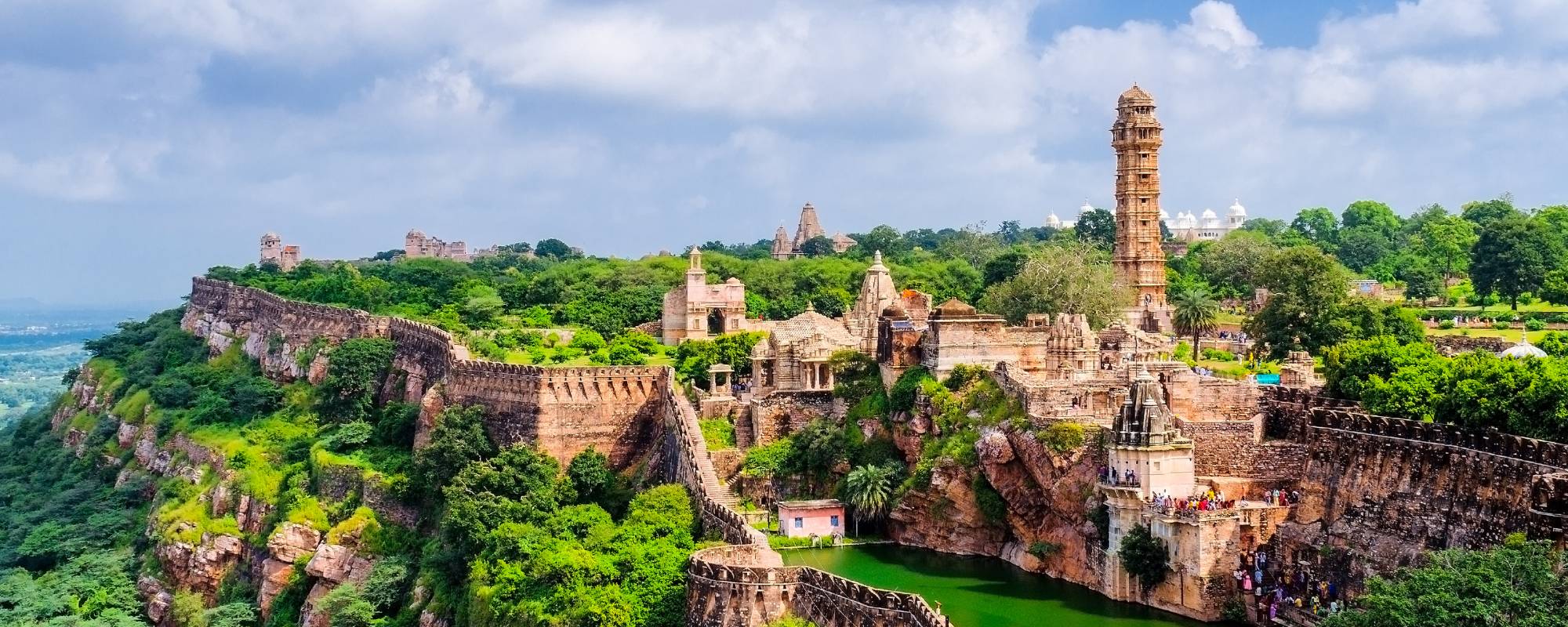



Chittorgarh, the royal city, boasts of its historical value. The city sits on the banks of the Berach and Ghambhiri rivers. It was once the capital of the Mewar Kingdom. The well-known Chittorgarh Fort is located here. It is the largest fort in India; the majestic fort is built on a hill 590 ft high and covers approx 692 acres of area. The fort contains loads of historical places, gates, towers, and temples.

The fort’s saga of valour and sacrifice inspires the fascinating minds of tourists, rhymesters, and writers. The fort was attacked three times, first by Alauddin Khilji in 1303 CE, who was obsessed with the matchless beauty of Rani Padmini, the gorgeous queen of Chittor. Khilji laid siege to the fort with a huge army. Finally, King Ratan Singh decided to fight the unmatched army. Rani Padmini knew the outcome, and she, along with the royal women in the fort, chose to commit Jauhar (the Rajput tradition of honourable self-immolation of women) to avoid dishonour at the hands of invaders. Later, during the siege of 1534 CE, thousands of Rajput women committed Jauhar with Rani Karnavati.

Local bards have sung tales of these royal sacrifices ever since. Meera Bai, the most famous spiritual poetess and most significant devotee of Lord Krishna, was born in Chittorgarh. Thousands of sacred songs and poems are dedicated to her devotion and unconditional love for Lord Krishna.


Explorations & Experiences in Chittorgarh -

EXPLORE (Places to visit in Chittorgarh):

  • Chittorgarh Fort
  • Vijay Stambh
  • Kirti Stambh
  • Rana Kumbha’s Palace
  • Rani Padmini’s Palace
  • Fateh Prakash Palace
  • Kalika Mata Temple
  • Meera Temple
  • Gomukh Kund
  • Sathis Deori Temple
  • Sanwariyaji Temple


EXPERIENCE (Things to do in Chittorgarh):

  • A peak into history at Chittorgarh Fort
  • Safari and photography at Sitamata Wildlife Sanctuary
  • Nature walk and photography at Bassi Wildlife Sanctuary
Reach out to our Local Experts
Plan Your Bespoke Journey with Us

Fill in your details and one of our destination experts will get in touch with you. Our experts are dedicated to providing personalized assistance and insights, ensuring that all your queries are addressed and you receive the best possible guidance for your travel plans.


Checkout our
Latest Blogs
Choose from the best
Hotel Partners
Get our latest updates
Subscribe Our Newsletter

Stay Connected
FAQs
  • Why does Chittorgarh carry such weight in Rajput history?

    Chittorgarh is not simply Rajasthan's largest fort, covering roughly 700 acres with a 13 km perimeter wall and seven gateways, but its most emotionally charged site. As the capital of the Mewar dynasty, the most celebrated of the Rajput kingdoms, it witnessed three catastrophic sieges and three mass acts of self-immolation known as jauhar, and the stories of Rani Padmini, Meera Bai, and Maharana Pratap that emerged here continue to define Rajput identity across India. No other fort in Rajasthan carries this depth of cultural meaning.


  • What happened during the fort's three sieges?

    Chittorgarh withstood three devastating sieges across three centuries, each followed by a jauhar. The first, by the Delhi Sultanate's Alauddin Khilji in 1303, is said to have prompted Rani Padmini's jauhar. The second, by Bahadur Shah of Gujarat in 1535, saw Rani Karnavati lead a second jauhar while the men rode out in saffron robes to fight to the death. The third, by the Mughal Emperor Akbar in 1567-68, prompted a final jauhar and led Maharana Udai Singh II to move the Mewar capital to the new city of Udaipur. Emperor Jahangir eventually returned the fort to the Rajputs in 1616.

  • Was Rani Padmini a real historical figure?

    Historians genuinely debate the story. According to legend, she was the queen of Rana Ratan Singh, whose beauty sparked the Delhi Sultan Alauddin Khilji's obsession after he glimpsed her reflection in a mirror, leading to his 1303 siege and her subsequent jauhar. The earliest contemporary account, by Khilji's own court poet Amir Khusrow, does not mention her; her story first appears in the 16th-century Sufi poem Padmavat. Whatever its factual basis, the tale has become inseparable from how people remember Chittorgarh.


  • How is Meera Bai connected to this fort?

    Meera Bai, born around 1498, was a Rajput princess and one of the most beloved saint-poets of the Hindu devotional tradition, married into the Mewar royal family after growing up devoted to Krishna from childhood. Her public singing and mingling with holy men across caste lines brought her into conflict with the royal court. She is believed to have lived in the Rana Kumbha Palace within the fort, and the Meera Bai Temple beside the Vijay Stambha honours her memory. Her devotional poetry, composed in praise of Krishna, remains among the finest in the Hindi language and is still sung throughout India.

  • What is the Vijay Stambha, and why is it Chittorgarh's emblem?

    Rana Kumbha built the Tower of Victory, a nine-storey structure 37 metres high, between 1458 and 1468 to mark his 1440 victory over Mahmud Shah I Khalji of Malwa. Covered in intricate carvings of deities and mythological scenes from base to crown, it is considered one of the finest examples of Rajput sculptural art. A narrow 157-step staircase climbs to the eighth floor, with fine views over the fort and plains. The nearby Kirti Stambha, a smaller 12th-century Jain tower dedicated to Adinath, complements it well.

  • Which sites inside the fort should I prioritise if time is short?

    The Vijay Stambha and adjacent Rana Kumbha Palace ruins, the oldest structure in the fort and site of the first jauhar and Meera Bai's residence, are the essential starting point. Rani Padmini's Palace, a white three-storeyed building surrounded by a water moat, is where Khilji is said to have seen the queen's reflection. The Gaumukh Reservoir, fed by a spring through a carved cow's mouth in the cliff face, sustained the fort through its sieges. With 65 historic structures in total, selective prioritisation genuinely matters here.

  • How much time should I allow to see the fort properly?

    Four to five hours minimum, ideally a full day starting at opening time. The fort is large enough that walking between sites is a real commitment, and midday heat from April onwards makes pacing important. A knowledgeable guide is strongly worth arranging: the layered stories and architectural detail embedded in each ruin require context that is hard to piece together independently.


  • Is Chittorgarh part of Rajasthan's UNESCO listing?

    Yes. It was inscribed in 2013 as part of the Hill Forts of Rajasthan, a group of six forts recognised together for their Rajput military architecture, alongside Amber, Kumbhalgarh, Ranthambore, Gagron, and Jaisalmer. Chittorgarh is by far the largest of the six and was the capital of the most powerful Rajput kingdom; UNESCO specifically recognised its role as a living cultural landscape that testifies to Rajput bravery and artistic achievement over nearly a millennium.

  • Should I visit Chittorgarh as a day trip from Udaipur, or stay the night?

    At 115 km and around two and a half hours away, a day trip is entirely feasible: leave Udaipur by 7 or 8 in the morning, spend four to five hours at the fort, and return by evening. An overnight stay, however, allows a more leisurely pace and the chance to see the fort at dusk, when the light is exceptional. Chittorgarh also connects naturally with Bundi, 150 km northeast, for a southern Rajasthan circuit, and the Castle Bijaipur, 40 km from the fort, is the best nearby accommodation.

  • When should I plan a visit?

    October to March offers weather that suits the extensive outdoor walking the fort requires, with November and December providing the clearest skies and best light. The Jauhar Mela in March, which commemorates the three jauhars and celebrates Rajput courage, is worth seeing if the dates align. April to June is hot, reaching 40 to 42 degrees Celsius, manageable early in the day but uncomfortable at noon.

Plan Your Trip