Madhya Pradesh sits at the geographic centre of India, and its tourism identity reflects that position: it is the only Indian state where a major UNESCO World Heritage site, some of the country's best tiger reserves, and a genuinely intact medieval fort town can be combined into a single circuit without long transfers. Khajuraho's temple carvings, Bandhavgarh's tiger density, and Orchha's Bundela-era palaces each rank among the best examples of their kind in India, yet the state remains far less visited by international travellers than Rajasthan or Kerala.
This guide covers Khajuraho, Bandhavgarh, Kanha, and Orchha individually, how to combine them into a single circuit, and everything you need to plan the trip.
Madhya Pradesh at a Glance
- Main gateway: Khajuraho Airport (HJR) for the temple circuit; Jabalpur Airport (JLR) for Bandhavgarh and Kanha
- Best time to visit: October to March for temples and general sightseeing; October to June for tiger safaris (parks close during the monsoon)
- Minimum recommended stay: 7 to 9 days to cover Orchha, Khajuraho, and one tiger reserve without rushing
- UNESCO status: Khajuraho Group of Monuments, inscribed 1986
- Signature experiences: Khajuraho's carved temples, a Bandhavgarh tiger safari, Orchha's Bundela palaces, a Kanha jeep safari through sal and bamboo forest
Khajuraho: What Makes These Temples a UNESCO World Heritage Site?
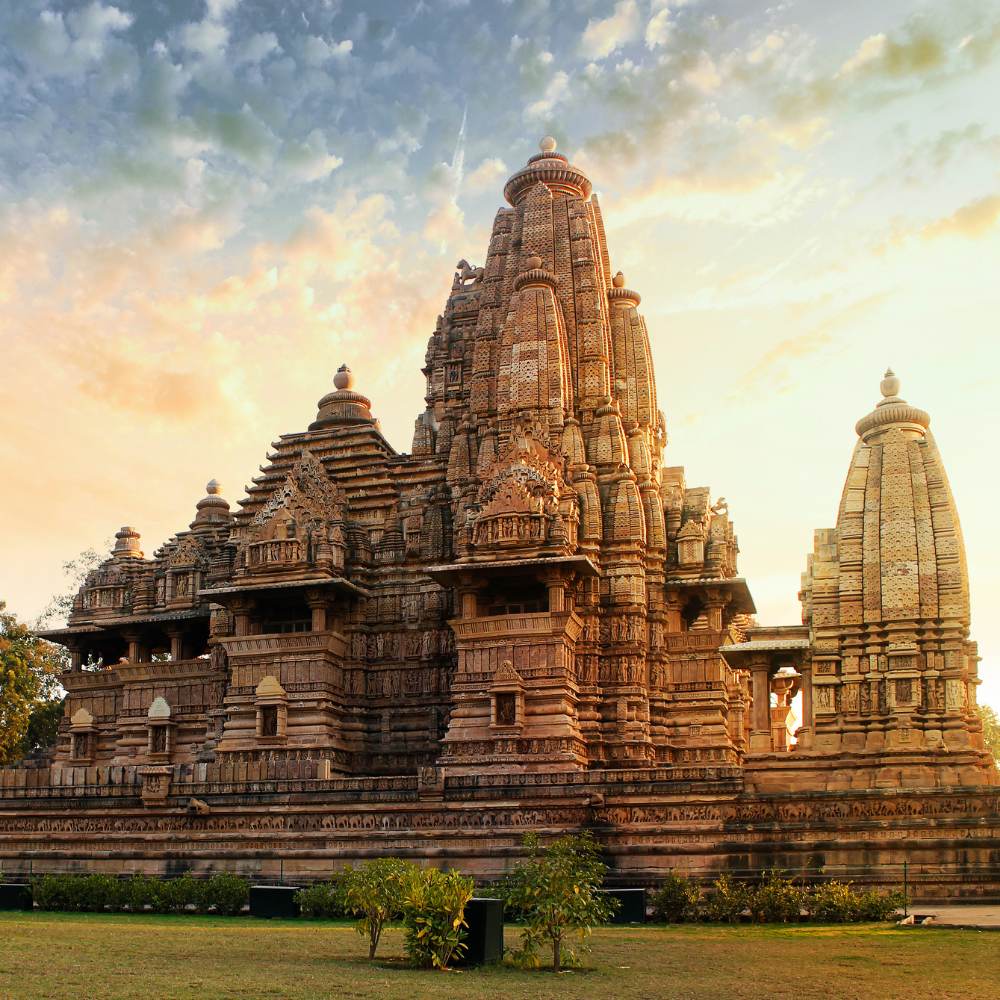
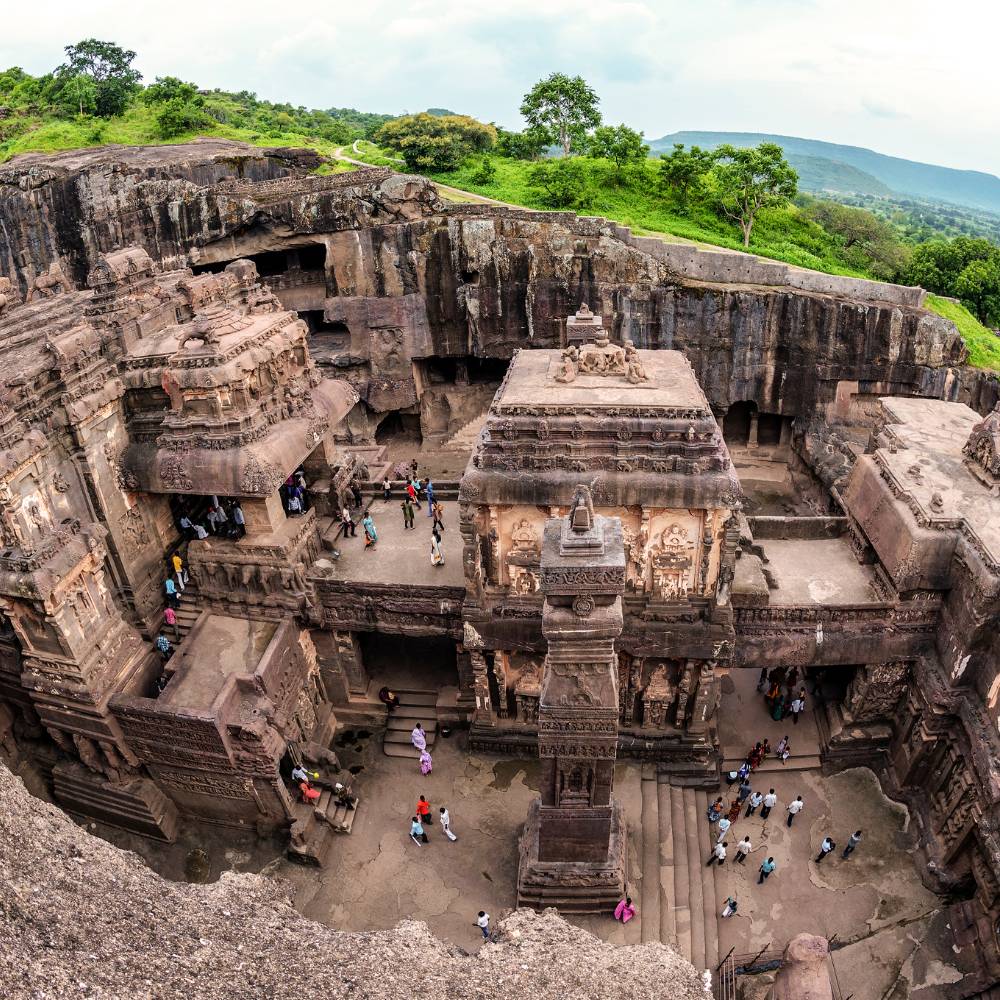
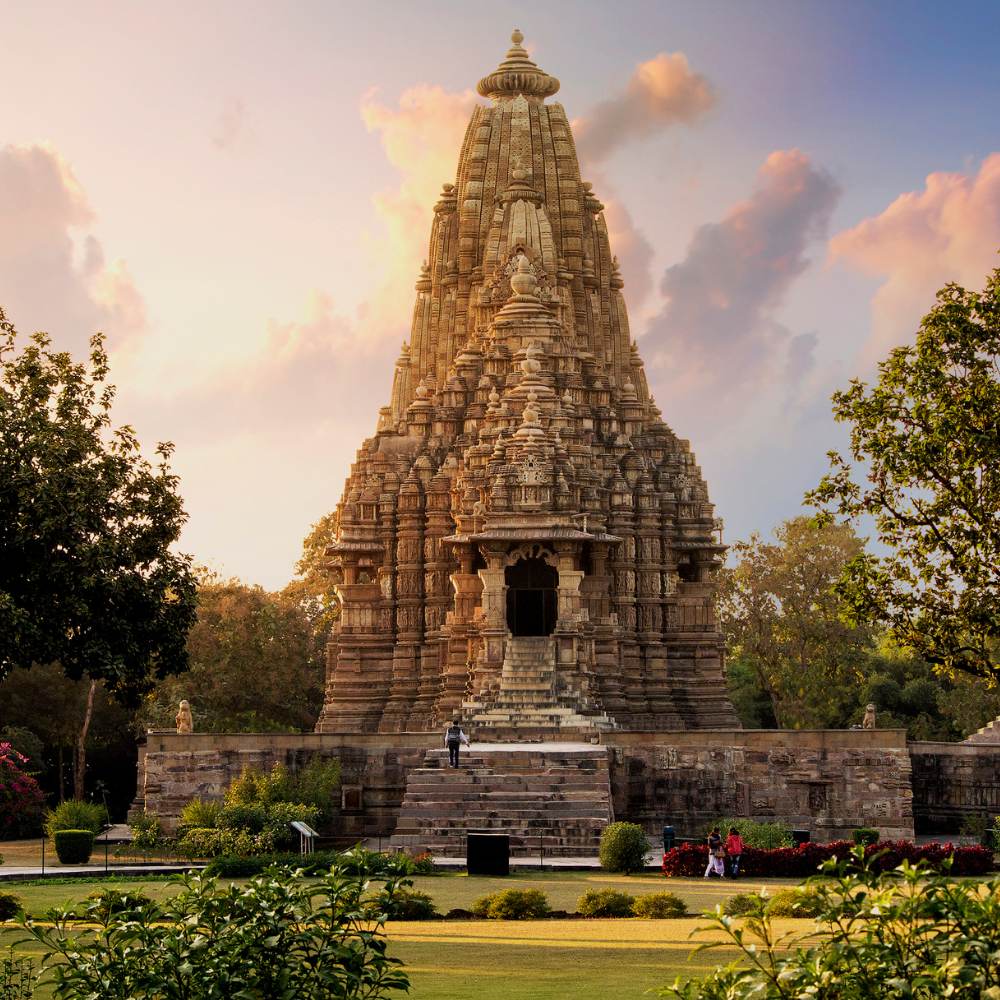
Khajuraho was built as the religious capital of the Chandela dynasty, which ruled the Bundelkhand region of central India between the 9th and 13th centuries. Most of the surviving temples were constructed between 950 and 1050 CE, during the reigns of the Chandela kings Yashovarman and Dhanga, with the largest and most celebrated, the Kandariya Mahadeva Temple, completed under King Vidyadhara. At its height, the site held around 85 temples spread across roughly 20 square kilometres; only about 25 survive today, grouped into western, eastern, and southern clusters, with the western group holding the largest and most visited temples.
Khajuraho is best known internationally for the sculptural detail covering nearly every surface of its temples, work depicting deities, dancers, musicians, and, in a minority of panels concentrated on specific temples, amorous couples in explicit poses. These erotic sculptures represent a small fraction of the total carving, most of which depicts daily life, mythology, and worship, but they are historically significant: art historians read them as reflecting Chandela-era attitudes toward the union of the sacred and the sensory, and possibly as instructional imagery for young men living as celibate students (brahmacharyas) before entering married life. The temples fell out of active use after the Chandela decline in the 13th century and were gradually reclaimed by jungle, remaining largely forgotten until a British army officer, Captain T.S. Burt, rediscovered the site in 1838. UNESCO inscribed the Khajuraho Group of Monuments as a World Heritage Site in 1986, citing the exceptional balance of architecture and sculpture achieved in its Nagara-style design.
A single day is enough to see the Western Group, the site's core and most complete cluster, in reasonable depth, with a second half day for the smaller Eastern and Southern Groups and the Archaeological Museum. The evening Sound and Light Show at the Western Group narrates the site's history and the context of the Chandela dynasty, with English and Hindi showings on alternating seasonal schedules.
Orchha: A Medieval Capital Frozen in Time
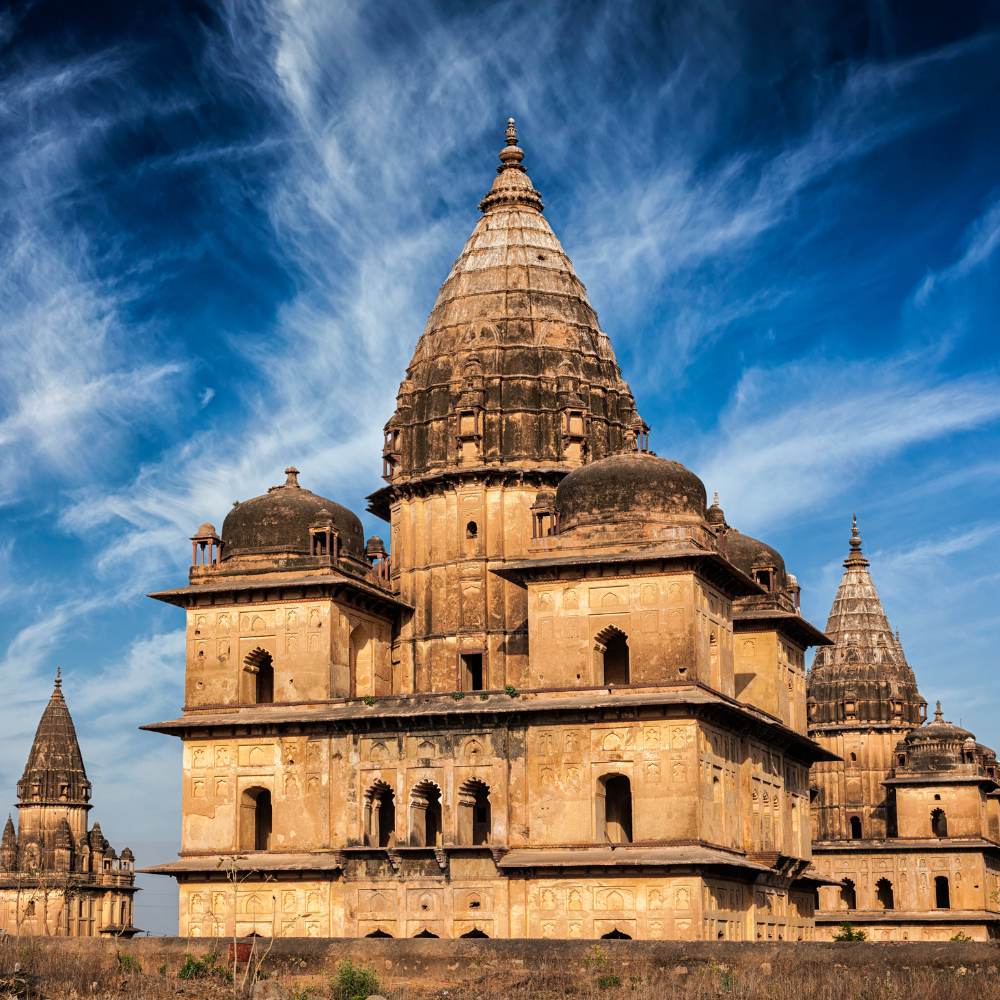
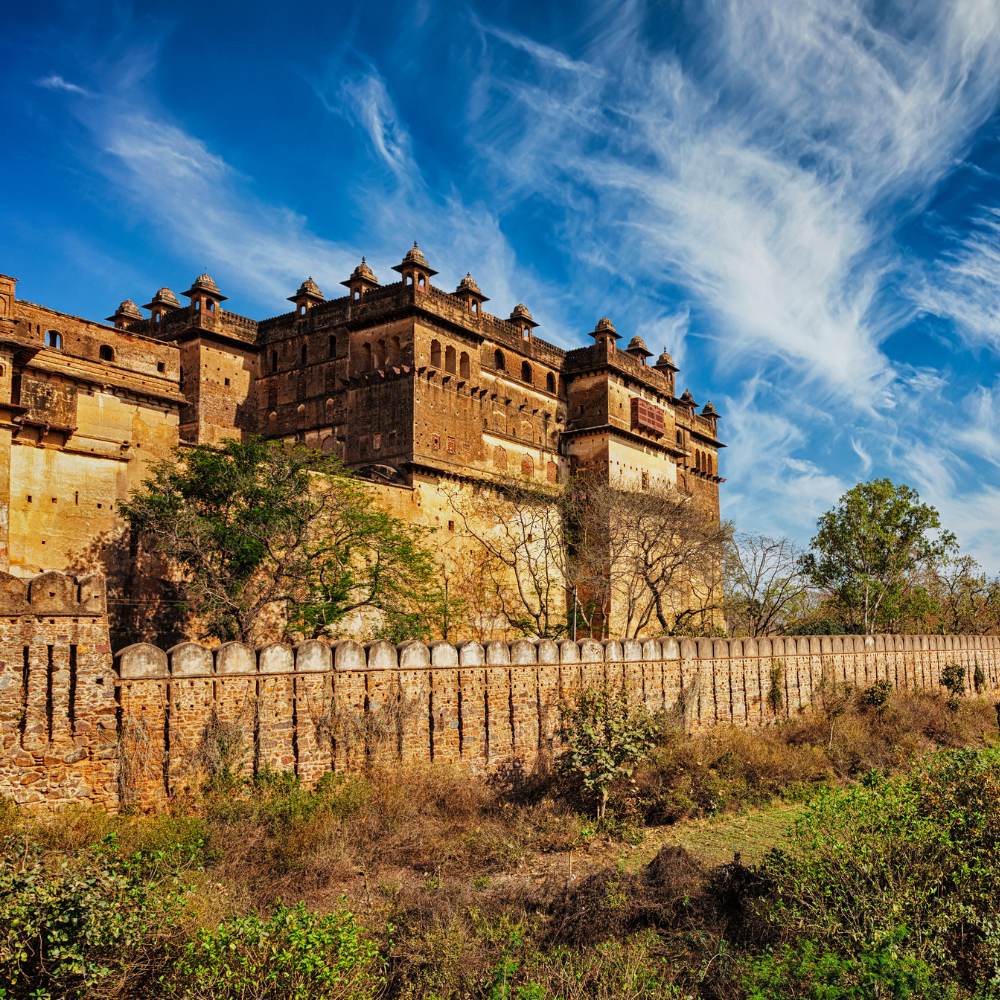
Orchha, roughly 175 kilometres from Khajuraho and 15 kilometres from Jhansi, was founded by the Bundela Rajput chief Rudra Pratap Singh in the early 16th century, who established his fort here on the banks of the Betwa River; his son and successor, Bharti Chand, moved the full capital to Orchha in 1531. The town served as the seat of the Bundela dynasty until 1783, and unlike many medieval Indian capitals, its core monuments were never significantly redeveloped afterwards, leaving an unusually intact ensemble of palaces, temples, and cenotaphs.
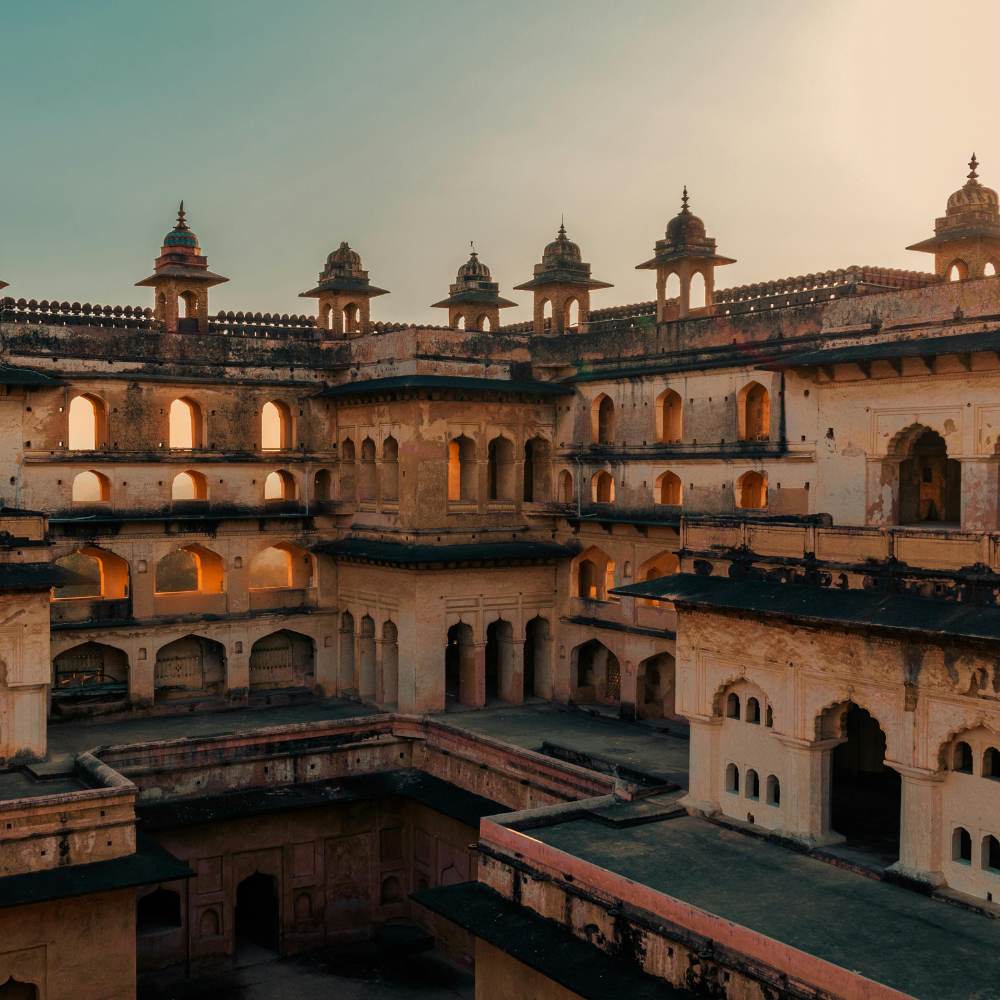
The Jahangir Mahal, built by Raja Bir Singh Deo in the early 17th century to commemorate a visit from the Mughal emperor Jahangir, is the town's architectural centrepiece: a fusion of Rajput and Mughal palace design built around a mandala-plan courtyard. Nearby, the Raj Mahal and the Chaturbhuj Temple, built by Orchha's queen and intended to house an image of Rama that ultimately proved immovable, complete the core monument cluster. Along the Betwa riverbank, a row of Bundela royal cenotaphs (chhatris) creates one of the most photographed skylines in central India, particularly at sunrise. Orchha's monuments were included on UNESCO's Tentative List as the Historic Ensemble of Orchha, recognising the site's significance, though it has not yet received full World Heritage inscription.
Bandhavgarh: Why This Is India's Best Tiger Safari Destination
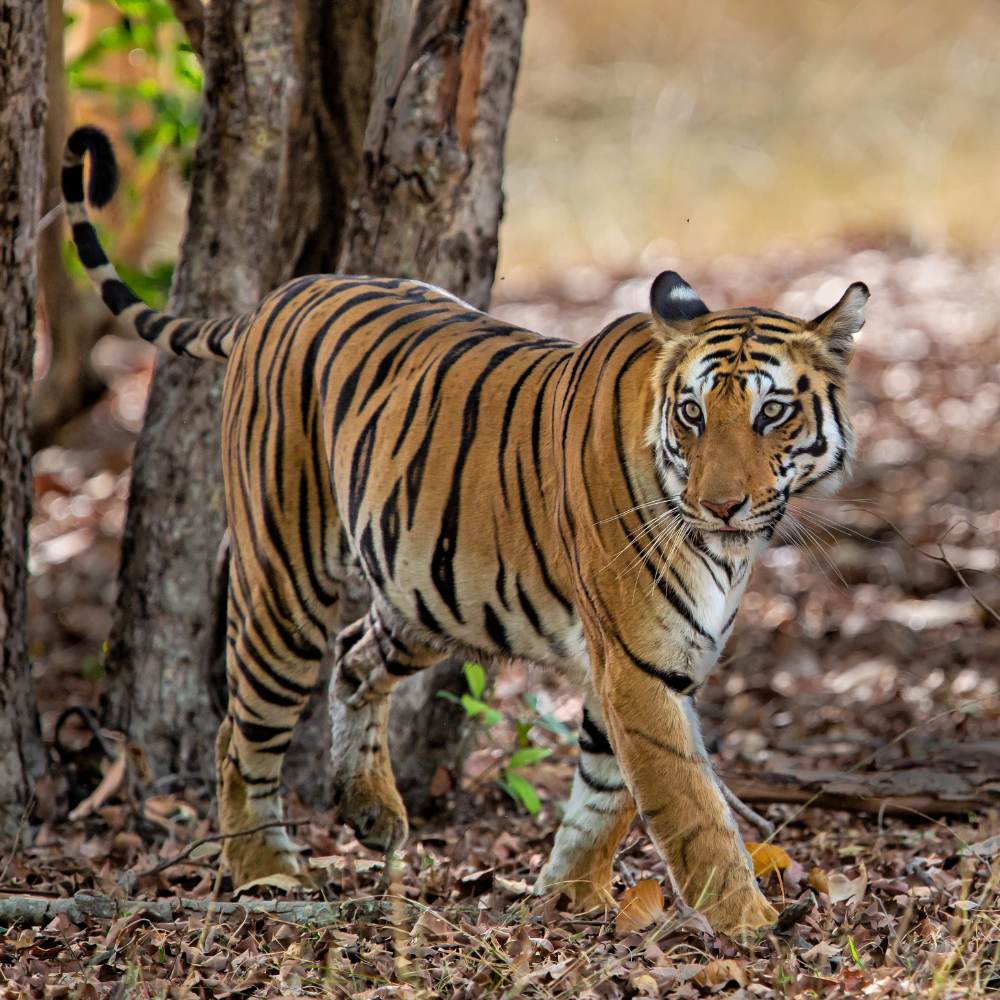
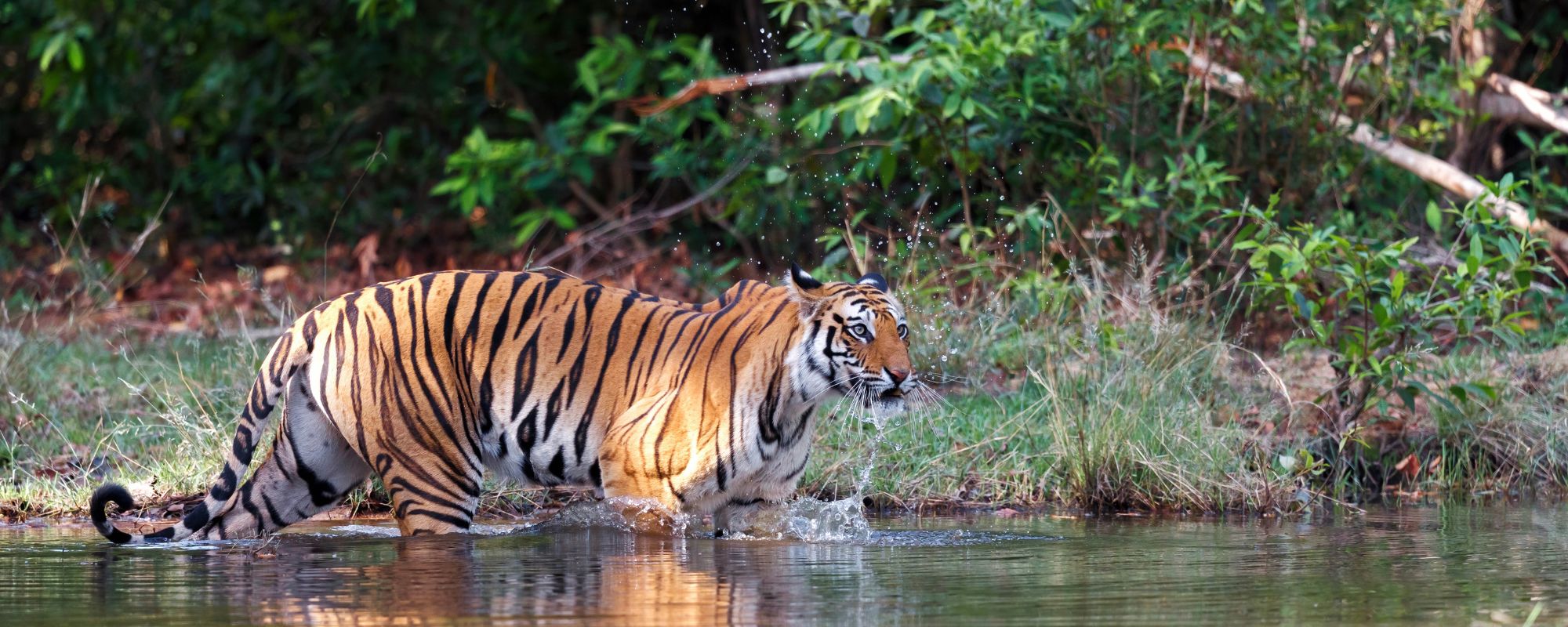
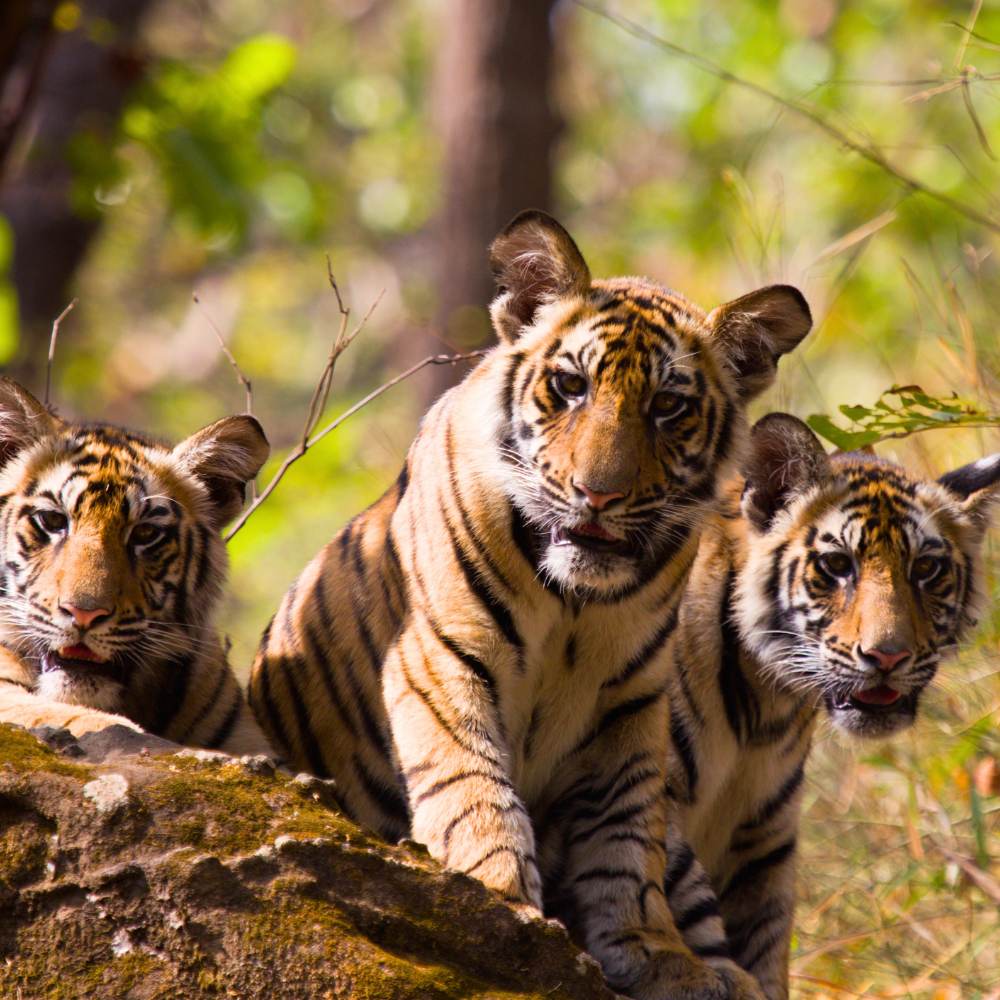
Bandhavgarh National Park, in the Umaria district of Madhya Pradesh, is widely cited as having the highest density of wild tigers of any reserve in the world. The park was declared a national park in 1968 at the initiative of Maharaja Martand Singh of the former princely state of Rewa, on land that had previously served as the Rewa royal family's hunting ground, and became a designated Tiger Reserve in 1993. The most recent national tiger census, conducted in 2022, recorded 135 tigers within the reserve.
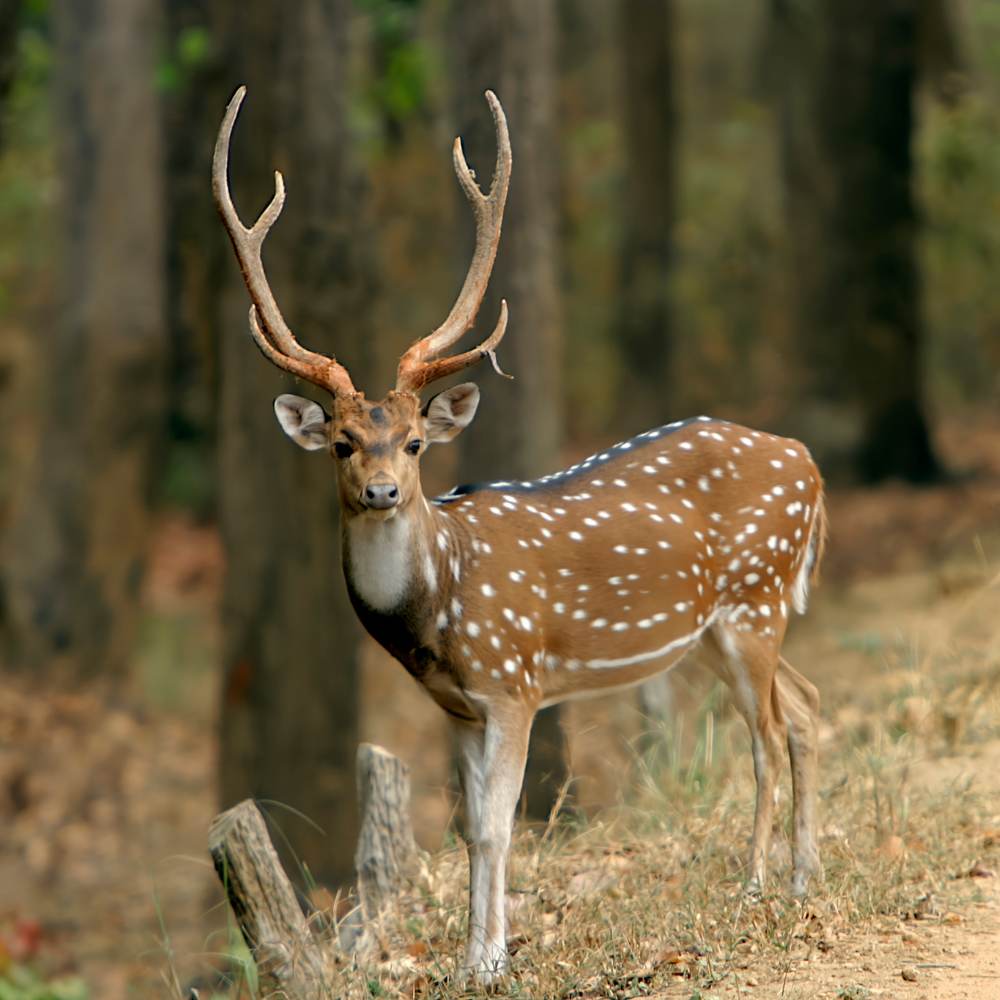
The reserve's high density is partly due to unusually compact tiger territories compared with other Indian parks: female tigers hold ranges of roughly 10 to 20 square kilometres and males 20 to 50 square kilometres, both considerably smaller than typical ranges elsewhere, concentrating more tigers into a smaller visitable area. The three core safari zones, Tala, Magdhi, and Khitauli, each offer a different character: Tala is the oldest and most scenic, home to Bandhavgarh Fort and the best historical tiger sighting record; Magdhi is a denser forest with strong sighting frequency; Khitauli is better suited to birdwatching and has recently become a base for a migrant wild elephant herd. Beyond tigers, the park protects leopards, sloth bears, and, since a 2012 reintroduction programme that transferred animals from Kanha, a recovering population of gaur (Indian bison), which had numbered around 170 by early 2025.
Bandhavgarh also holds genuine historical depth beyond its wildlife: the 2,000-year-old Bandhavgarh Fort sits atop the park's central hill, alongside a 10th-century reclining Vishnu statue (Shesh Shaiya) and ancient rock-cut caves, though access to the fort itself is restricted to two pilgrimage days a year. The park is closed annually from July 1 to mid-October for the monsoon.
Kanha: Is This Really the Jungle Book Jungle?
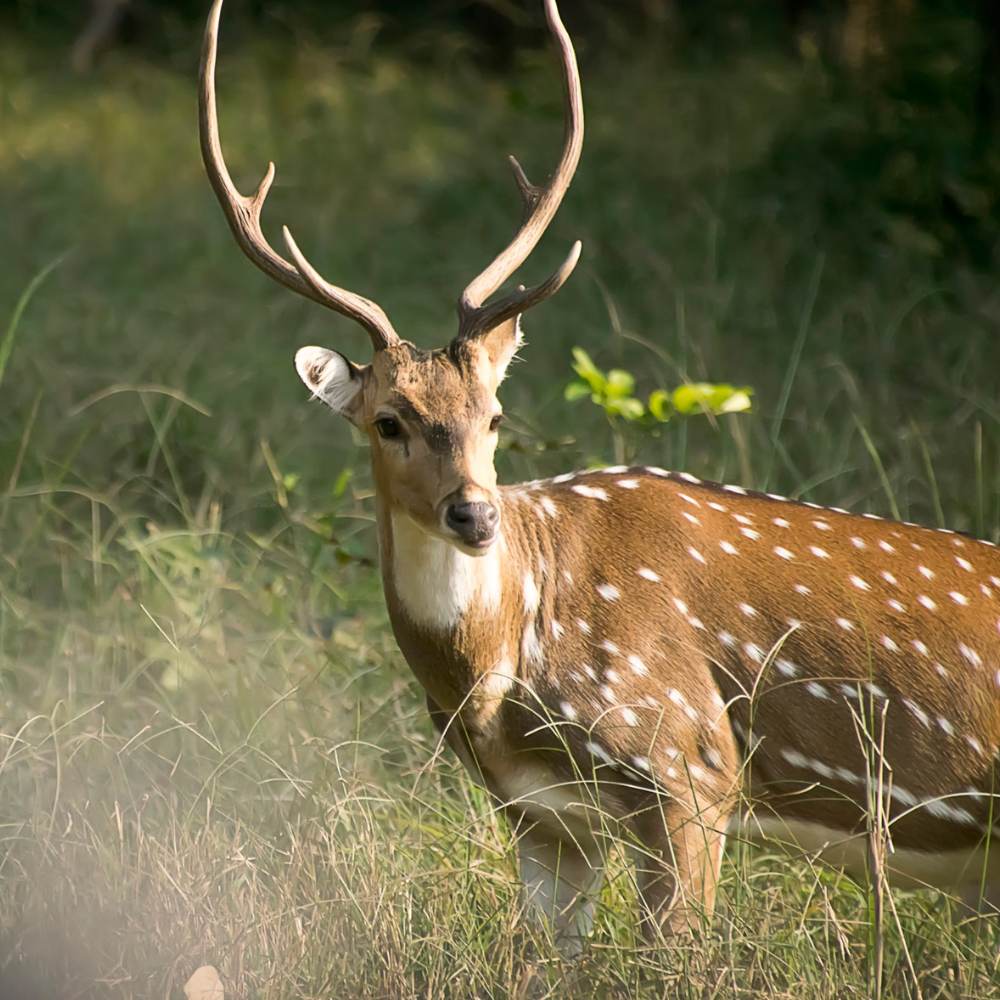
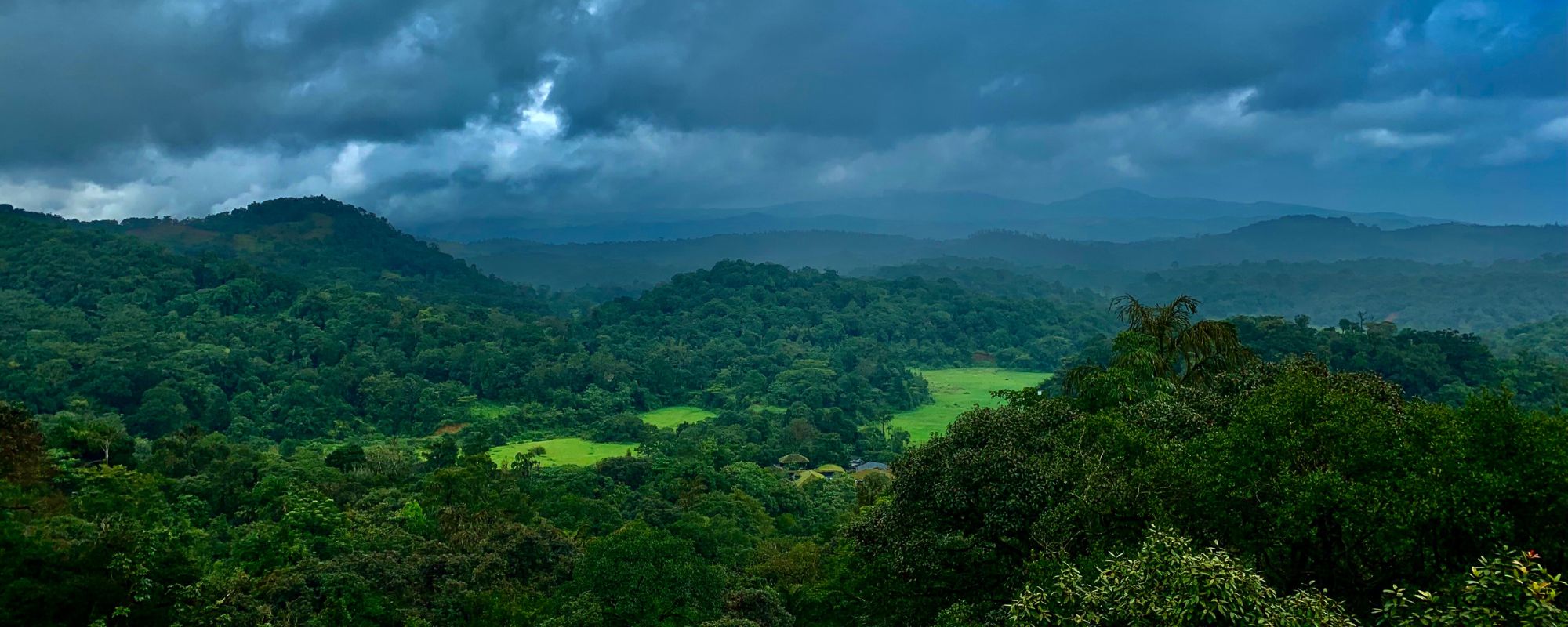
Kanha National Park, roughly three to four hours from Bandhavgarh by road, is one of India's largest and most scenic tiger reserves. It is frequently marketed as the inspiration for Rudyard Kipling's The Jungle Book, though the connection is more folklore than fact: Kipling never visited central India, and the book's fictional setting of Seeonee is more directly associated with the Seoni district near Pench National Park than with Kanha itself. What Kanha does offer is a landscape that closely matches the book's descriptions, sal and bamboo forest, open meadows, and winding streams, which is why the association has endured regardless of its historical accuracy. Established in 1955, Kanha is credited with one of India's conservation success stories: the hard-ground barasingha (swamp deer), a subspecies found only in this region, was brought back from the edge of extinction through a dedicated breeding programme after its population collapsed to a few dozen animals in the 1960s. Kanha's population later served as the source herd for the 2012 reintroduction of gaur to Bandhavgarh.
Kanha's safari zones cover a larger total area than Bandhavgarh, generally leading to longer drives between sightings but offering a stronger overall wilderness experience and excellent odds of seeing leopard, wild dog (dhole), and gaur alongside tigers. Travellers building a Madhya Pradesh circuit typically choose one of Bandhavgarh or Kanha rather than both, given the road distance between them and the overlap in experience: Bandhavgarh suits travellers prioritising tiger-sighting odds, while Kanha suits those seeking a broader wilderness experience with somewhat lower visitor density.
How to Combine Khajuraho, Orchha, and a Tiger Reserve in One Trip
The standard and most efficient circuit runs Delhi to Jhansi by train (roughly 2 to 3 hours on faster services), Jhansi to Orchha by road (15 kilometres, under 30 minutes), Orchha to Khajuraho by road (roughly 175 kilometres, 4 to 5 hours, or a short flight where seasonal air links operate), and Khajuraho to Bandhavgarh by road (roughly 4 to 5 hours) or via Jabalpur. A full version of this circuit, allowing one night in Orchha, two nights in Khajuraho, and three nights at a Bandhavgarh safari lodge, runs 7 to 9 days, including arrival and departure. Travellers who prefer Kanha over Bandhavgarh add roughly a half day of extra road travel to the itinerary.
When Is the Best Time to Visit Madhya Pradesh?
- October to March (recommended for temples): Comfortable temperatures for exploring Khajuraho and Orchha on foot, generally 15 to 28 degrees Celsius
- April to June (best for tiger sightings): Hot and dry, but tigers stay close to waterholes, making sightings more reliable at Bandhavgarh and Kanha; daytime heat can exceed 40 degrees Celsius.
- July to mid-October (avoid for safaris): Bandhavgarh and Kanha core zones close entirely for the monsoon; Khajuraho and Orchha remain open but with heavy rainfall
How to Reach Madhya Pradesh
- By air: Khajuraho Airport (HJR) has domestic connections from Delhi and Varanasi, primarily seasonal; Jabalpur Airport (JLR) offers more consistent year-round connections and is the more practical gateway for Bandhavgarh and Kanha.
- By rail: Jhansi is the primary railhead for Orchha and is well connected to Delhi and Agra; Khajuraho has limited direct rail links and is more commonly reached by road from Jhansi or by air.
- By road: Private car transfers connect all four destinations in this guide; road quality on the Khajuraho-Bandhavgarh stretch is variable, and a private driver familiar with the route is strongly recommended over self-driving