Kerala occupies the southwestern tip of India. A narrow, intensely green strip between the Western Ghats and the Arabian Sea, it packs an extraordinary range of landscapes into a compact geography: high-altitude tea country, dense wildlife reserves, a 600-kilometre coastline, and the backwaters that make Kerala unlike anywhere else in India.
Kerala is widely known as God's Own Country, a reputation that stands out among travellers from the UK, US, and India. The state combines natural beauty, cultural richness, excellent cuisine, and convenient travel logistics, making it one of the most appealing destinations in the region. This guide presents the essential places and experiences, optimal visiting times, and practical planning advice.
Top 10 Things to Do in Kerala
- The Kerala Backwaters: Alleppey and Kumarakom
- Munnar Tea Estates and Eravikulam National Park
- Fort Kochi: Heritage, History, and the Chinese Fishing Nets
- Periyar Tiger Reserve, Thekkady
- Varkala: Cliffs, Beach, and Papanasam
- Kovalam Beach
- Thrissur Pooram
- Kathakali and Kalaripayattu
- Onam and the Nehru Trophy Boat Race
- The Kerala Sadya
1. The Kerala Backwaters: Alleppey and Kumarakom
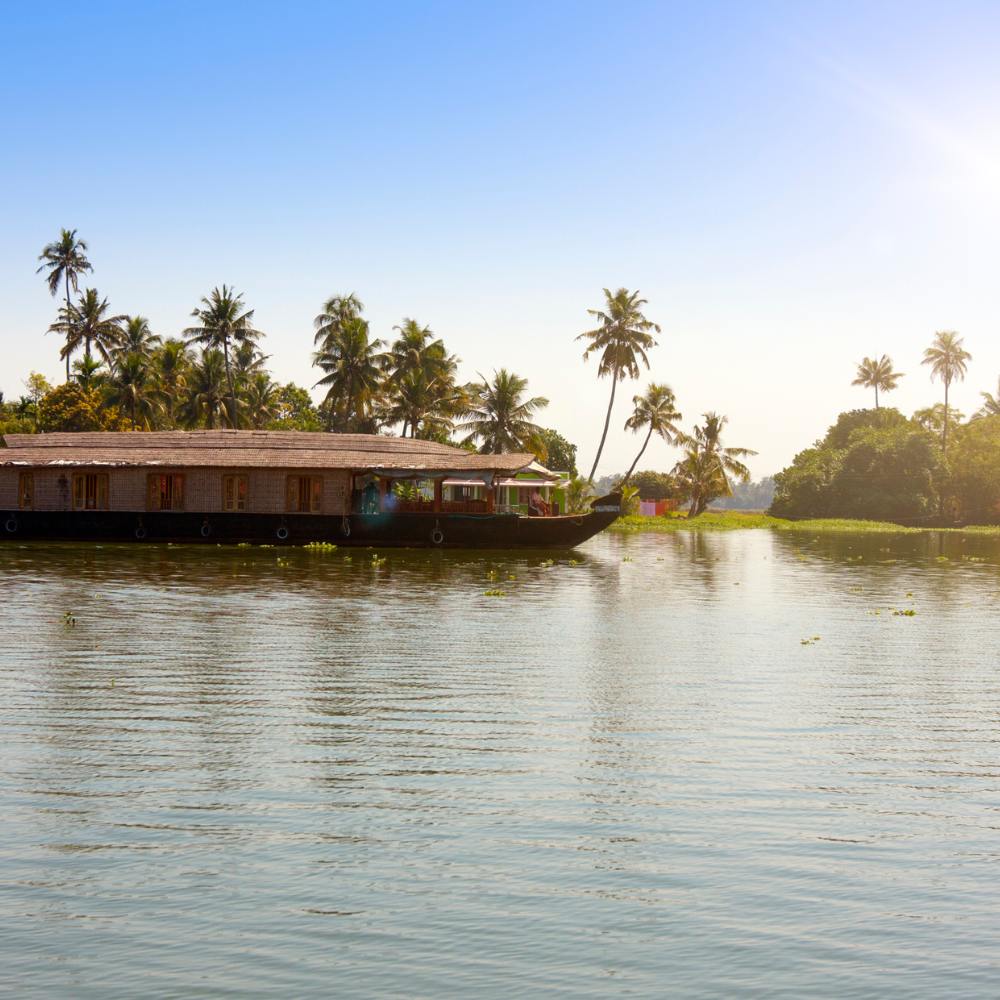
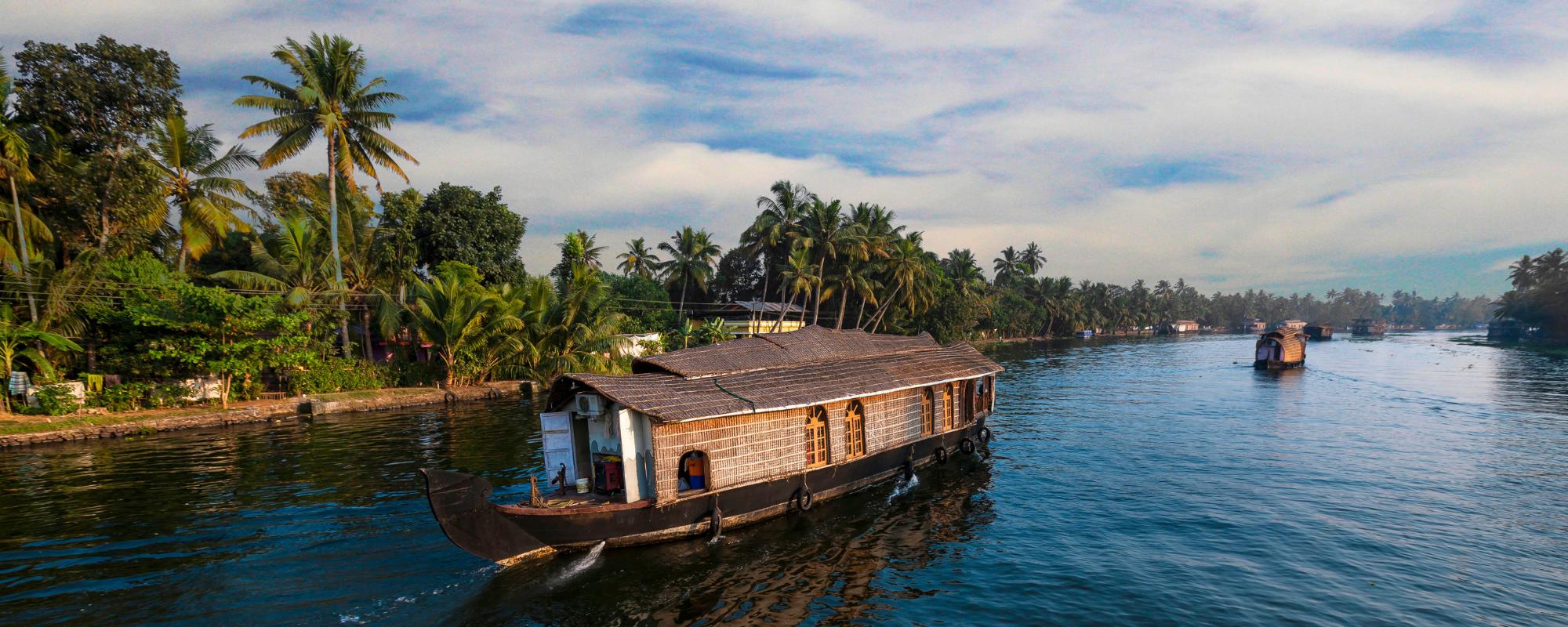
The backwaters are Kerala's defining experience. This 900-kilometre network of lagoons, lakes, rivers, and canals runs parallel to the Arabian Sea, fed by 38 rivers from the Western Ghats. The kettuvallam, a traditional rice barge converted into a houseboat, is the image most associated with Kerala tourism, and it consistently delivers.
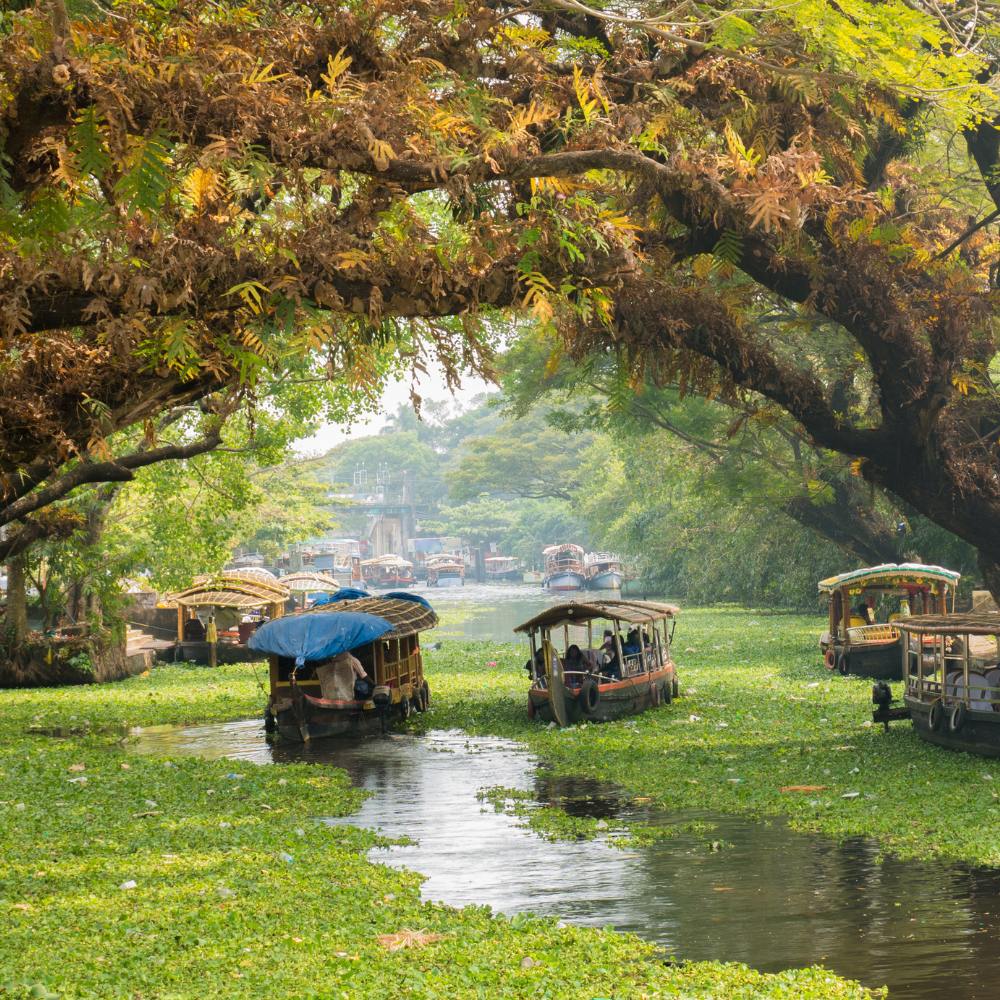
Alleppey (Alappuzha) is the main hub, sitting at the junction of the network and the sea. Kumarakom, 32 kilometres east of Vembanad Lake, is quieter and better suited to those seeking calm over activity. An overnight houseboat cruise follows the main backwater channels past paddy fields, coconut groves, and open lakes, with an on-board cook preparing Kerala meals throughout.
Practical Information
- Best time to visit: November to February
- Ideal duration: 2 nights
- Nearest airport: Cochin International Airport (IATA: COK), approximately 78 km
- Nearest railway station: Alleppey Railway Station (station code: ALLP), 5 km from the houseboat jetties
- Houseboat cost: approximately INR 8,000 to 25,000 per night, depending on category and season
2. Munnar Tea Estates and Eravikulam National Park
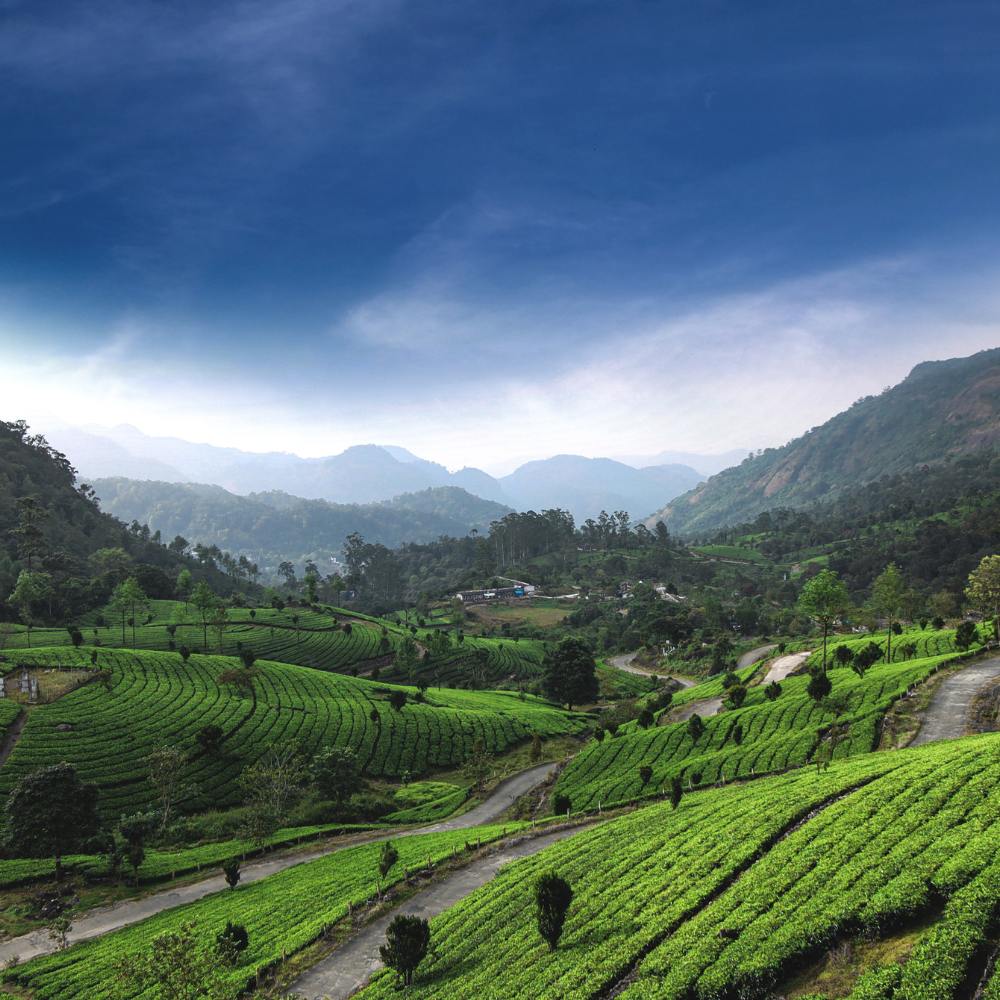
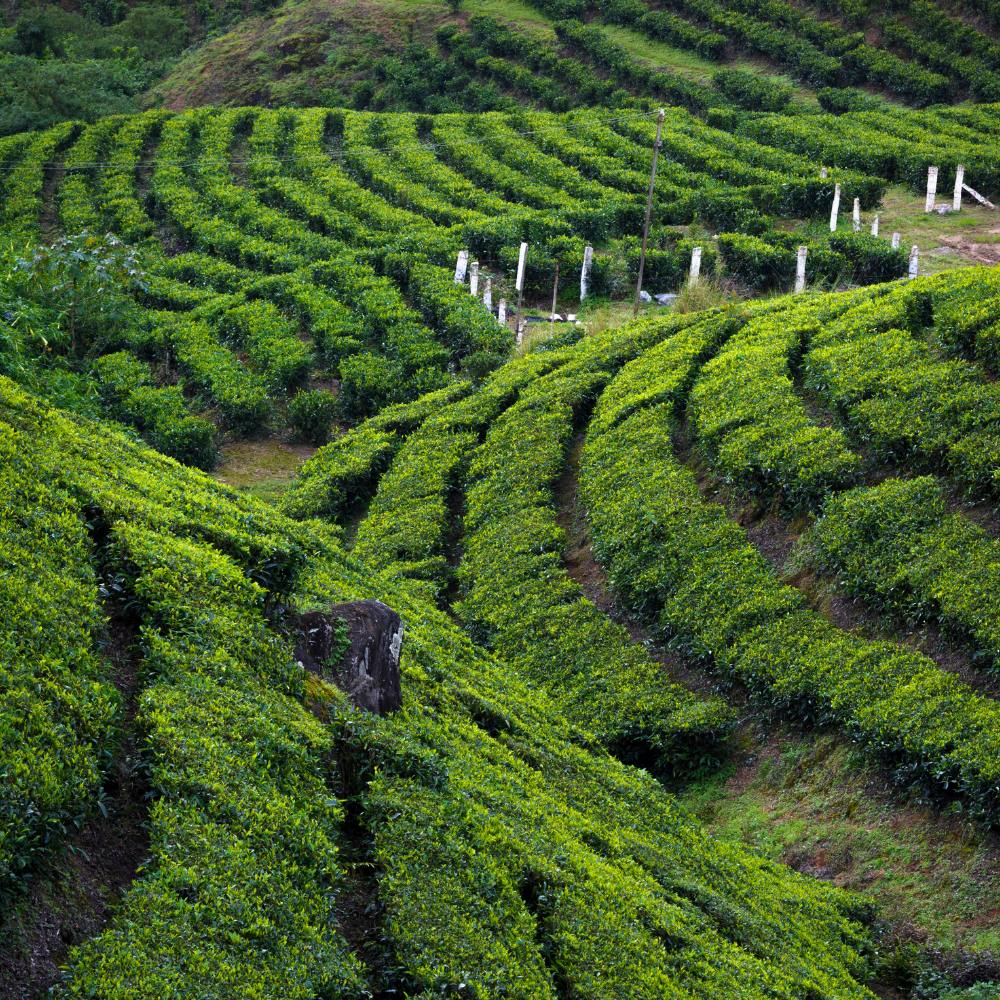
Munnar sits at approximately 1,600 metres in the High Ranges of the Western Ghats, surrounded by over 30 tea estates covering 13,000 hectares. The Malayalam name means 'three rivers'. Kolukkumalai, on the Kerala-Tamil Nadu border at approximately 2,170 metres, is widely cited as the world's highest tea plantation, accessible by jeep from Suryanelli.
Eravikulam National Park, 13 km from Munnar town, covers 97 square kilometres and is the primary stronghold of the Nilgiri tahr, an endangered mountain ungulate endemic to the Western Ghats. The park closes annually from February 1 to March 31 for the tahr calving season. Anamudi, at 2,695 metres, is the highest peak in South India outside the Himalayas and lies within the park boundary.
Practical Information
- Best time to visit: September to May (park closed February to March)
- Ideal duration: 2 to 3 nights
- Nearest airport: Cochin International Airport (COK), approximately 110 km; journey 3 to 4 hours
- Nearest railway station: Aluva Railway Station, approximately 110 km; no direct rail access to Munnar
3. Fort Kochi: Heritage, History, and the Chinese Fishing Nets
Fort Kochi, on a peninsula on the southwestern edge of Kochi, layers six centuries of colonial history across a compact, walkable area. Portuguese, Dutch, and British architectural influences coexist here in a way found nowhere else in India. St Francis Church, built by Portuguese Franciscan friars in 1503, is one of the oldest European-built churches in India and the original burial place of Vasco da Gama.
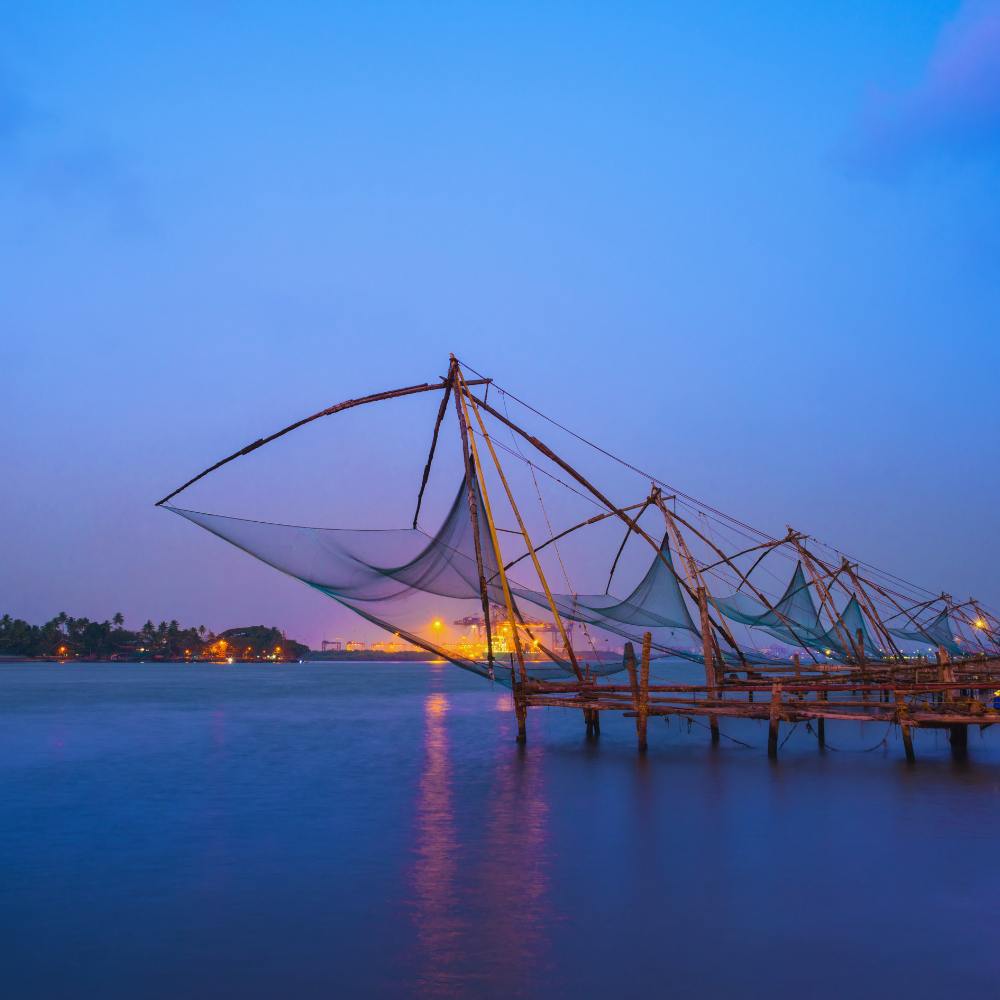
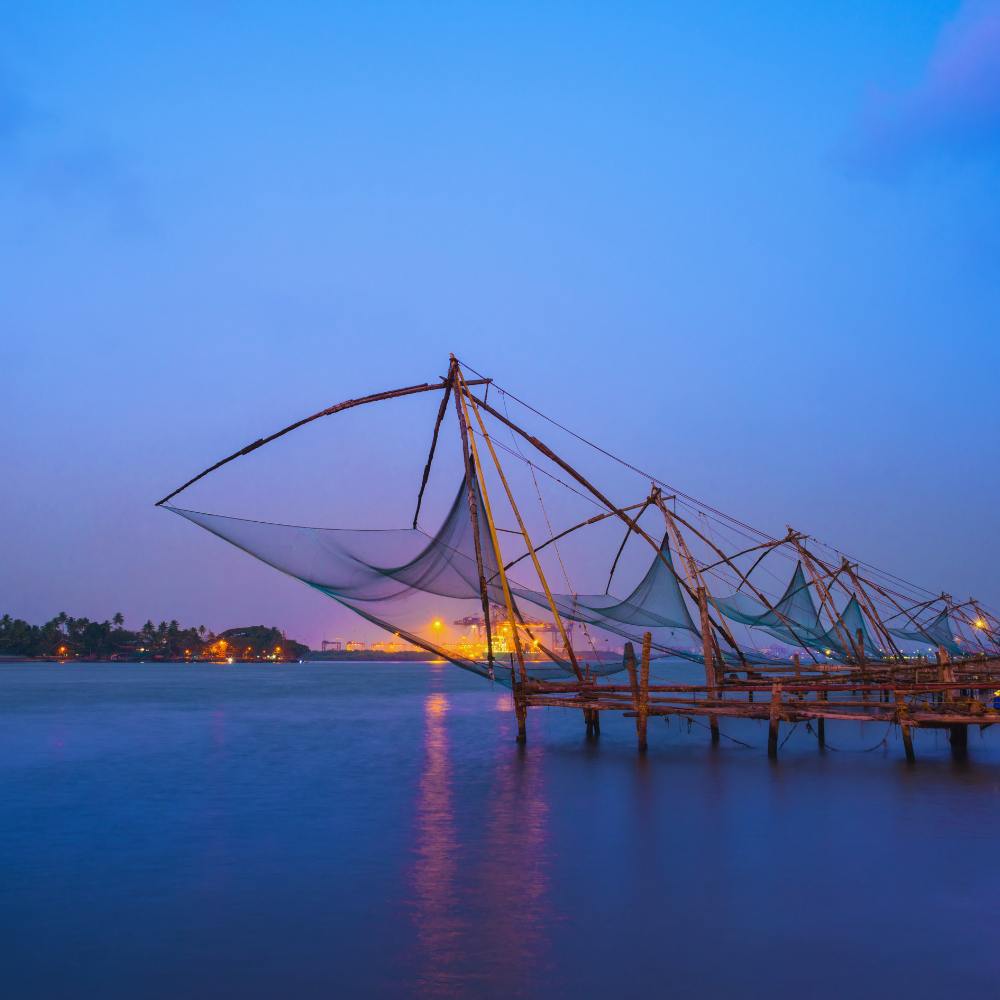
The Chinese fishing nets — giant cantilevered nets believed to have been introduced between 1350 and 1450 CE from the court of Kublai Khan — remain the most photographed feature of the waterfront. Mattancherry Palace, built by the Portuguese around 1555 and renovated by the Dutch, contains significant Kerala murals. The Kochi-Muziris Biennale, held every two years since its inaugural edition in 2012, has established Fort Kochi as one of Asia's most significant contemporary art venues.
Practical Information
- Best time to visit: October to March
- Ideal duration: 2 to 3 nights
- Nearest airport: Cochin International Airport (COK), approximately 40 km from Fort Kochi
- Getting around: entirely on foot or by cycle-rickshaw; passenger ferries connect Fort Kochi with Ernakulam.
4. Periyar Tiger Reserve, Thekkady
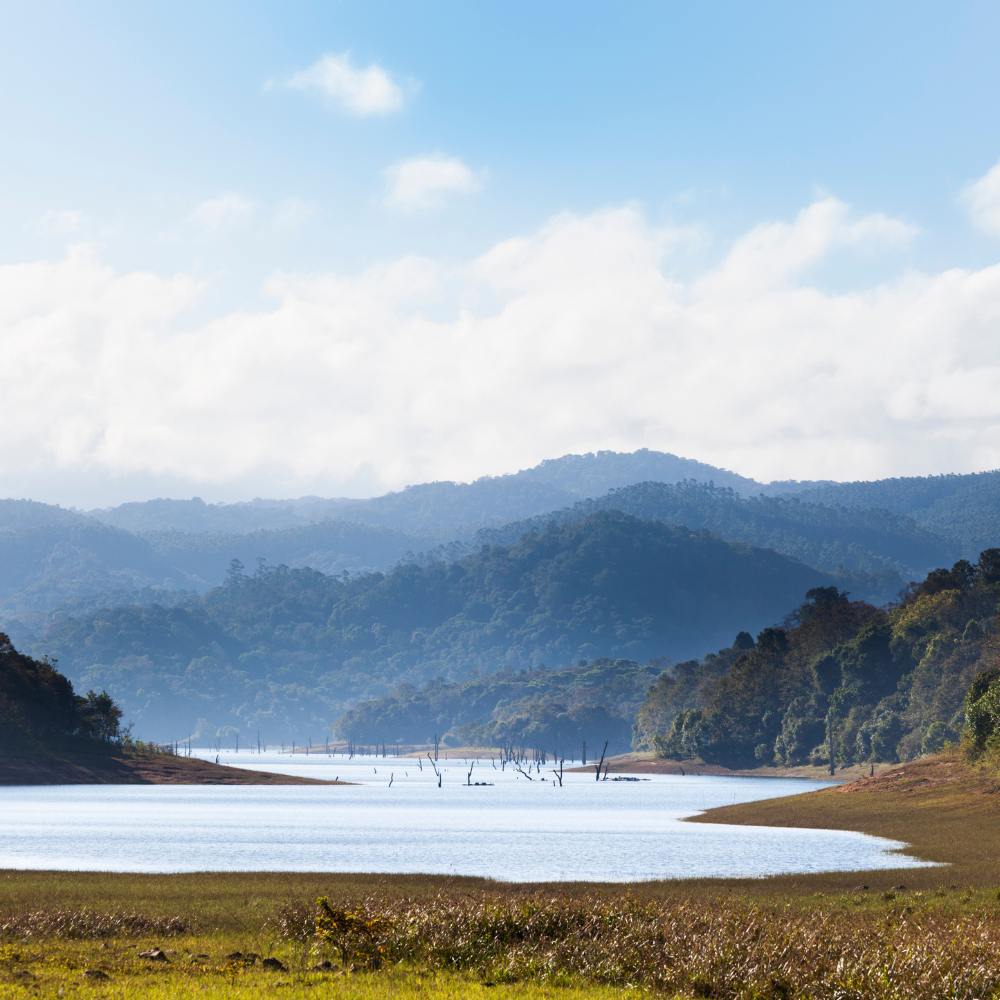
Periyar National Park covers 925 square kilometres in the Cardamom and Pandalam Hills of the southern Western Ghats. First established as a game sanctuary in 1934, it was declared a tiger reserve under Project Tiger in 1978. The reserve holds an estimated 40 Bengal tigers alongside more than 60 mammal species, including Asian elephants, leopards, gaur, lion-tailed macaques, and Nilgiri tahr.
The artificial Periyar Lake, created in 1895, forms the nucleus of the sanctuary. Boat safaris offer sightings of elephants and wildlife at the water's edge. The Forest Department also operates guided jungle treks, bamboo rafting, and night safaris. Kumily, adjacent to the reserve, is surrounded by cardamom and spice plantations that provide a fragrant contrast to the forest.
Practical Information
- Best time to visit: October to June
- Ideal duration: 2 to 3 nights
- Nearest airport: Cochin International Airport (COK), approximately 195 km; 4 hours by road
- Nearest railway station: Kottayam, approximately 103 km; no direct rail to Thekkady
5. Varkala: Cliffs, Beach, and Papanasam
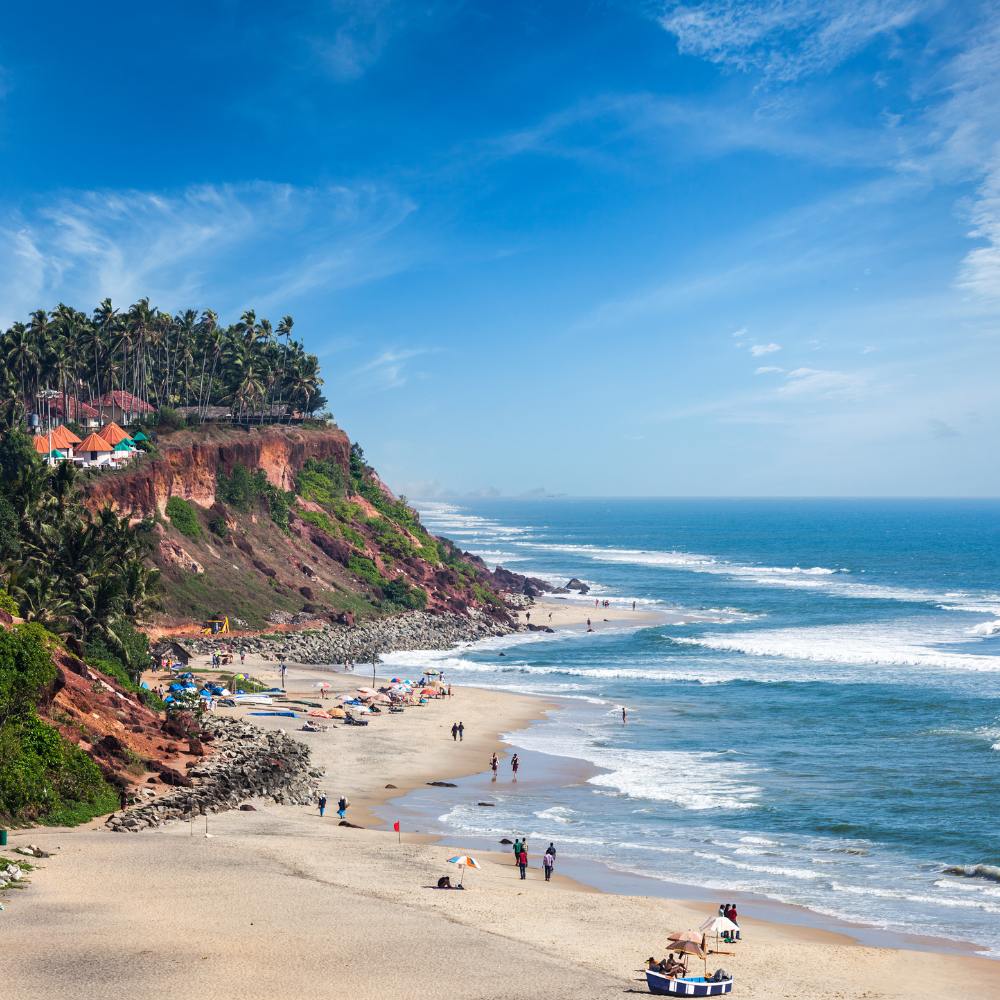
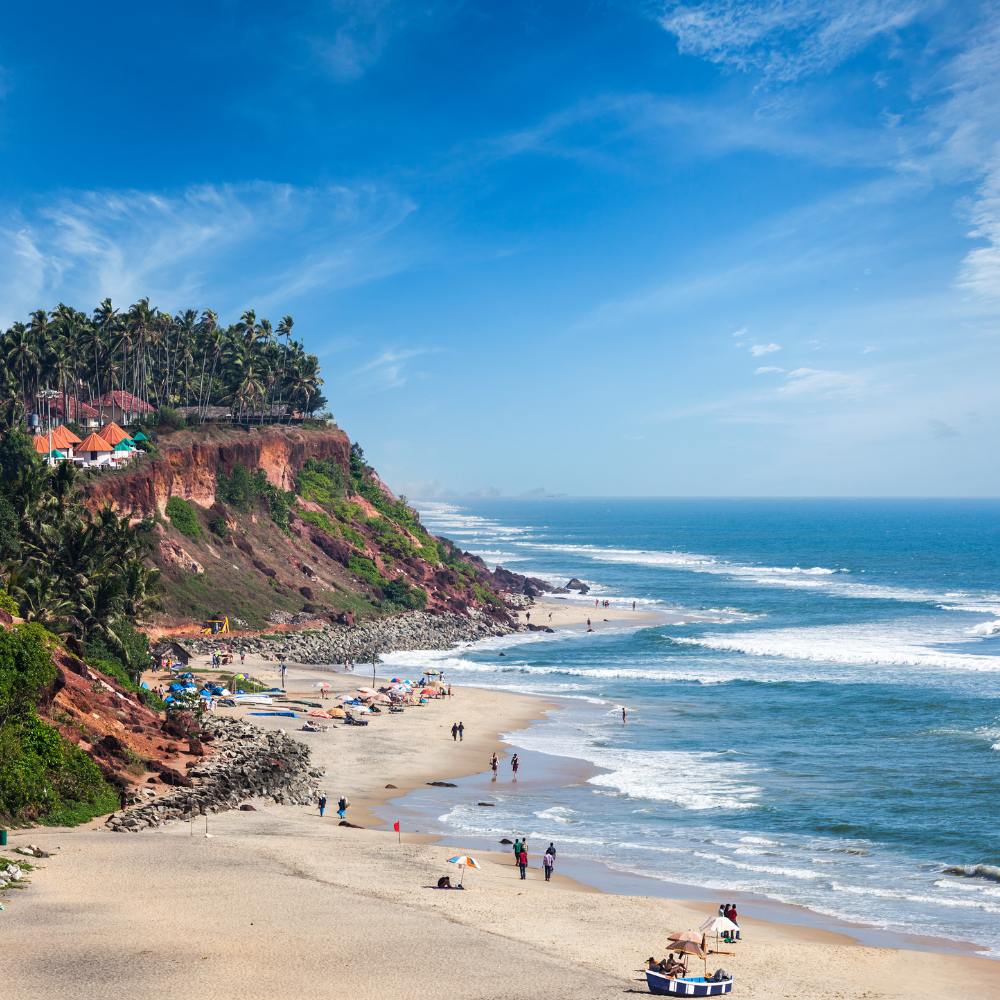
Varkala stands out as Kerala's most unique beach destination, recognisable by striking laterite cliffs that rise about 20 metres above the Arabian Sea, in contrast to the rest of the state's flat coastline. The promenade atop the cliffs stretches over a kilometre and features cafes, yoga studios, guesthouses, and restaurants that attract independent and long-term travellers seeking a quieter setting than Goa offers.
The beach below, Papanasam, is sacred to Hindu pilgrims who come to perform rituals for deceased ancestors. The 2,000-year-old Janardhana Swami Temple stands at the northern end of the cliff. Kathakali performances are staged regularly at the Varkala Culture Centre during the tourist season.
Practical Information
- Best time to visit: October to March
- Ideal duration: 2 to 4 nights
- Nearest airport: Trivandrum International Airport (IATA: TRV), approximately 50 km
- Nearest railway station: Varkala Sivagiri Railway Station (station code: VAK) on the main coastal line
6. Kovalam Beach
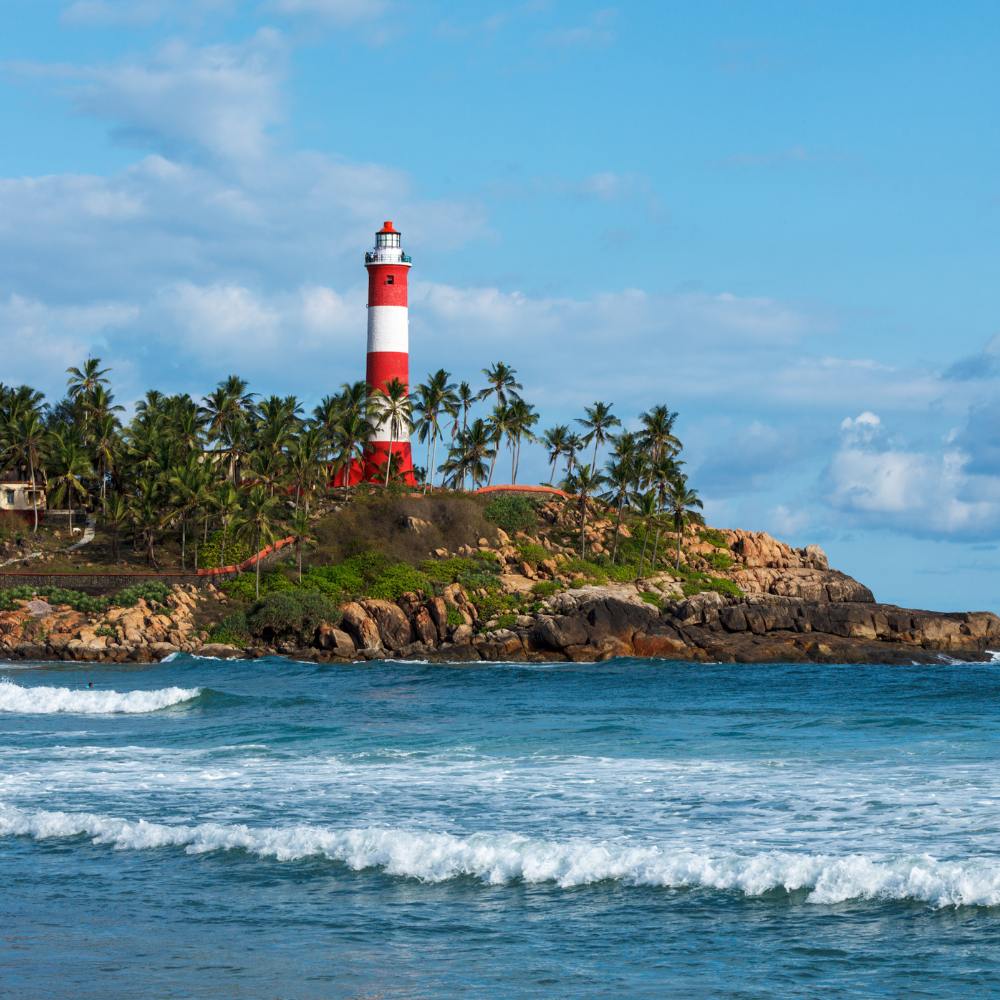
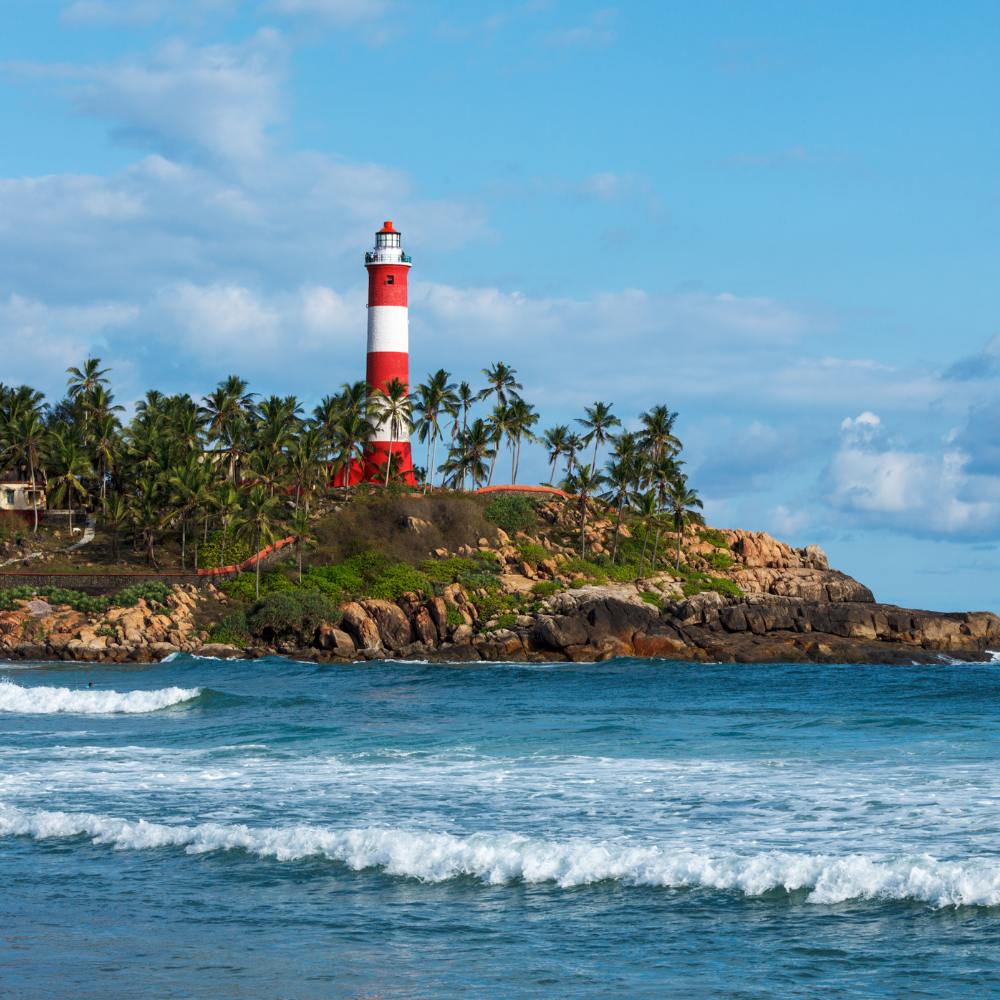
Kovalam is Kerala's most established beach destination, a crescent of three adjacent beaches 16 kilometres south of Thiruvananthapuram. The Lighthouse Beach at the southern end is the busiest, framed by the active Vizhinjam Lighthouse and a line of restaurants and guesthouses rising up the headland. Hawa Beach and Samudra Beach to the north are calmer and less commercial.
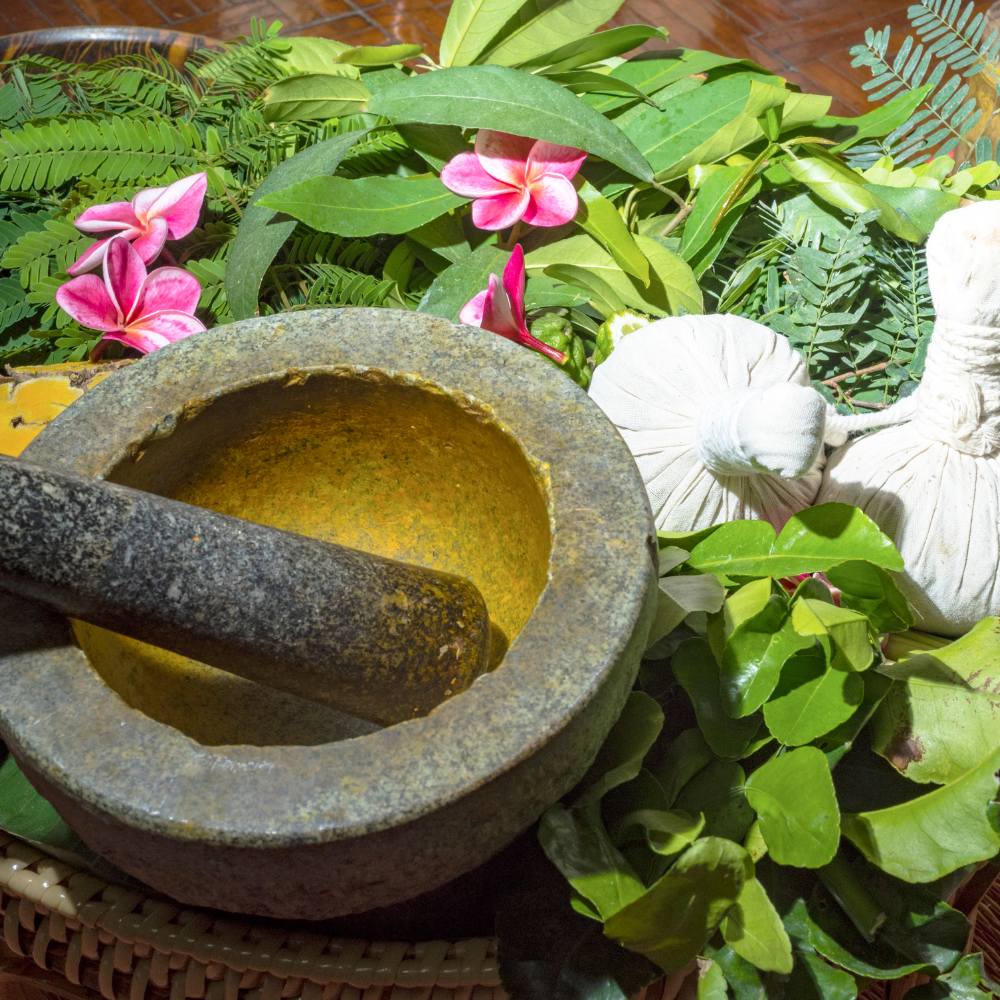
Kovalam has a significant Ayurvedic tourism industry built on Kerala's traditional system of medicine. Genuine clinical Ayurvedic programmes last a minimum of 7 to 14 days; shorter resort experiences provide an introduction. Swimming is safest at Lighthouse Beach, where lifeguards are present. Kovalam is accessible by auto-rickshaw or taxi from Thiruvananthapuram in approximately 45 minutes.
Practical Information
- Best time to visit: October to March
- Ideal duration: 2 to 4 nights
- Nearest airport: Trivandrum International Airport (TRV), approximately 16 km
- Nearest railway station: Thiruvananthapuram Central (station code: TVC), approximately 14 km
Kerala's Essential Cultural Experiences
7. Thrissur Pooram
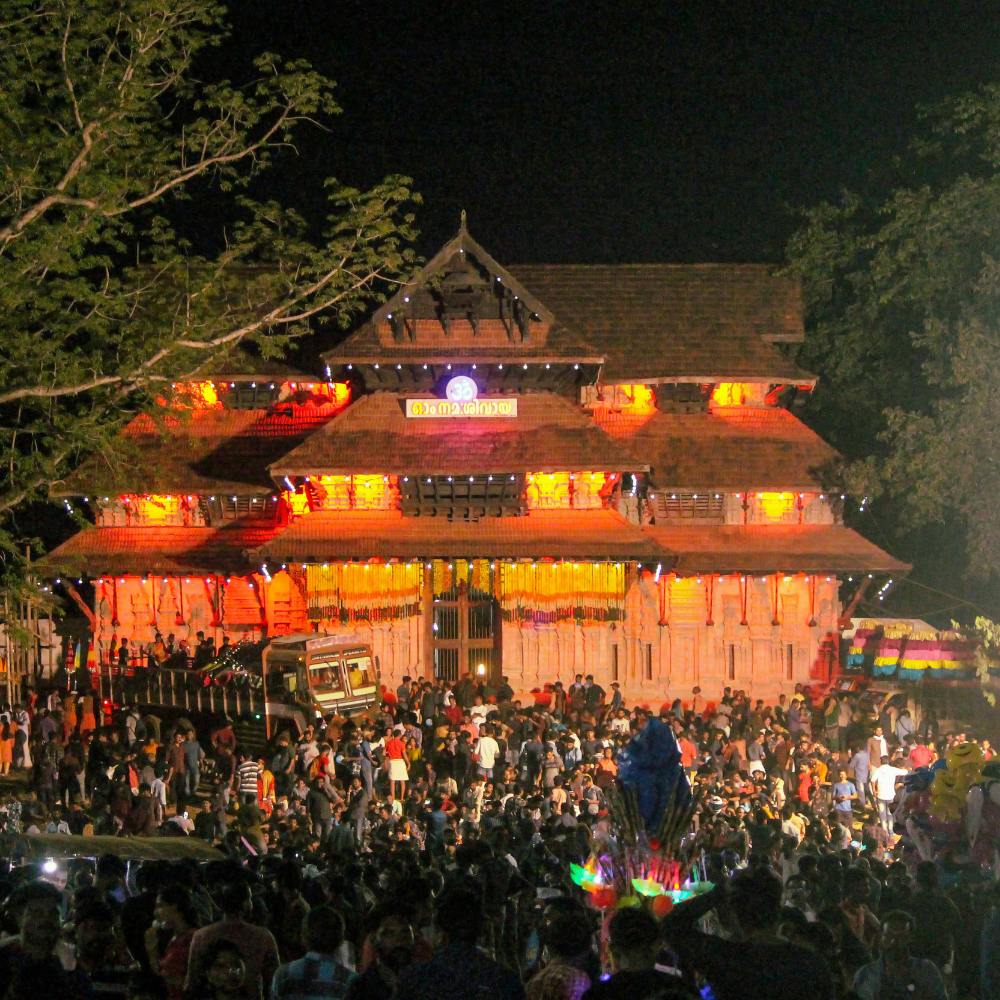
Thrissur Pooram is the most spectacular temple festival in Kerala. Held annually at the Vadakkumnathan Temple, it brings together 10 participating temples over 36 hours, culminating in the Kudamattam: a competitive display in which two groups of decorated elephants exchange ceremonial parasols to the Panchavadyam, the traditional five-instrument ensemble. The fireworks display is among the largest in South India. The festival falls in April or May; Thrissur railway station (code: TCR) is one hour from Kochi on the main coastal line.
8. Kathakali and Kalaripayattu
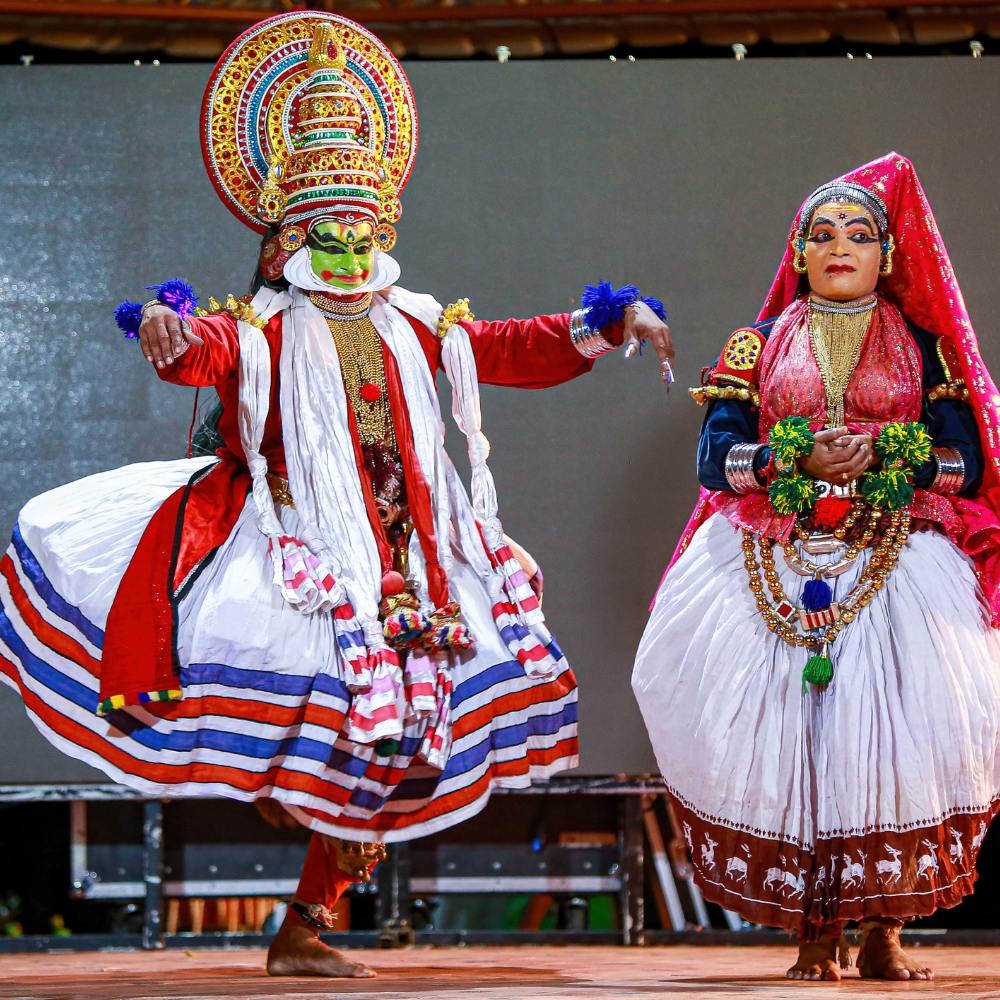
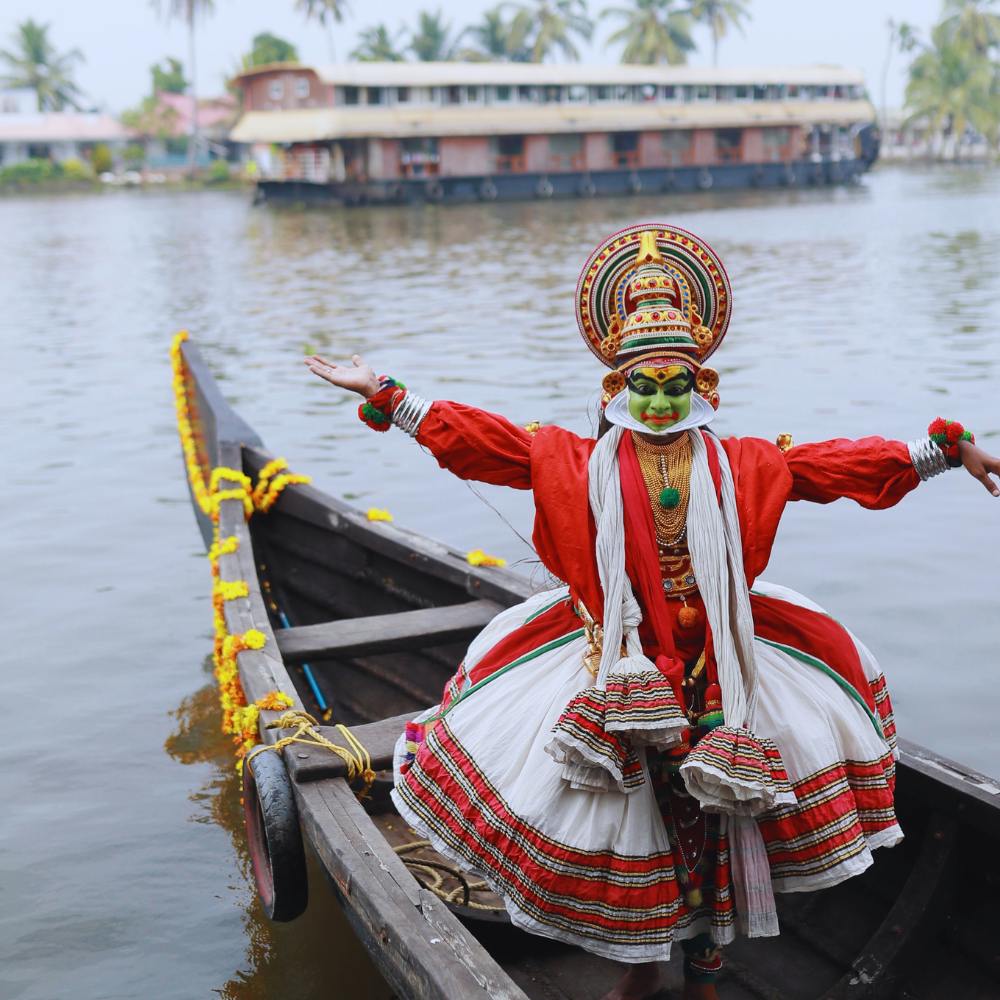
Kathakali is a classical dance-drama originating in 17th-century Kerala, performed through 24 primary hand gestures, elaborate facial expressions, and percussion-backed vocal music. The two-hour makeup preparation is as compelling as the performance itself. Kalaripayattu, Kerala's traditional martial art, is considered one of the oldest fighting systems in the world. Both are performed nightly at cultural centres in Fort Kochi, Varkala, and Thiruvananthapuram during the tourist season. Entry fees typically range from INR 300 to 500.
9. Onam and the Nehru Trophy Boat Race
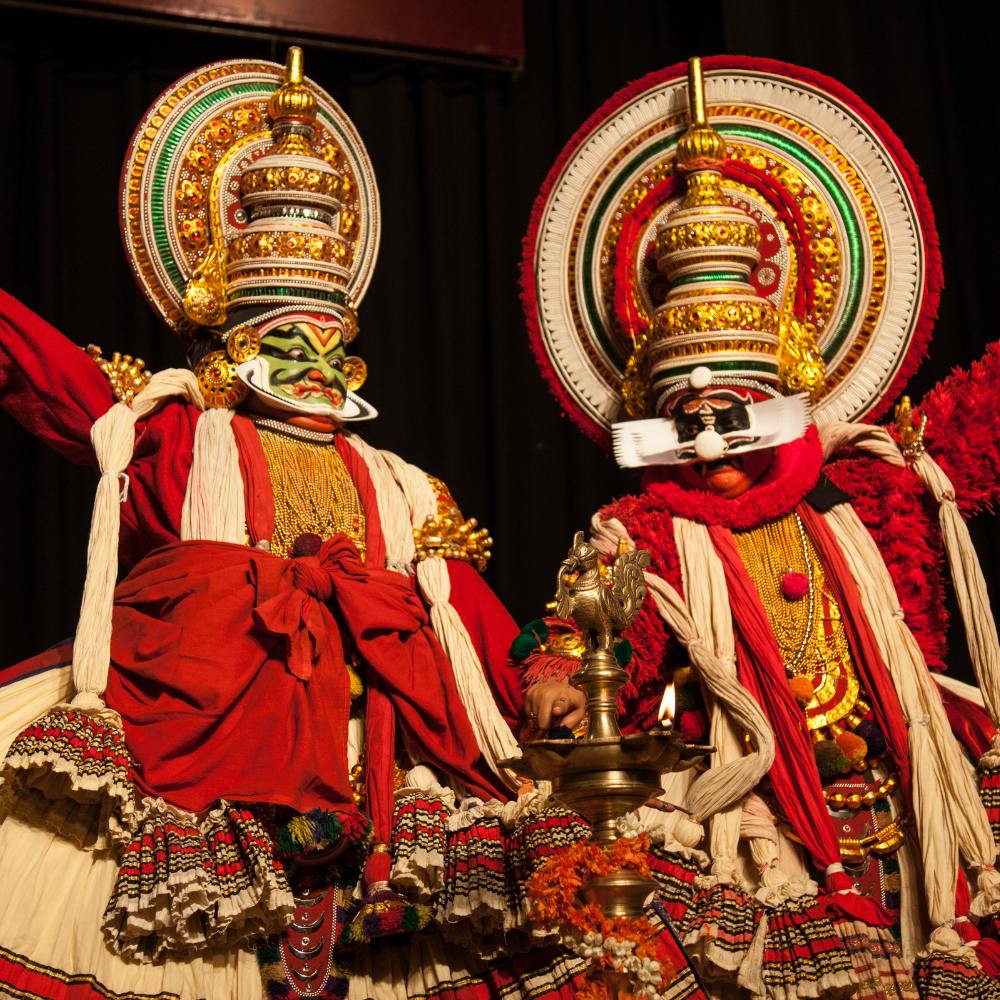
Onam is Kerala's most important cultural event, celebrated over 10 days in August or September to mark the legendary return of King Mahabali. The Pookalam, an elaborate floral rangoli, and the Onasadya, a feast of 26 or more dishes on a banana leaf, are its defining traditions. The Nehru Trophy Boat Race, on the second Saturday of August at Punnamada Lake near Alleppey, sees teams of up to 150 rowers power traditional chundan vallam snake boats over 100 feet in length. Book grandstand tickets and accommodation months in advance.
10. The Kerala Sadya
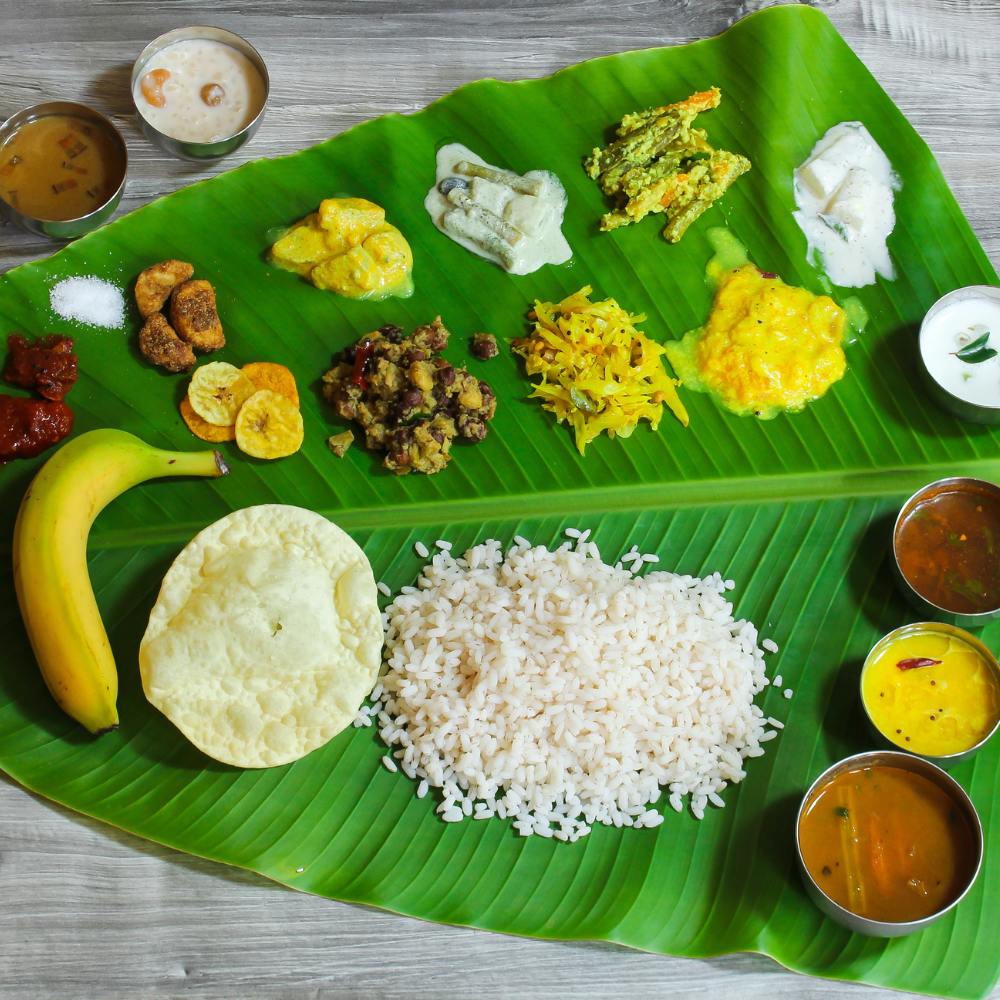
The Kerala Sadya is a formal vegetarian feast of 20 to 30 dishes served in traditional order on a banana leaf: avial, olan, kalan, erissery, thoran, pappadam, and one or more payasam desserts. It is eaten with the right hand only. The Onasadya on the main day of Onam is the grandest version. Sadya is available at traditional restaurants statewide on Sundays and festival days at a few hundred rupees per person, and is one of the most accessible windows into Kerala's cultural identity.
Best Time to Visit Kerala
- October to February: Clear skies, comfortable temperatures of 22 to 32 degrees Celsius, full access to backwaters, beaches, and hill stations. Christmas and New Year are absolute peaks; book months in advance.
- March to May: Lowland temperatures exceed 35 degrees Celsius, but Munnar and Wayanad remain cooler. Thrissur Pooram falls in April or May. Indian school holidays in May put significant pressure on domestic tourism.
- June to September: Heavy monsoon rainfall transforms the landscape to deep green. Beach swimming is inadvisable. The Nehru Trophy Boat Race is held in August. Considered the optimal season for Ayurvedic treatment.
How to Reach Kerala
By air: Cochin International Airport (COK) is the largest and best-connected airport, 30 km from Kochi. Trivandrum (TRV), Calicut (CCJ), and Kannur (CNN) also serve the state. No direct long-haul flights from the UK or USA; Gulf hub connections (Emirates, Etihad, Qatar Airways) or Indian metros are the most practical options.
By rail: Kerala's coastal mainline connects Thiruvananthapuram, Kochi, Alleppey, Thrissur, and Kozhikode to major Indian cities. Book via irctc.co.in. The Kerala Express (12625) from New Delhi takes approximately 47 hours to Thiruvananthapuram.
Frequently Asked Questions
How many days do you need in Kerala?
A minimum of 7 days covers the essentials: 2 nights on the backwaters, 2 nights in Munnar, and 2 nights in Fort Kochi. Ten to fourteen days adds Varkala, Thekkady, and Thrissur. Kerala rewards slow travel.
What is the best single experience in Kerala?
An overnight houseboat cruise between Alleppey and Kumarakom. No photograph fully prepares visitors for the quality of the light across the paddy fields or the silence on the water at dawn.
Is Kerala safe for solo travellers?
Yes. High literacy, widespread English, and established tourism infrastructure make Kerala one of the safest states in India for solo visitors, including solo women. Fort Kochi and Varkala are the easiest entry points.
What vaccinations do international visitors need?
UK visitors should consult their GP regarding Hepatitis A, Typhoid, and Tetanus. US visitors should check the current CDC guidance. Drink only bottled water throughout. Travel insurance covering medical evacuation is strongly recommended.
Is Kerala good for vegetarian travellers?
Excellent. The Sadya is entirely plant-based, and most Kerala breakfast dishes are vegetarian. The coconut, banana, and rice-based tradition offers substantial variety at every price point.