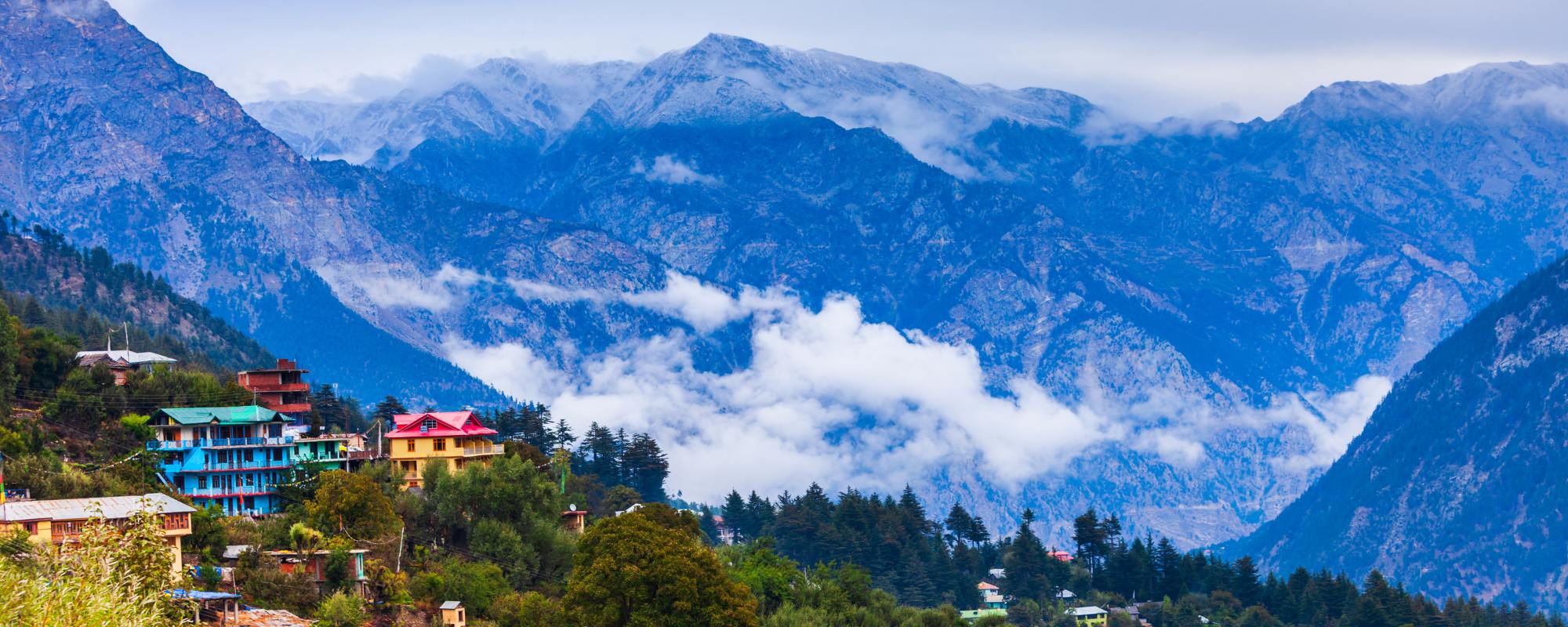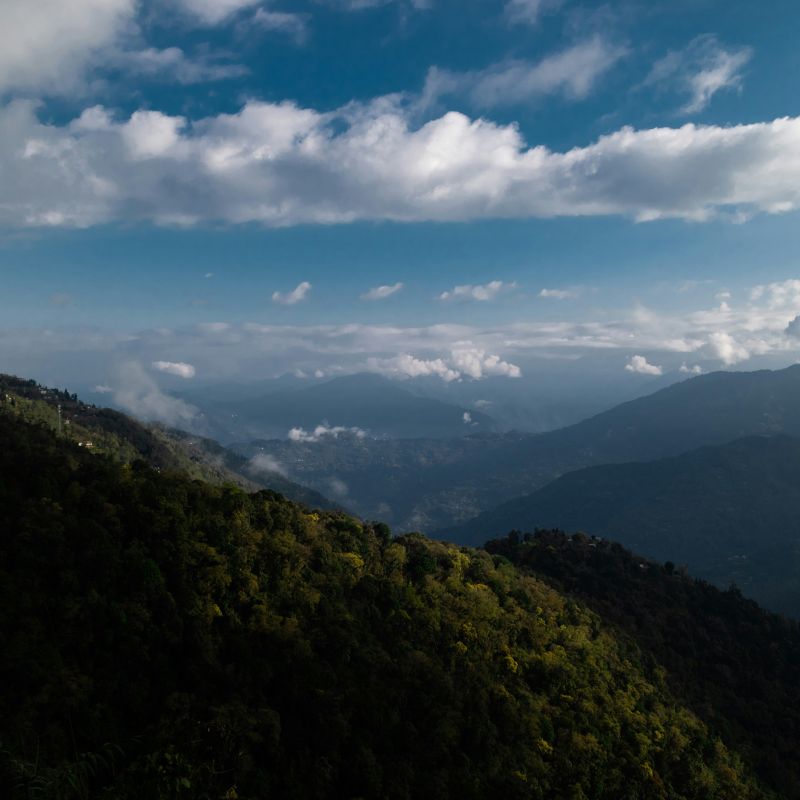
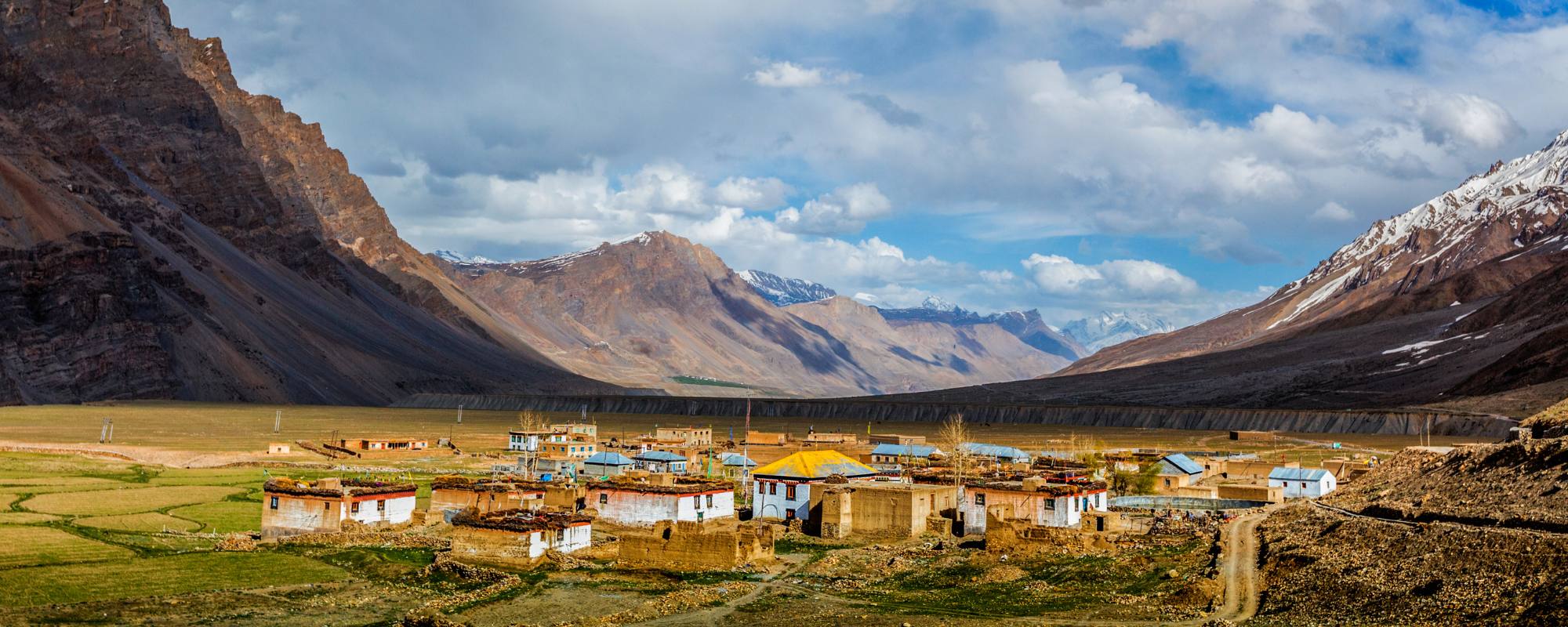
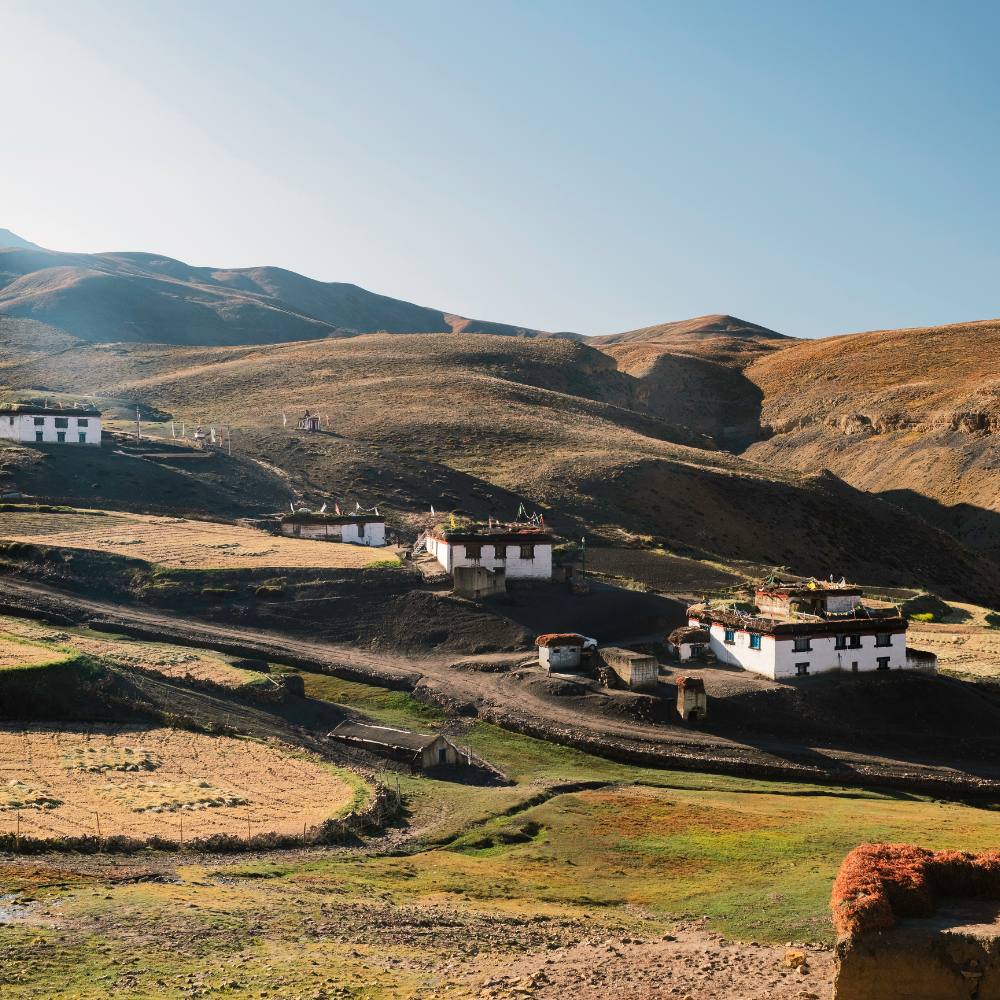
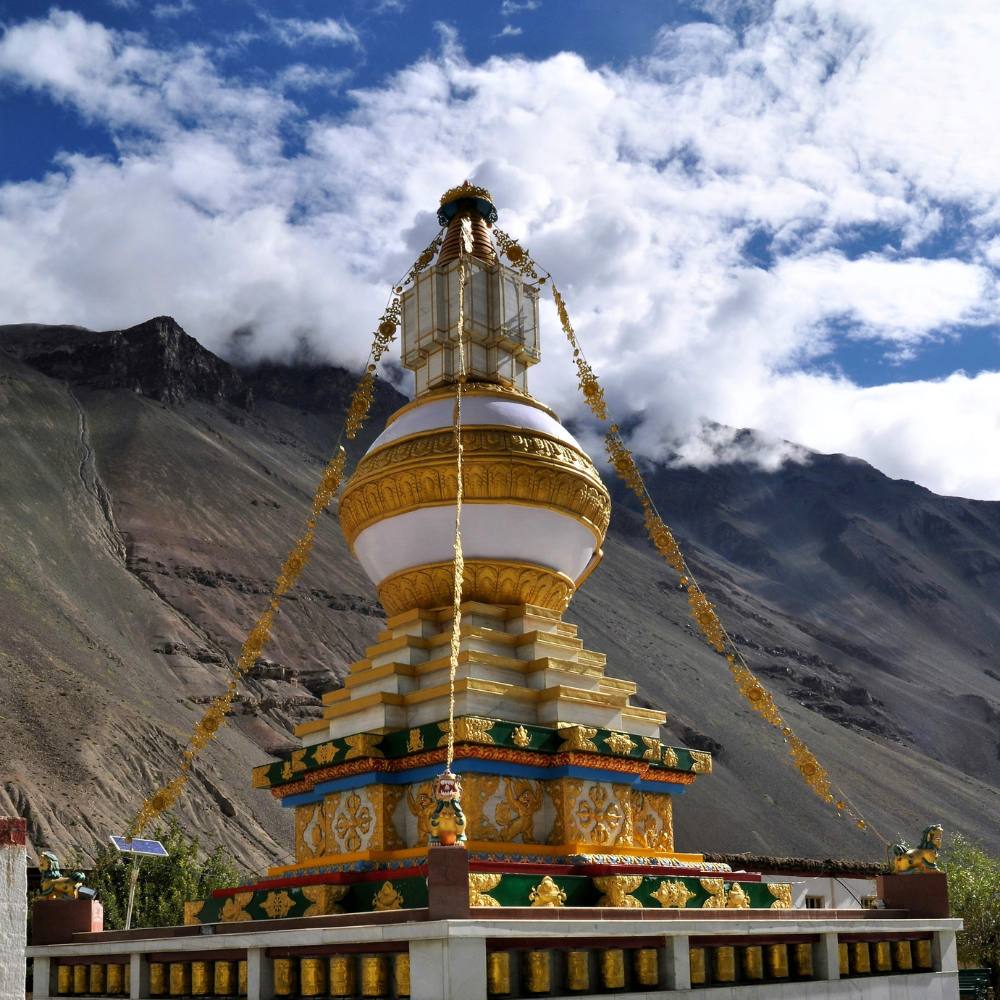
Spiti Valley does not ease you in gently. It drops you into a landscape of rust-coloured mountains, impossibly blue rivers, and villages clinging to cliffsides at altitudes where the air is noticeably thin. Located in the northernmost reaches of Himachal Pradesh, this high-altitude cold desert sits between the greater Himalayas and the Tibetan plateau, averaging over 3,800 metres above sea level.
Spiti is not a destination you pass through by accident. The roads are long, the seasons are unforgiving, and the journey demands intention. What it gives back in return is extraordinary: ancient monasteries, glacial lakes, villages untouched by mass tourism, and landscapes unlike anything else in India.
Whether you are travelling from abroad or from another corner of India, this guide covers the ten places in Spiti Valley that every traveller must see, and exactly what makes each one worth the journey.
Quick Reference: Top 10 Places in Spiti Valley
- Key Monastery (Kee Gompa)
- Chandratal Lake
- Tabo Monastery
- Kaza
- Dhankhar Village and Dhankhar Lake
- Langza Village
- Hikkim Village
- Komic Village
- Kibber
- Gue Mummy Stupa
1. Key Monastery (Kee Gompa)
Altitude: 4,166 m | Best For: History, spirituality, photography
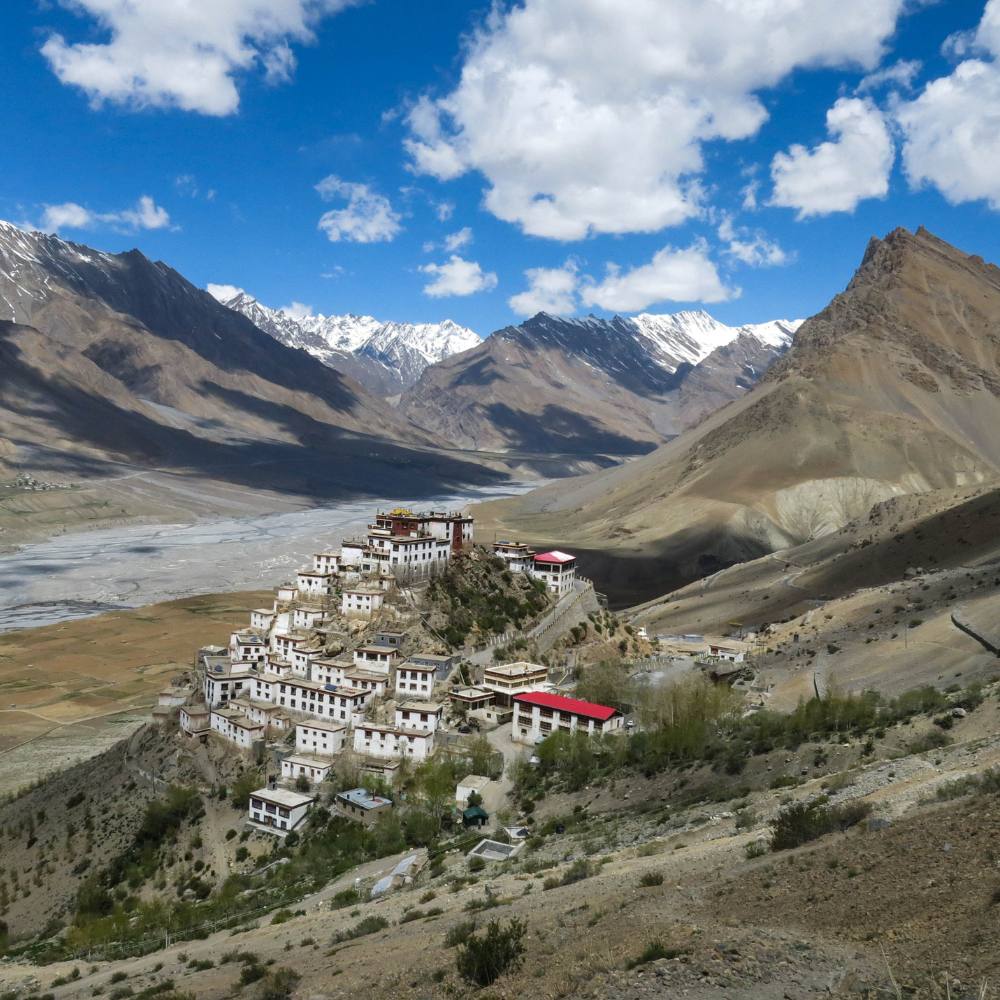
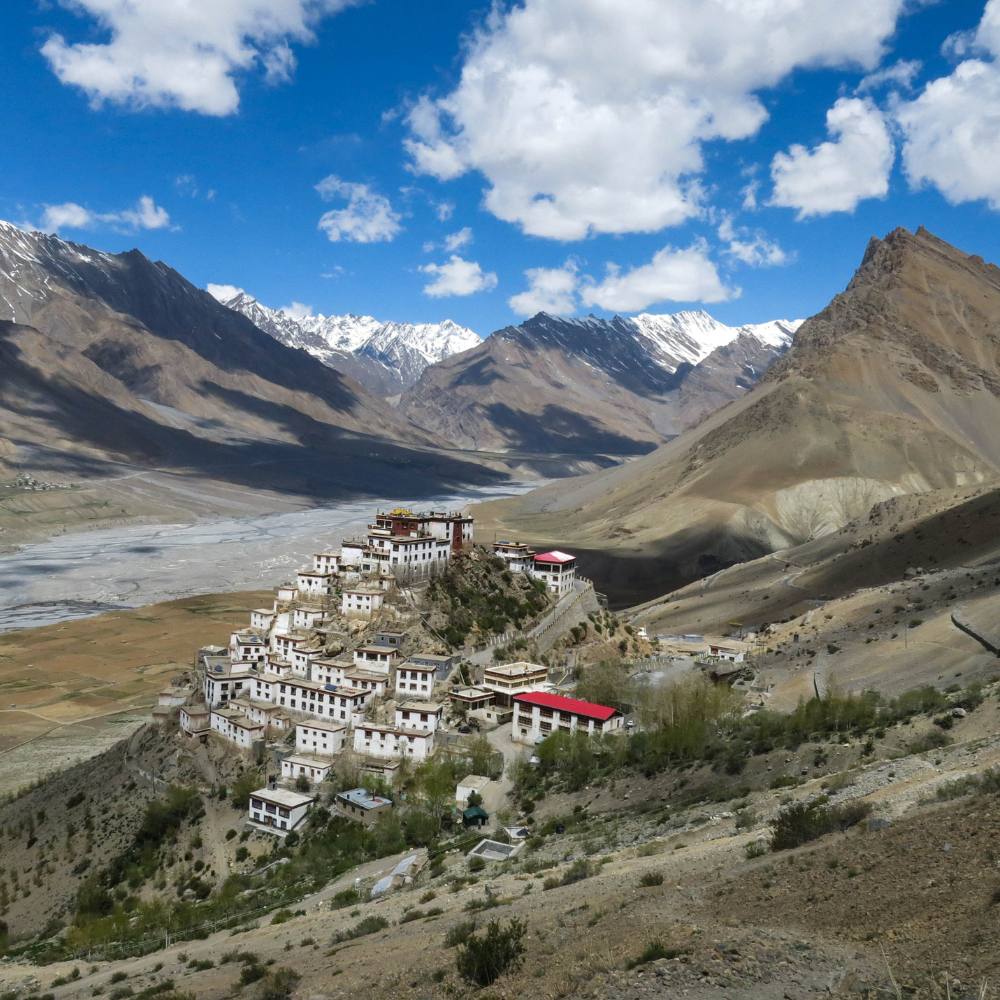
The largest and oldest monastery in Spiti Valley, Kee Gompa has stood for over a thousand years on a rocky hillside above the Spiti River. Its whitewashed multi-storey structure rises so naturally from the mountain beneath it that the two seem inseparable.
Inside, prayer halls are layered with centuries-old frescoes, thangka paintings, and gilded sculptures. The monastery has survived invasions, earthquakes, and fires and has been rebuilt each time. It remains a fully functioning centre of Tibetan Buddhist learning today, home to a community of monks.
The terrace views alone are worth the drive up: the Spiti River cutting through the valley floor, peaks filling the horizon in every direction.
What to Do Here
- Attend the early morning prayer session with the monks (around 6 AM)
- Explore the ancient manuscript collection in the library
- Visit during the annual Kee Festival (June or July, Tibetan lunar calendar) for ceremonial Cham dances
- Photograph the monastery from the valley road below at sunrise for the best light
2. Chandratal Lake
Altitude: 4,300 m | Best For: Trekking, camping, stargazing, photography
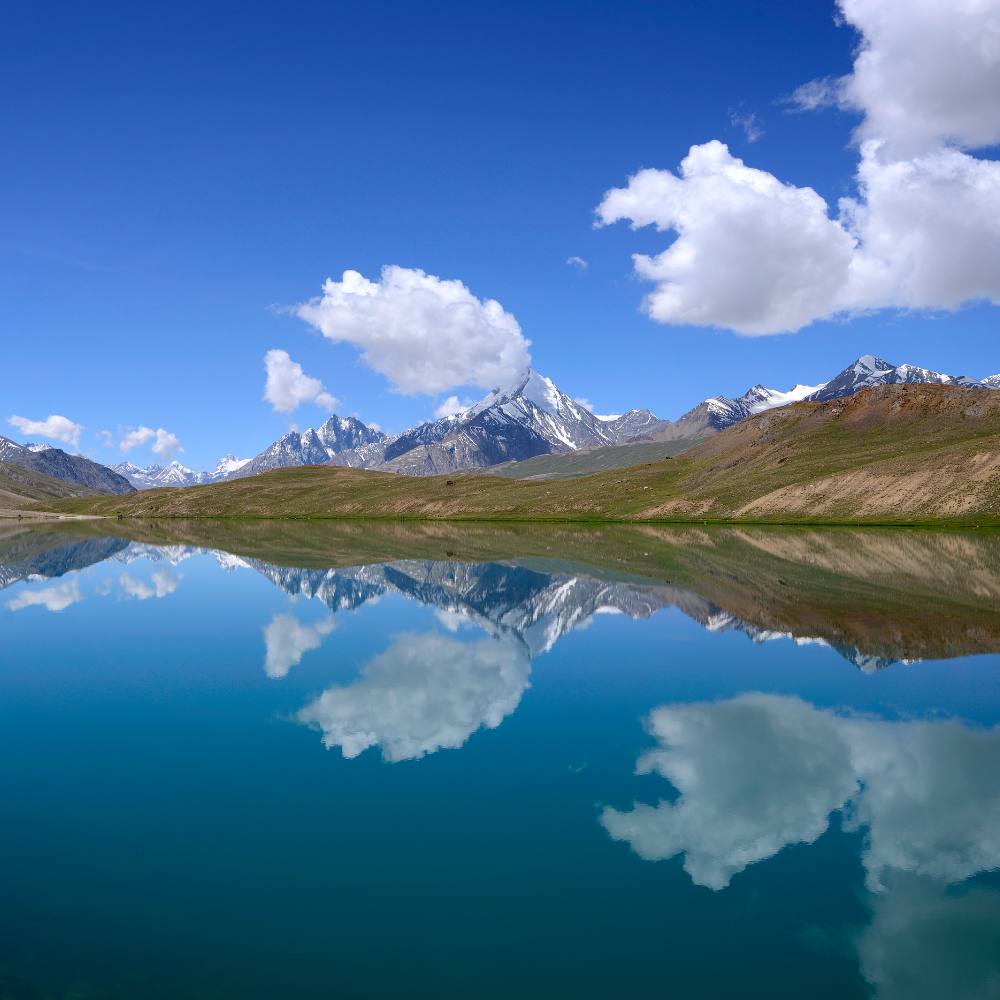
Chandratal, meaning Moon Lake, is a crescent-shaped glacial lake whose water shifts between emerald, turquoise, and deep sapphire depending on the light. The surrounding peaks mirror perfectly in its surface.
Recognised as a Ramsar wetland site by the international conservation community, Chandratal is one of the most ecologically significant high-altitude lakes in India. Motorised vehicles are restricted in the area to protect its fragile ecosystem.
A 3-kilometre trek from the nearest road access point leads to the lake. The trail crosses open alpine meadows blanketed in wildflowers through summer. Camping near Chandratal on a clear night delivers some of the finest stargazing in the country.
Good to Know
- Accessible from late May or June through September or early October
- Camping in designated zones only, regulated by the Himachal Pradesh Forest Department
- Carry all rubbish out. No waste disposal facilities exist at the lake
3. Tabo Monastery
Altitude: 3,050 m | Best For: Buddhist art, history, cave exploration
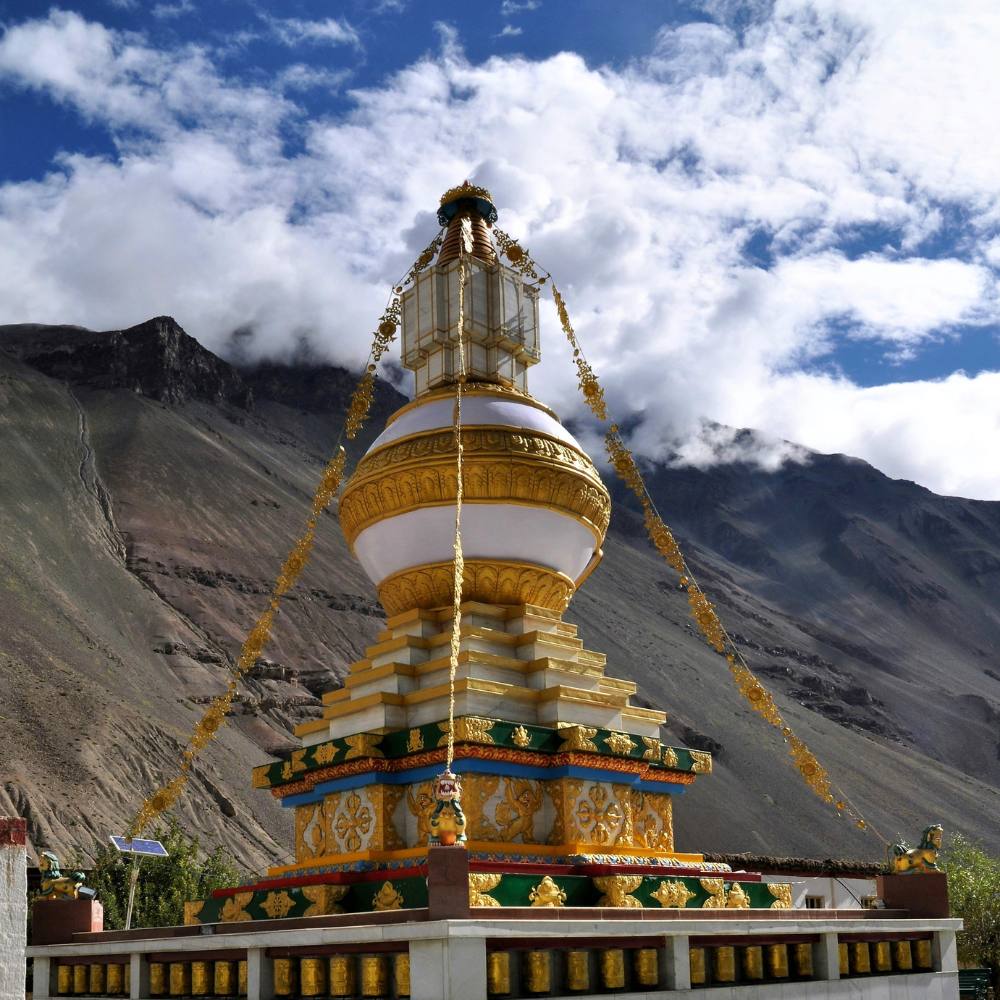
Founded in 996 CE by the Tibetan Buddhist scholar Lochen Rinchen Zangpo, Tabo Monastery is one of the oldest continuously functioning monasteries in the world. Historians and art scholars frequently describe it as the Ajanta of the Himalayas.
Its nine temples and multiple stupas house a collection of murals, stucco sculptures, and illuminated manuscripts spanning over a thousand years. The detail across every surface is extraordinary.
The Dalai Lama has visited Tabo on multiple occasions and has expressed a wish to spend his final years in meditation here. Behind the monastery complex, ancient caves carved into the hillside, once used by monks for extended meditation retreats, are open to visitors today.
Practical Details
- Photography inside the temples may be restricted. Always ask before raising your camera
- The biennial Tabo Festival features masked dances and Buddhist teachings open to visitors
- A small museum adjacent to the complex provides additional historical context
Read Also: Top 15 Cool Places to Visit in Maharashtra This Summer
4. Kaza
Altitude: 3,800 m | Best For: Base camp, acclimatisation, logistics, day trips
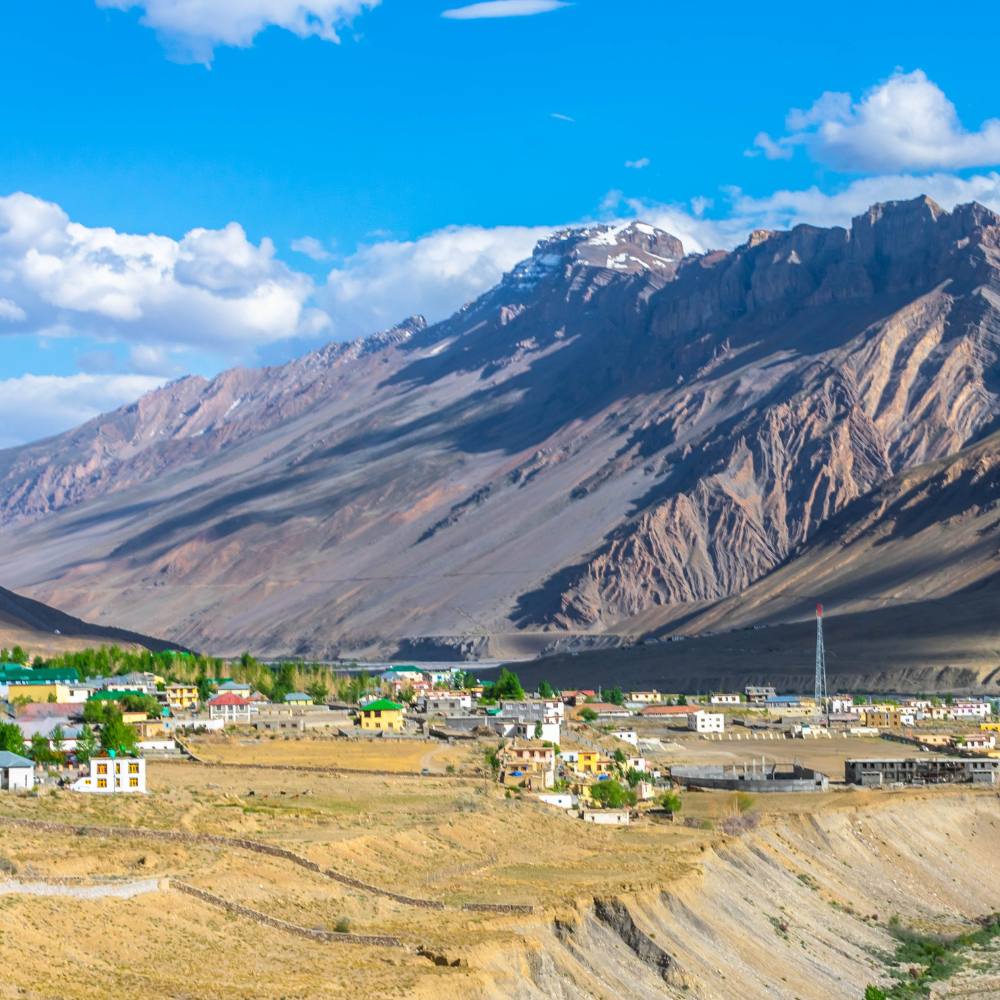
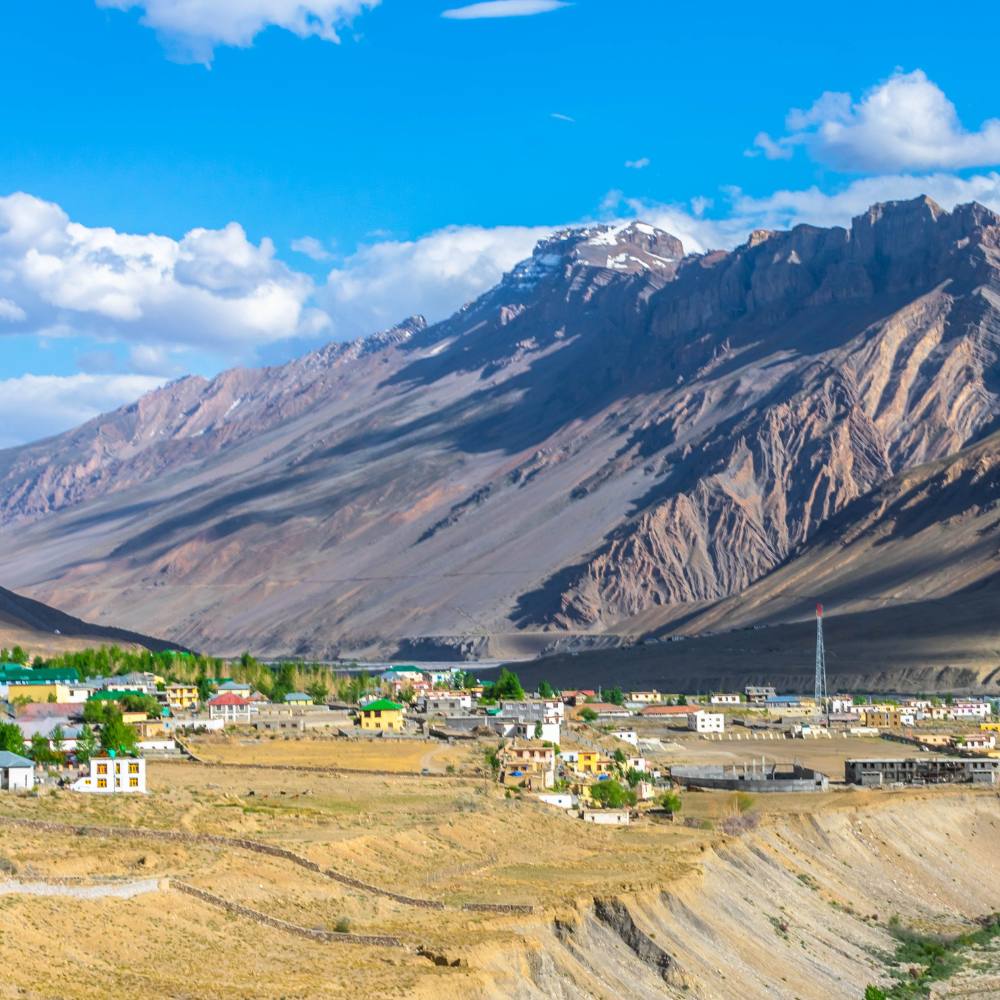
Every journey through Spiti passes through Kaza. As the administrative headquarters of the Spiti sub-division, it is the most connected and developed settlement in the valley.
Despite its remote location, Kaza has ATMs, petrol pumps, reliable internet, a proper market, and a range of cafes and guesthouses. The old town section is atmospheric, with mud and stone homes, prayer flags, and the Sakya Tangyud Monastery watching over everything from the hillside above.
Most travellers spend two to three nights here, acclimatising and organising day trips to the surrounding high altitude villages.
Before Leaving Kaza
- Withdraw enough cash. ATMs beyond Kaza are unreliable or absent
- Arrange a motorcycle rental or local driver for the village circuit (Langza, Hikkim, Komic)
- Top up fuel. Petrol pumps do not exist beyond this point on most routes
5. Dhankar Village and Dhankar Lake
Altitude: 3,894 m | Best For: History, trekking, photography, lake views
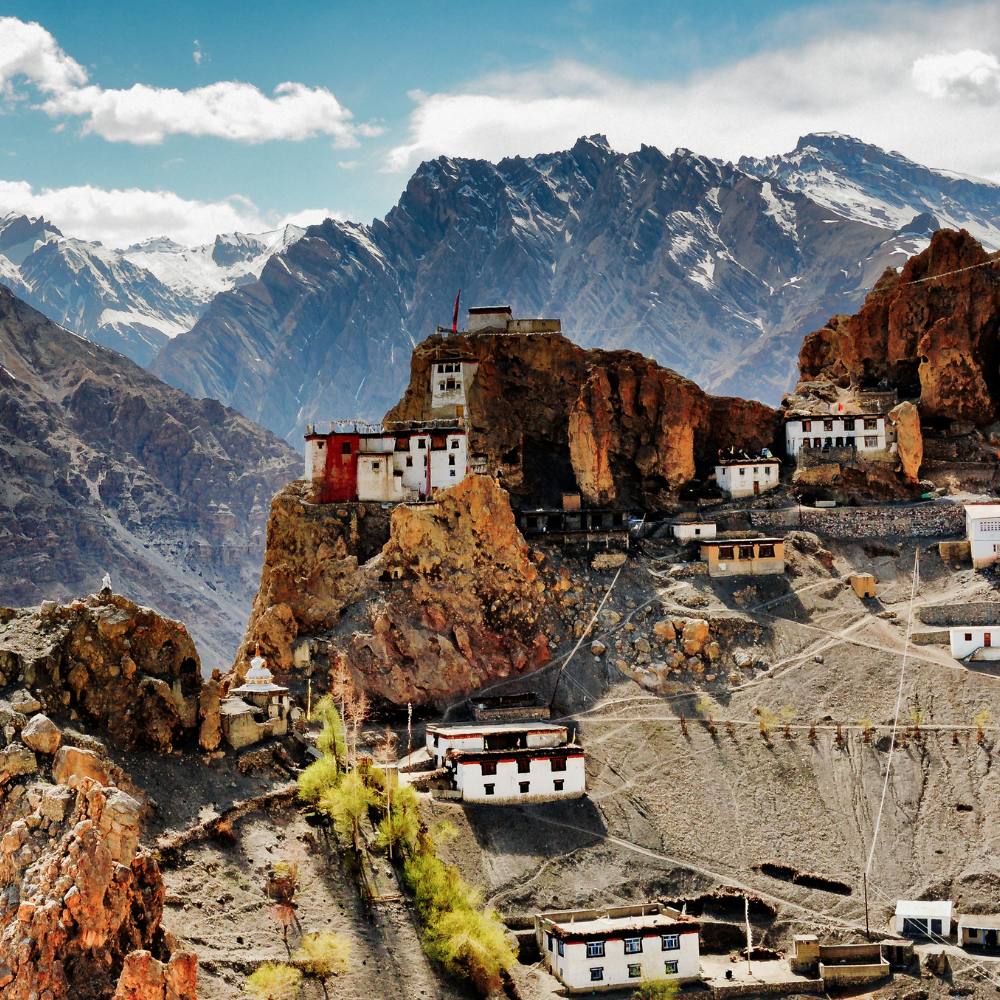
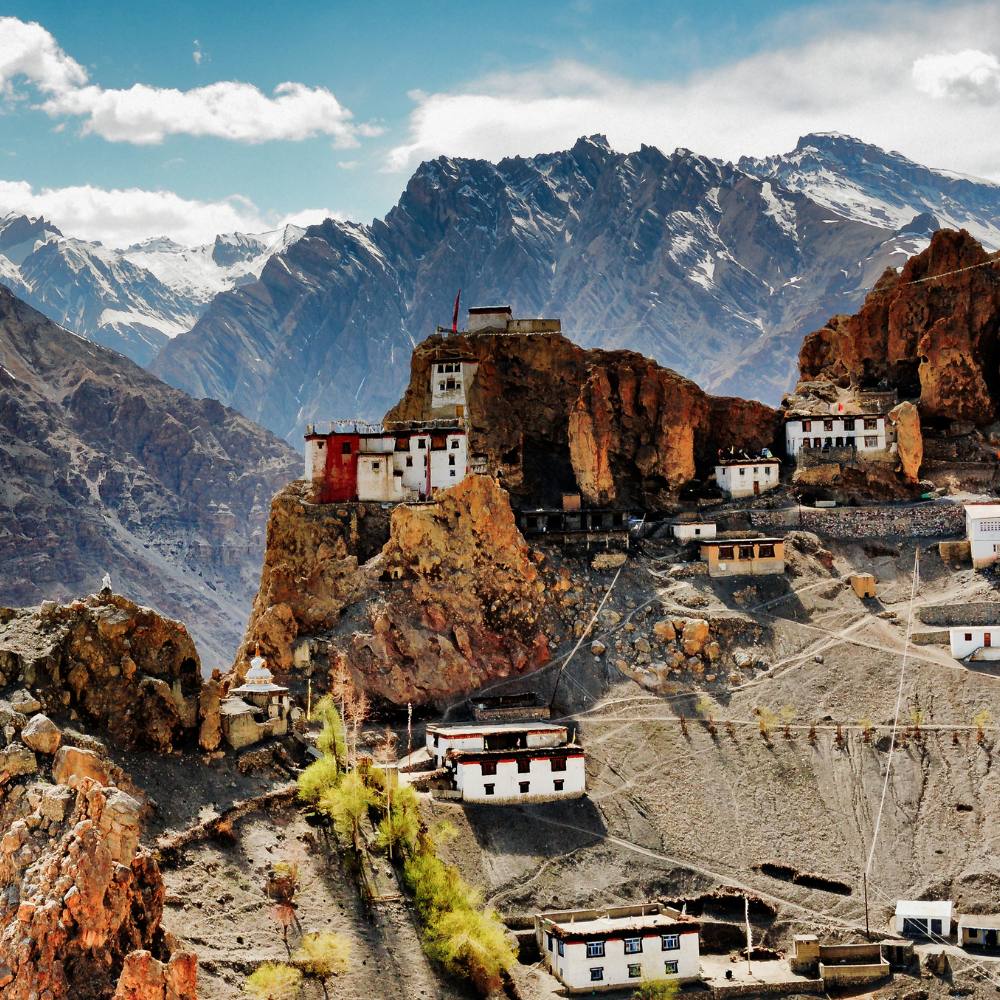
Dhankhar Gompa, a fort-monastery over a thousand years old, is perched on the edge of a sheer cliff above the confluence of the Spiti and Pin rivers. It is so precariously positioned that it has been listed among the hundred most endangered historic sites in the world by the World Monuments Fund.
This was once the royal seat of the Nono, the king of Spiti. The mud and stone of the village blend so completely into the cliff that the two are often indistinguishable from a distance.
A 45-minute trek above the monastery leads to Dhankar Lake, a still glacial lake sitting in a bowl of arid ridges with no sound except wind. The walk is straightforward, and the reward is significant.
6. Langza Village
Altitude: 4,400 m | Best For: Photography, fossil hunting, village culture
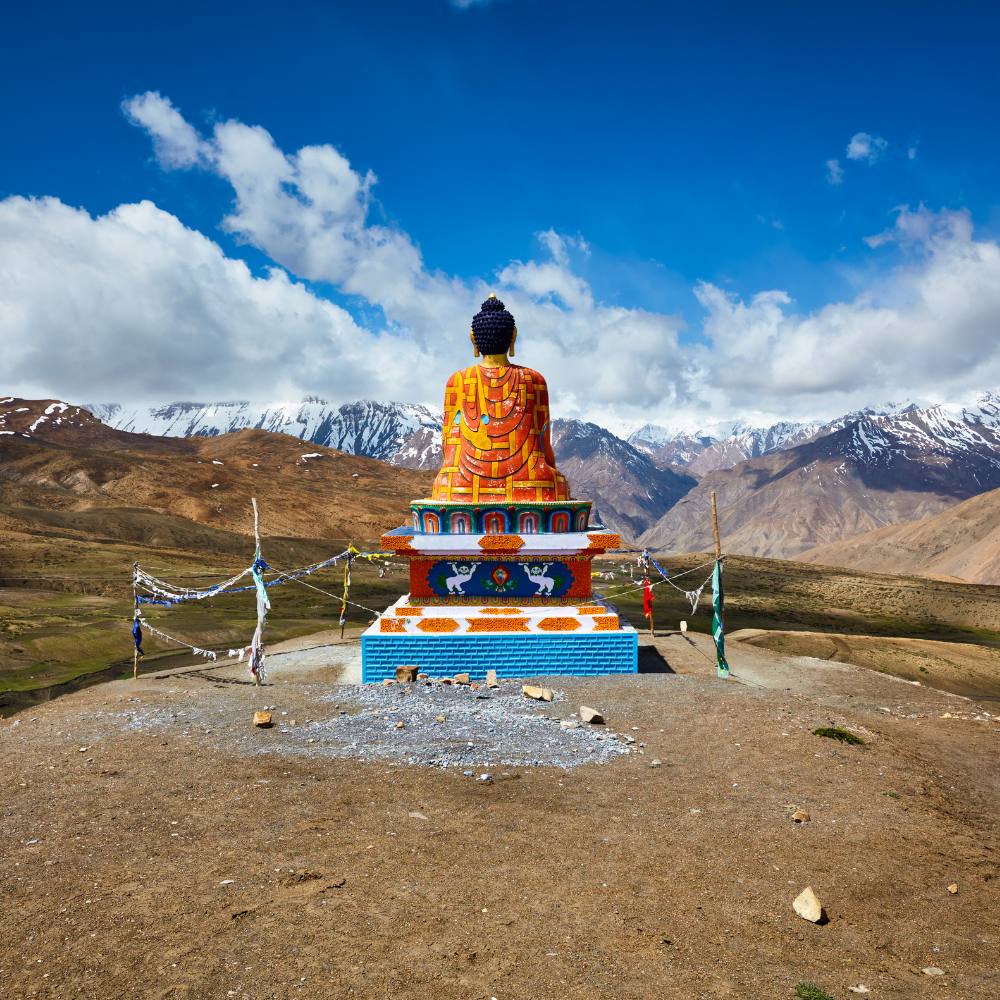
Langza is defined by two things: a towering golden Buddha statue at the edge of the village gazing across the valley, and the extraordinary geological secret buried in the ground beneath it.
The landscape here was once the floor of the ancient Tethys Sea, the ocean that preceded the Himalayas. As tectonic forces pushed the land skyward over 50 million years, marine fossils, ammonites, and ancient sea creatures were carried with it. Today they lie preserved in the soil at over 14,000 feet above the current ocean level.
Local children collect and sell fossil specimens from the area, making for one of the most unusual and meaningful souvenirs anywhere in India.
Responsible Travel Note
Purchase fossils from local vendors to support the community directly. Do not remove specimens from the landscape. The geological heritage of Langza belongs to the village and to future visitors.
Read Also: Top 10 Most Visited Tourist Places in India
7. Hikkim Village
Altitude: 4,400 m | Best For: Unique experience, village life, photography
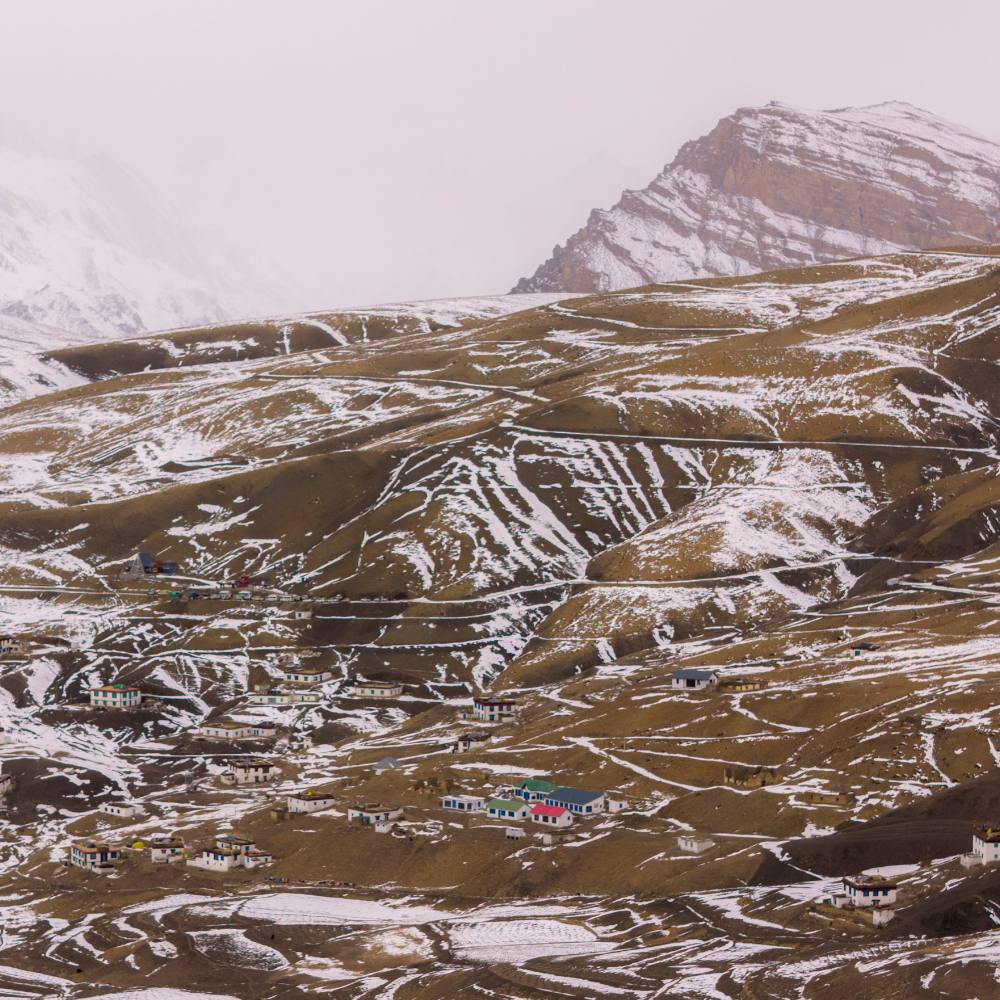
Hikkim is home to the world's highest post office, a fact that sounds like a travel gimmick until you are actually sitting inside it, writing a postcard addressed to someone 14,000 feet below.
The post office has been operational since 1983. The postmaster arrives by foot or jeep, handles real mail, and sends letters to destinations across India and around the world. Stamps and cards are available at the counter.
Beyond the post office, Hikkim is a peaceful, photogenic village of flat-roofed stone homes, terraced fields, and wide views of the Pin Parvati range across the valley. The drive from Kaza takes approximately 45 minutes.
8. Komic Village
Altitude: 4,587 m | Best For: High altitude record, monastery, panoramic views
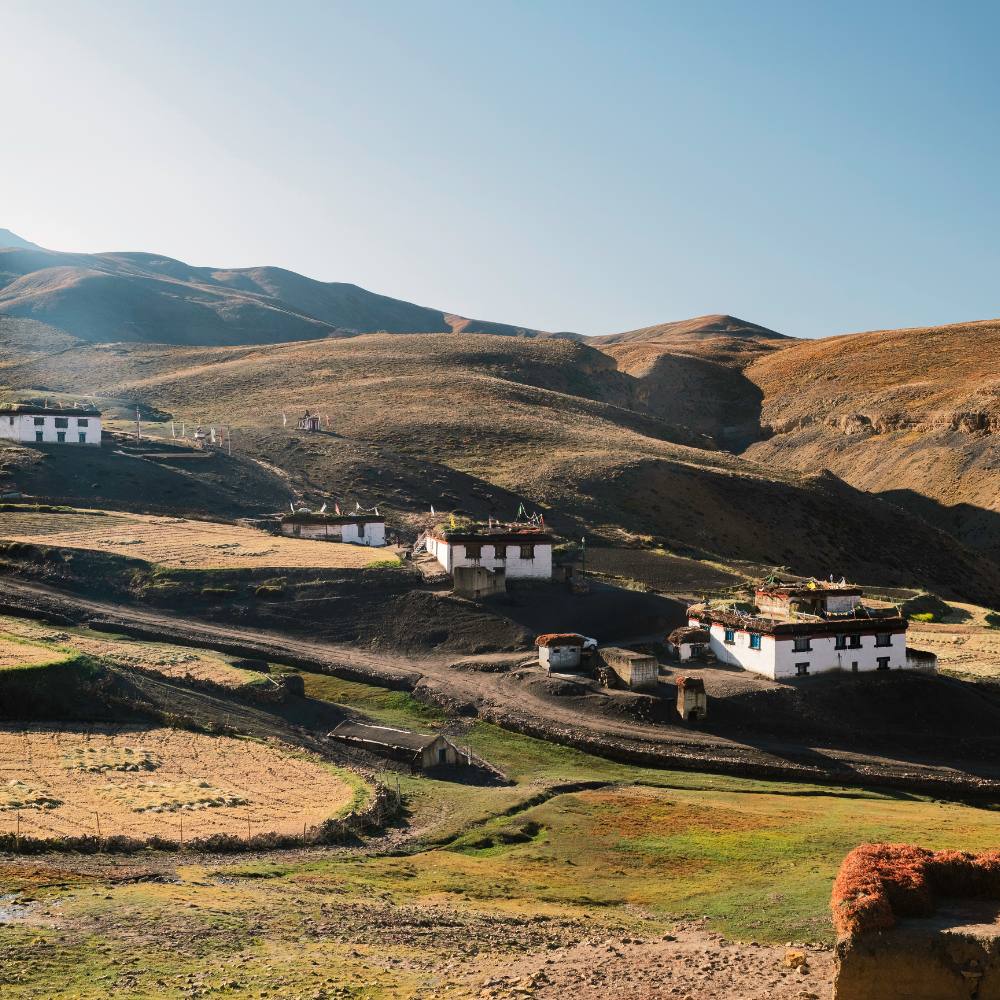
At 4,587 metres, Komic is widely recognised as the highest motorable village in Asia. The road up from Kaza is paved but increasingly narrow, spiralling upward until the air is noticeably thin and the views are overwhelming.
The village is anchored by the Tangyud Monastery, one of the oldest gompas in Spiti, with a small resident monk community and a collection of ancient religious texts and artwork.
The homes here are built in traditional Himalayan style, mud, stone, and timber, engineered over generations to survive winters that last nearly six months at this altitude. The silence and the 360-degree mountain panorama are reason enough to make the drive.
9. Kibber
Altitude: 4,205 m | Best For: Wildlife, trekking, winter travel, village life
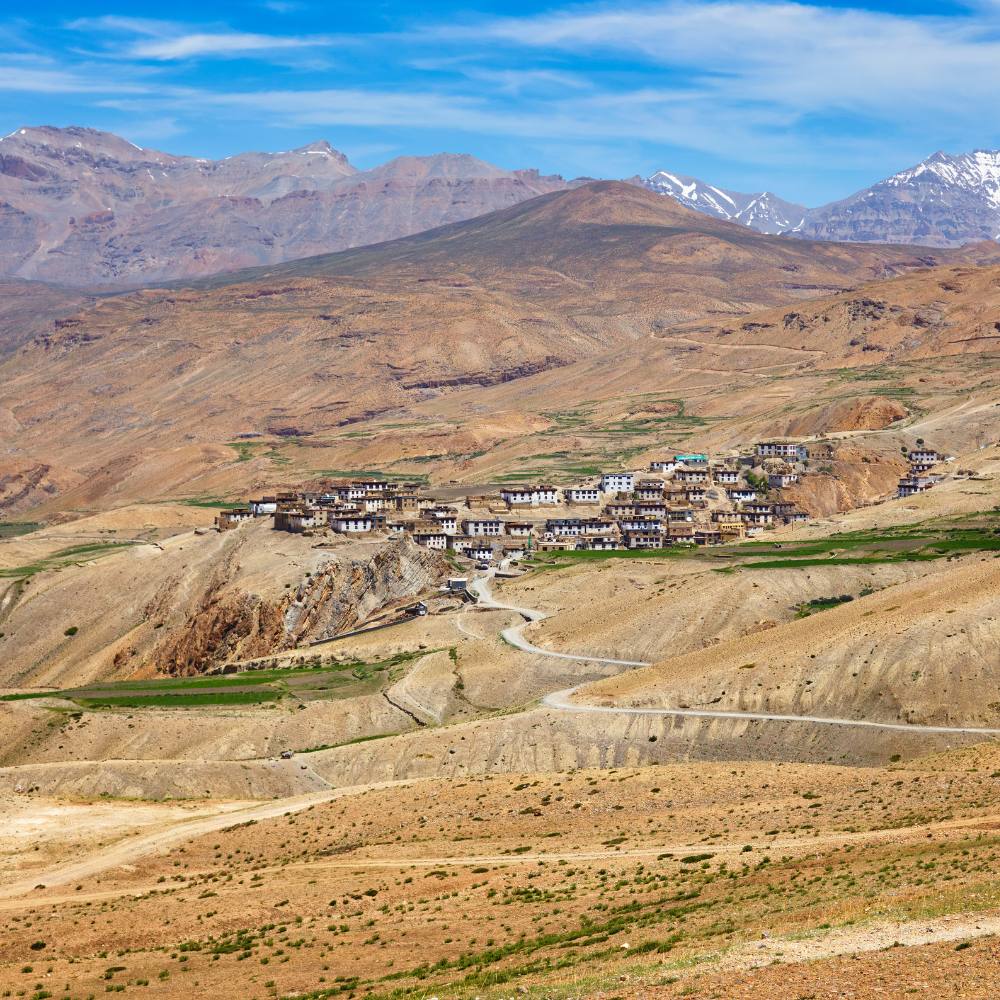
Kibber sits within the Kibber Wildlife Sanctuary, making it one of the best places in India to spot the snow leopard in the wild.
In winter, snowfall pushes prey animals down from higher elevations and snow leopards follow. Expert-guided wildlife watching treks are organised from the village during these months. The sanctuary is also home to the Himalayan blue sheep, Tibetan wolf, red fox, and multiple high-altitude bird species.
In summer, the landscape opens up for trekking. The Kibber to Langza trail is a classic half-day route across some of the most spectacular terrain in the valley.
Wildlife Watching Tips
- December to March offers the highest probability of snow leopard sightings
- Book a guided trek with a local naturalist from the village, not an outside agency
- Carry binoculars. Snow leopards blend into rocky terrain with extraordinary effectiveness
- Sightings are never guaranteed. These are wild animals in a protected habitat, not a controlled environment
10. Gue Mummy Stupa
Altitude: ~3,000 m | Best For: History, off-the-beaten-path exploration
Picture credit: Wikipedia
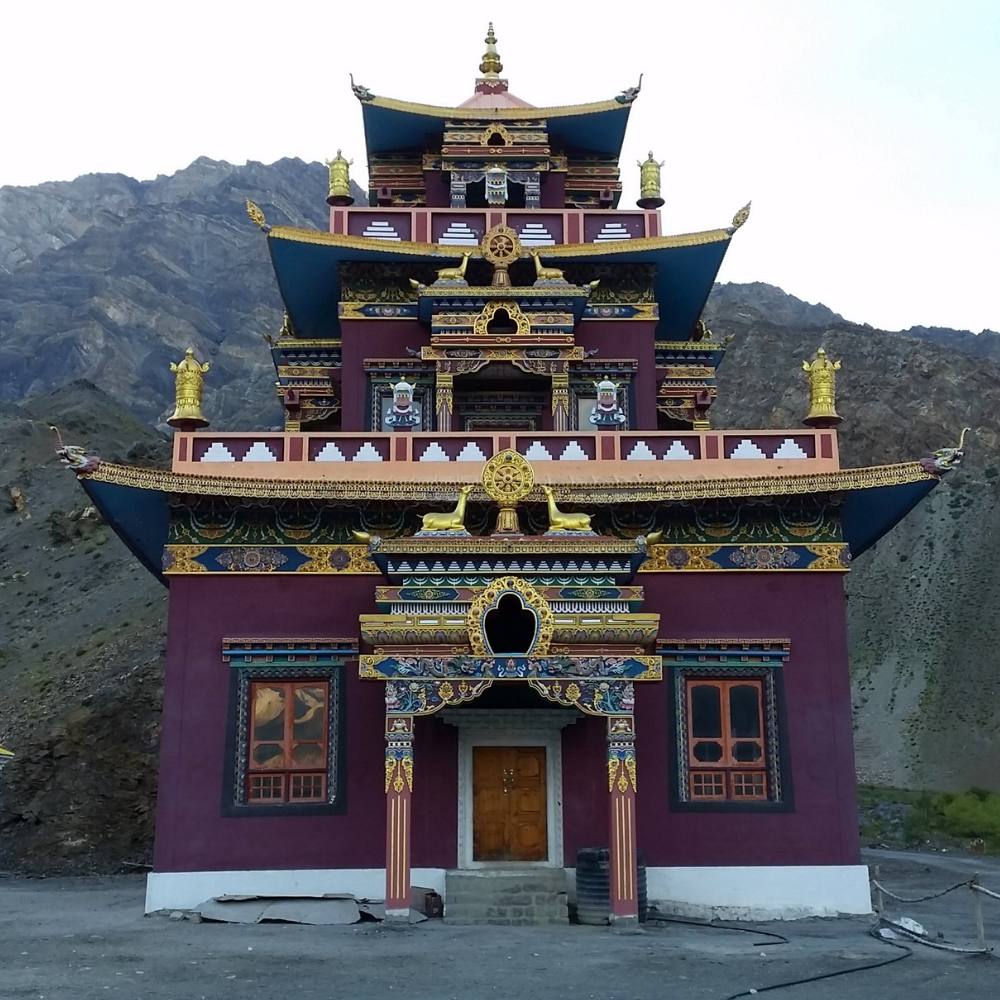
In a small stupa at the edge of the village of Gue, near the Indo-Tibet border, rests the naturally preserved mummy of a Buddhist monk named Sangha Tenzin, believed to be at least 500 years old.
His hair and teeth remain intact. His posture is that of a seated meditating monk. Local tradition holds that Sangha Tenzin voluntarily entered a state of deep meditation from which he never emerged, a practice known in certain Buddhist traditions as self-mummification.
The mummy was uncovered in 1975 after an earthquake cracked open the stupa. Scientific examination has confirmed both its authenticity and its estimated age. The site is maintained and open to respectful visitors.
Gue requires a deliberate detour from the main Spiti circuit, close to Sumdo near the Himachal Pradesh and Tibet border. It is worth every kilometre.
Travel itinerary: Spiti Valley Private Tour: 14 Days India Tour
What Is the Best Time to Visit Spiti Valley?
The answer depends entirely on what kind of experience you are seeking.
Summer: June to September
- Both the Manali and Shimla-Kinnaur entry routes are open
- Chandratal Lake is accessible
- Temperatures are mild during the day, cold at night
- Peak season brings more visitors. Book accommodation in advance
- Recommended for first-time visitors and those with limited time
Winter: December to March
- The valley transforms into a landscape of absolute white silence
- Snow leopard sightings are most likely around Kibber
- Temperatures can drop below minus 20 degrees Celsius
- Many passes close. Entry primarily via Shimla and Kinnaur
- Recommended for experienced Himalayan travellers seeking isolation
How to Reach Spiti Valley
Route 1: Via Shimla and Kinnaur
- Longer but lower altitude. Open for a wider seasonal window than the Manali route
- Follows the Hindustan-Tibet Road through the stunning Kinnaur district
- Nearest major airport: Chandigarh (approx. 8 hours by road) or Shimla (limited Delhi connections)
- Best for gradual acclimatisation and those wishing to explore Kinnaur en route
Route 2: Via Manali and Rohtang Pass
- Faster and more dramatic, crossing Rohtang Pass then Kunzum Pass into Spiti
- Open from approximately late May through October
- Nearest airport: Bhuntar near Kullu, approximately 50 km from Manali
- Best for those coming from Ladakh or with limited time
Frequently Asked Questions
Is Spiti Valley safe for solo travellers and international tourists?
Yes. Crime rates are negligible, and the local community is known for its hospitality. The challenges in Spiti are geographic, not security-related: altitude, road conditions, and unpredictable weather.
International visitors do not require a special permit for the main Spiti circuit. Areas near the Indo-Tibet border, such as Gue, may require an Inner Line Permit (ILP). Verify current requirements with the Himachal Pradesh Home Department before travelling, as regulations are subject to change.
How many days do you need for the Spiti Valley?
A minimum of 7 to 10 days is recommended, including travel time from the nearest major city. A full circuit covering Tabo, Dhankar, Kaza, the Kaza villages, Key Monastery, Kibber, and Chandratal requires at least 8 to 9 nights.
The altitude alone makes rushing inadvisable. Build in acclimatisation days, especially on arrival in Kaza.
Is altitude sickness a concern in Spiti Valley?
Yes. Most destinations sit between 3,500 and 4,600 metres. Acute Mountain Sickness (AMS) is a genuine risk and should be taken seriously.
Prevention:
- Spend a night in Shimla or Manali before entering Spiti
- Take at least one full rest day in Kaza on arrival
- Drink 3 to 4 litres of water daily
- Avoid alcohol for the first few days
- Consult a doctor about Acetazolamide if you have prior concerns
- Anyone experiencing severe AMS symptoms must descend immediately.
What should you pack for the Spiti Valley?
Pack for cold and dry conditions regardless of season. Temperatures drop sharply after sunset even in July.
- Thermal base layers and a windproof, waterproof outer jacket
- Sturdy walking shoes with ankle support
- Sunscreen SPF 50 or higher (UV radiation is intense at altitude)
- UV protection sunglasses
- Personal first aid kit including altitude medication
- Power bank (electricity in remote villages is intermittent)
- BSNL SIM card. It is the only network with coverage across most of the valley
Is there good food in Spiti Valley?
Kaza has a surprisingly varied food scene: Tibetan thukpa, momos, wood-fired pizza, and filter coffee are all available.
Outside Kaza, food is simpler and predominantly vegetarian: dal, rice, vegetables, and local staples like butter tea. Homestay meals, cooked by the family hosting you, are almost always the most memorable eating you will do in the valley. Vegans can eat well with clear communication at each stop.
Final Word
Spiti Valley does not offer easy travel. The roads are long, the altitude is demanding, and the winters are brutal.
What it offers instead is irreplaceable: monasteries that have held their ground for a thousand years, landscapes that exist nowhere else in India, and a silence so complete it changes the way you think.
For international travellers, this is an India that defies every expectation. For Indian travellers, it is a reminder of how extraordinary this country truly is.
Spiti rewards those who come prepared and take their time. Plan well, move slowly, and it will give you everything.